

50 Cents – Fiji
Circulating commemorative coins
Commemoration: FAO - First Indians in Fiji Centennial
Fiji
Context
Year: 1979
Issuer: Fiji 
Ruler: Elizabeth II
Currency:
(since 1969)
Demonetization: 30 June 2009
Total mintage: 264,004
Material
Diameter: 31.5 mm
Weight: 15.55 g
Shape: Dodecagonal
Composition: Copper-nickel
Standard: Silver half ounce
Technique: Milled
Alignment: Medal alignment
flip
References
KM: #Click to copy to clipboard44
Numista: #9413
Value
Exchange value: 0.50 FJD
Obverse
Description:
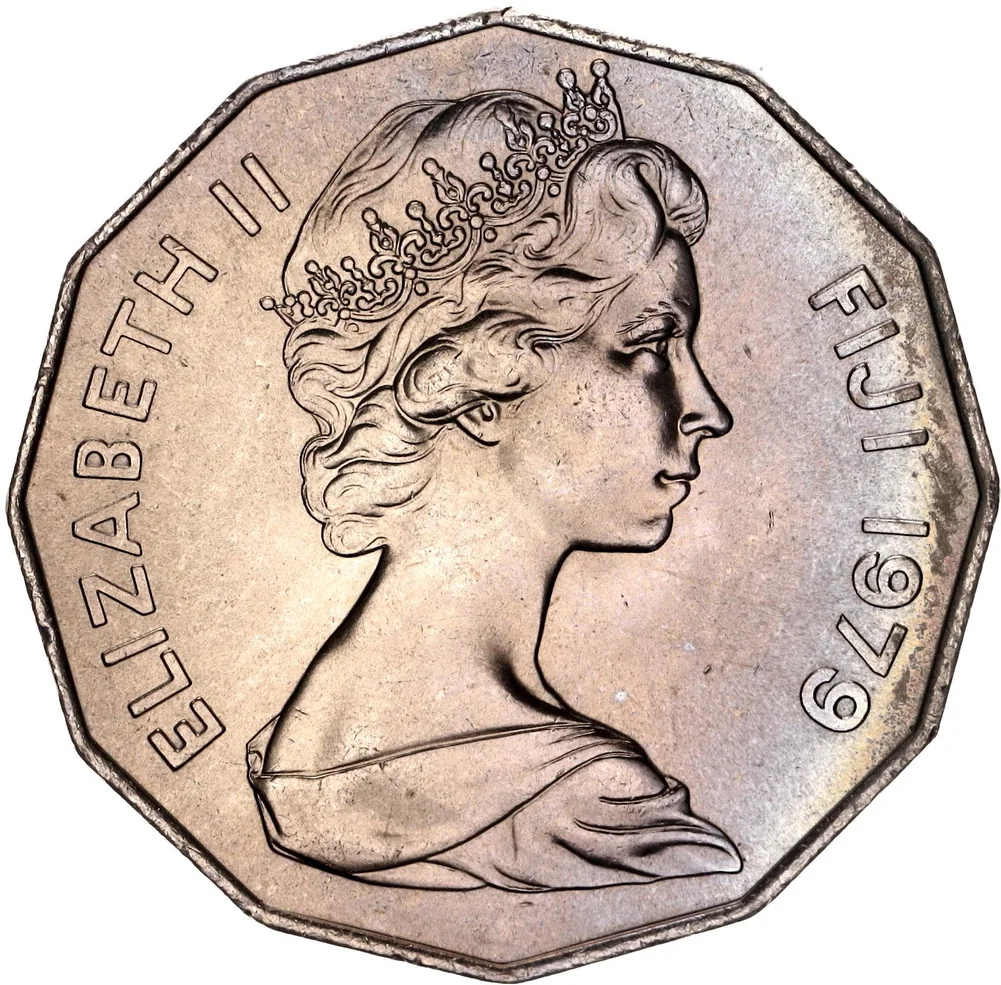
Machined bust of Queen Elizabeth II facing right, encircled by legend.
Inscription:
ELIZABETH II FIJI 1979
Translation:
ELIZABETH II FIJI 1979
Script: Latin
Language: English
Engraver: Arnold Machin
Reverse
Description:
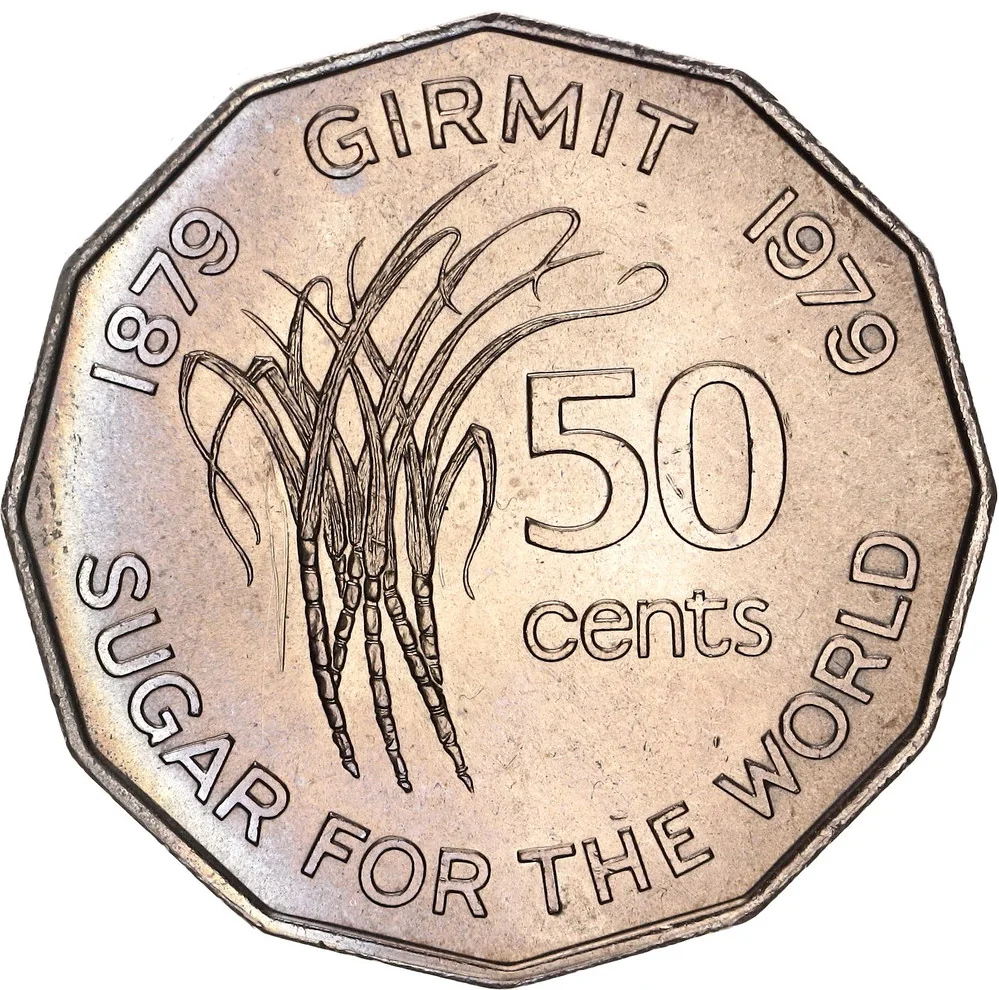
Sugar cane
Inscription:
1879 GIRMIT 1979
50
cents
SUGAR FOR THE WORLD
50
cents
SUGAR FOR THE WORLD
Translation:
1879 GIRMIT 1979
50
cents
SUGAR FOR THE WORLD
50
cents
SUGAR FOR THE WORLD
Script: Latin
Language: English
Engraver: Horst Hahne
Edge
Plain
Categories
| Organization> FAO |
Mints
| Name | Mark |
|---|---|
| Royal Australian Mint | — |
Mintings
| Year | Mint Mark | Mintage | Quality | Collection |
|---|---|---|---|---|
| 1979 | — | 258,000 | ||
| 1979 | — | 6,004 | Proof |
Historical background
In 1979, Fiji's currency situation was characterized by stability under the governance of the Reserve Bank of Fiji, which had been established a decade prior. The nation operated on a fully fiduciary currency system, meaning the Fijian dollar (FJD), introduced in 1969 to replace the Fijian pound, was no longer backed by gold or sterling reserves but by the government's credit and foreign exchange holdings. Its value was pegged to a basket of currencies of Fiji's major trading partners, a system designed to stabilize the exchange rate and insulate the economy from the volatility of any single currency, particularly following the turbulence in global financial markets during the 1970s.
The economy was heavily dependent on sugar exports and a growing tourism sector, making foreign exchange earnings vital. The peg to a trade-weighted basket helped manage the cost of imports and the value of export income. However, this period also followed the significant shocks of the 1973 oil crisis and a major devaluation in 1975, when the Fijian dollar was devalued by 20% against the US dollar to address a widening trade deficit and loss of competitiveness. By 1979, the economy was in a phase of cautious recovery and adjustment to these earlier corrections.
Overall, the currency regime in 1979 was one of managed stability, with the Reserve Bank actively intervening to maintain the peg. The focus was on supporting economic growth through predictable exchange rates, while accumulating foreign reserves to cushion against external shocks. This conservative monetary approach reflected the priorities of a small, developing island nation navigating its post-colonial economic path and the lingering uncertainties of the global economic environment.
The economy was heavily dependent on sugar exports and a growing tourism sector, making foreign exchange earnings vital. The peg to a trade-weighted basket helped manage the cost of imports and the value of export income. However, this period also followed the significant shocks of the 1973 oil crisis and a major devaluation in 1975, when the Fijian dollar was devalued by 20% against the US dollar to address a widening trade deficit and loss of competitiveness. By 1979, the economy was in a phase of cautious recovery and adjustment to these earlier corrections.
Overall, the currency regime in 1979 was one of managed stability, with the Reserve Bank actively intervening to maintain the peg. The focus was on supporting economic growth through predictable exchange rates, while accumulating foreign reserves to cushion against external shocks. This conservative monetary approach reflected the priorities of a small, developing island nation navigating its post-colonial economic path and the lingering uncertainties of the global economic environment.
🌱 Common