

20 kroner – Denmark
Add to wishlist
Denmark
Context
Material
Diameter: 27 mm
Weight: 9.3 g
Thickness: 2.35 mm
Shape: Round
Composition: Aluminium bronze
Magnetic: No
Technique: Milled
Alignment: Coin alignment
flip
References
KM: #
Numista: #9404
Value
Exchange value: 20 DKK
Inflation-adjusted value: 27.36 DKK
Obverse
Description:
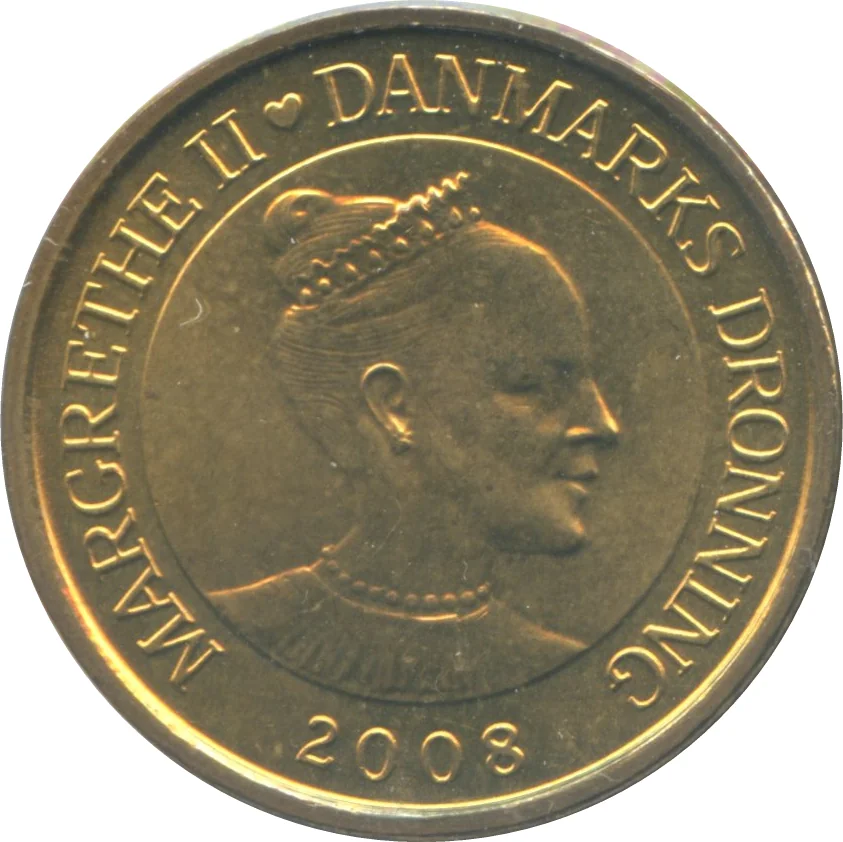
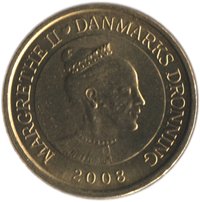
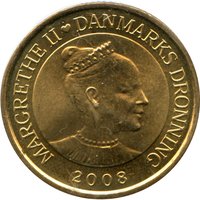
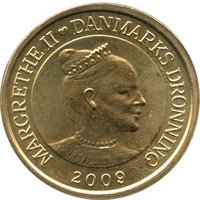
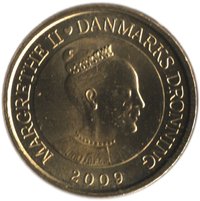
Queen Margrethe II in profile.
Inscription:
MARGRETHE II ♥ DANMARKS DRONNING
2008
2008
Translation:
MARGRETHE II ♥ QUEEN OF DENMARK
Script: Latin
Engraver: Mogens Møller
Reverse
Description:
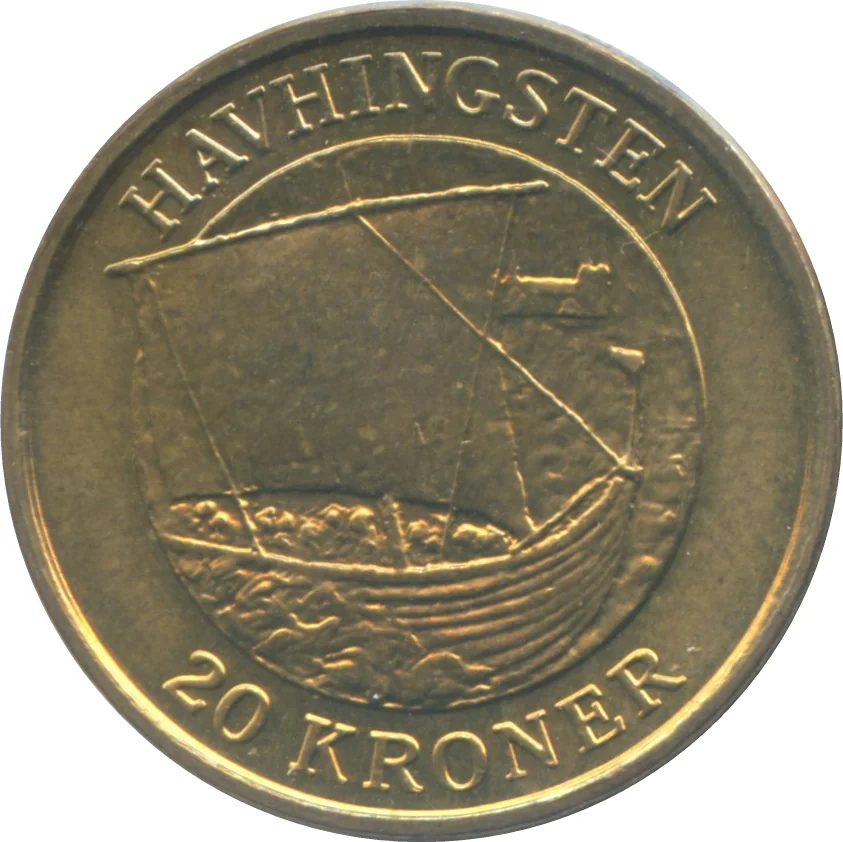
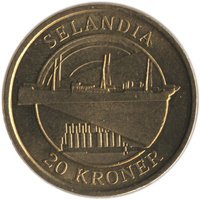
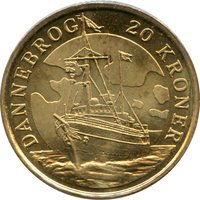
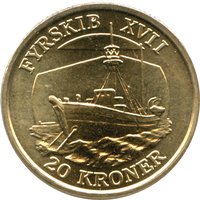
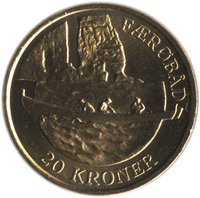
Viking longship under sail.
Inscription:
HAVHINGSTEN
20 KRONER
20 KRONER
Script: Latin
Engraver: Erik Varming
Edge
Alternating smooth and reeded segments
Categories
| Transportation> Watercraft |
Mints
| Name | Mark |
|---|---|
| Royal Danish Mint | — |
Mintings
| Year | Mint Mark | Mintage | Quality | Collection |
|---|---|---|---|---|
| 2008 | — | 1,200,000 | ||
| 2008 | — | 1,500 | Proof |
Historical background
In 2008, Denmark's currency situation was defined by its long-standing membership of the European Exchange Rate Mechanism II (ERM II). Since 1999, the Danish krone (DKK) had been pegged to the euro via a fixed exchange rate regime, maintaining a central rate of 7.46038 krone per euro with a very narrow fluctuation band of ±2.25%. This policy was a political compromise, following the 2000 referendum where Danes rejected adopting the euro, and was designed to ensure monetary stability and low inflation by shadowing the European Central Bank's policies.
The global financial crisis presented a severe test to this peg in the autumn of 2008. As liquidity froze and investors sought safe-haven assets, significant pressure mounted on the krone. There was intense speculative activity betting that Denmark might be forced to abandon or devalue its peg, leading to substantial capital outflows. In response, Danmarks Nationalbank took decisive and unprecedented action to defend the currency. It raised its key interest rates several times in October 2008, even as other central banks were cutting rates, culminating in a record one-day hike of 1.75 percentage points to 5.5%. This aggressive move aimed to make holding kroner more attractive and stem the outflow of capital.
These forceful interventions were successful. By early 2009, the pressure on the krone had subsided, and confidence in the fixed exchange rate policy was restored. The crisis ultimately validated Denmark's framework, proving the Nationalbank's commitment and capacity to defend the peg even under extreme market stress. Consequently, the krone emerged from the turmoil with its credibility enhanced, reinforcing the fixed exchange rate as the cornerstone of Danish monetary policy for the years that followed.
The global financial crisis presented a severe test to this peg in the autumn of 2008. As liquidity froze and investors sought safe-haven assets, significant pressure mounted on the krone. There was intense speculative activity betting that Denmark might be forced to abandon or devalue its peg, leading to substantial capital outflows. In response, Danmarks Nationalbank took decisive and unprecedented action to defend the currency. It raised its key interest rates several times in October 2008, even as other central banks were cutting rates, culminating in a record one-day hike of 1.75 percentage points to 5.5%. This aggressive move aimed to make holding kroner more attractive and stem the outflow of capital.
These forceful interventions were successful. By early 2009, the pressure on the krone had subsided, and confidence in the fixed exchange rate policy was restored. The crisis ultimately validated Denmark's framework, proving the Nationalbank's commitment and capacity to defend the peg even under extreme market stress. Consequently, the krone emerged from the turmoil with its credibility enhanced, reinforcing the fixed exchange rate as the cornerstone of Danish monetary policy for the years that followed.
Series: Ships
🌱 Fairly Common