

50 euro cents – Finland
Add to wishlist
Finland
Context
Material
Diameter: 24.25 mm
Weight: 7.8 g
Thickness: 2.38 mm
Shape: Round
Standard: Silver quarter ounce
Magnetic: No
Technique: Milled
Alignment: Medal alignment
flip
References
KM: #
Numista: #94
Value
Exchange value: 0.50 EUR
Inflation-adjusted value: 0.82 EUR
Obverse
Description:
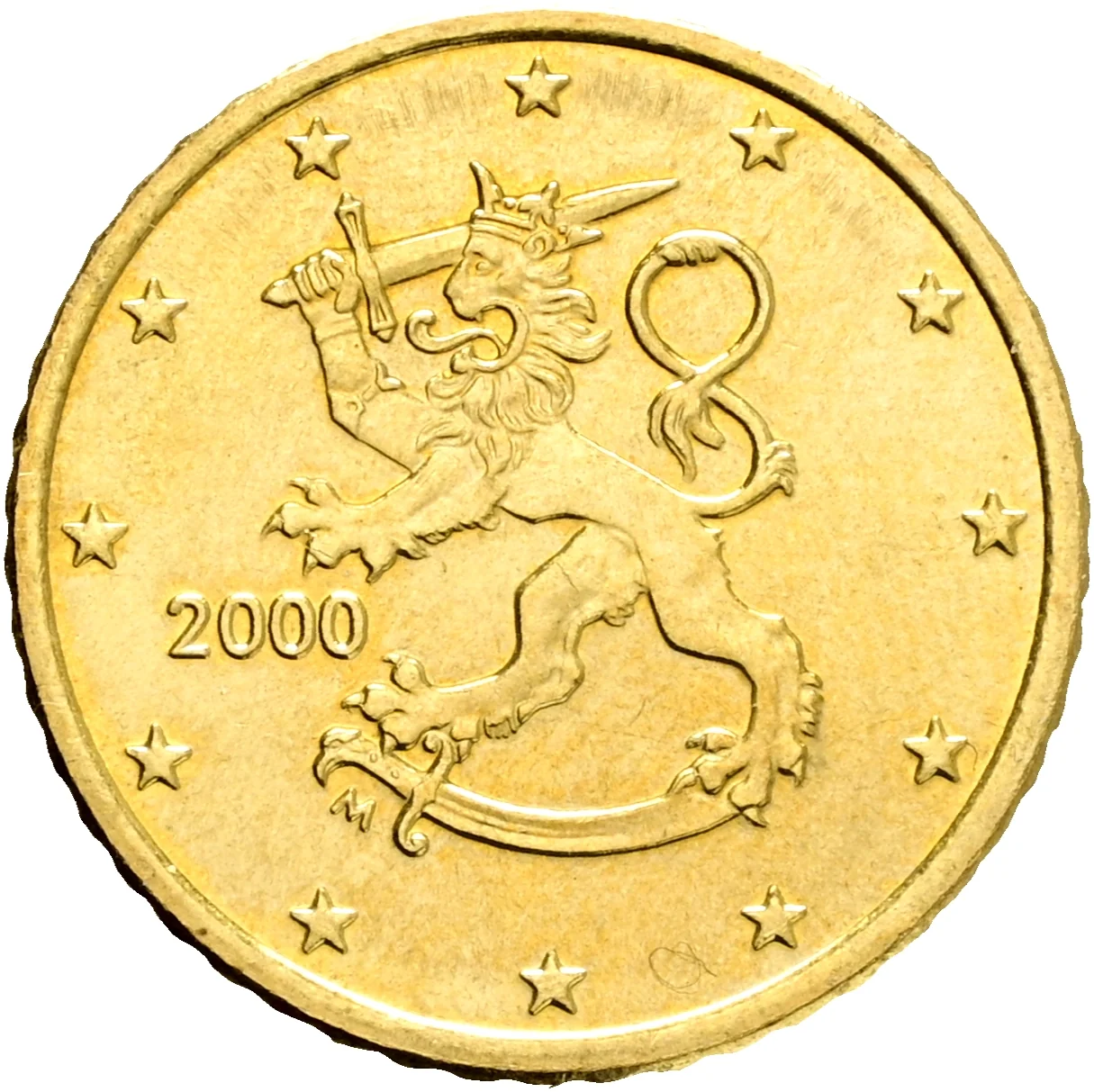
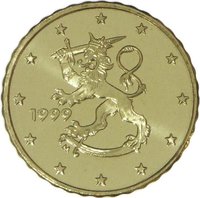
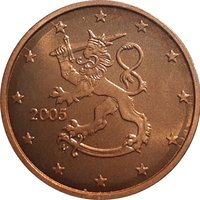
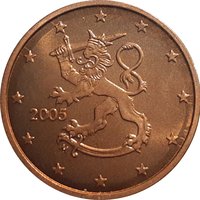
The Finnish heraldic lion surrounded by Europe's twelve stars.
Inscription:
2000 M
Script: Latin
Engraver: Heikki Aulis Häiväoja
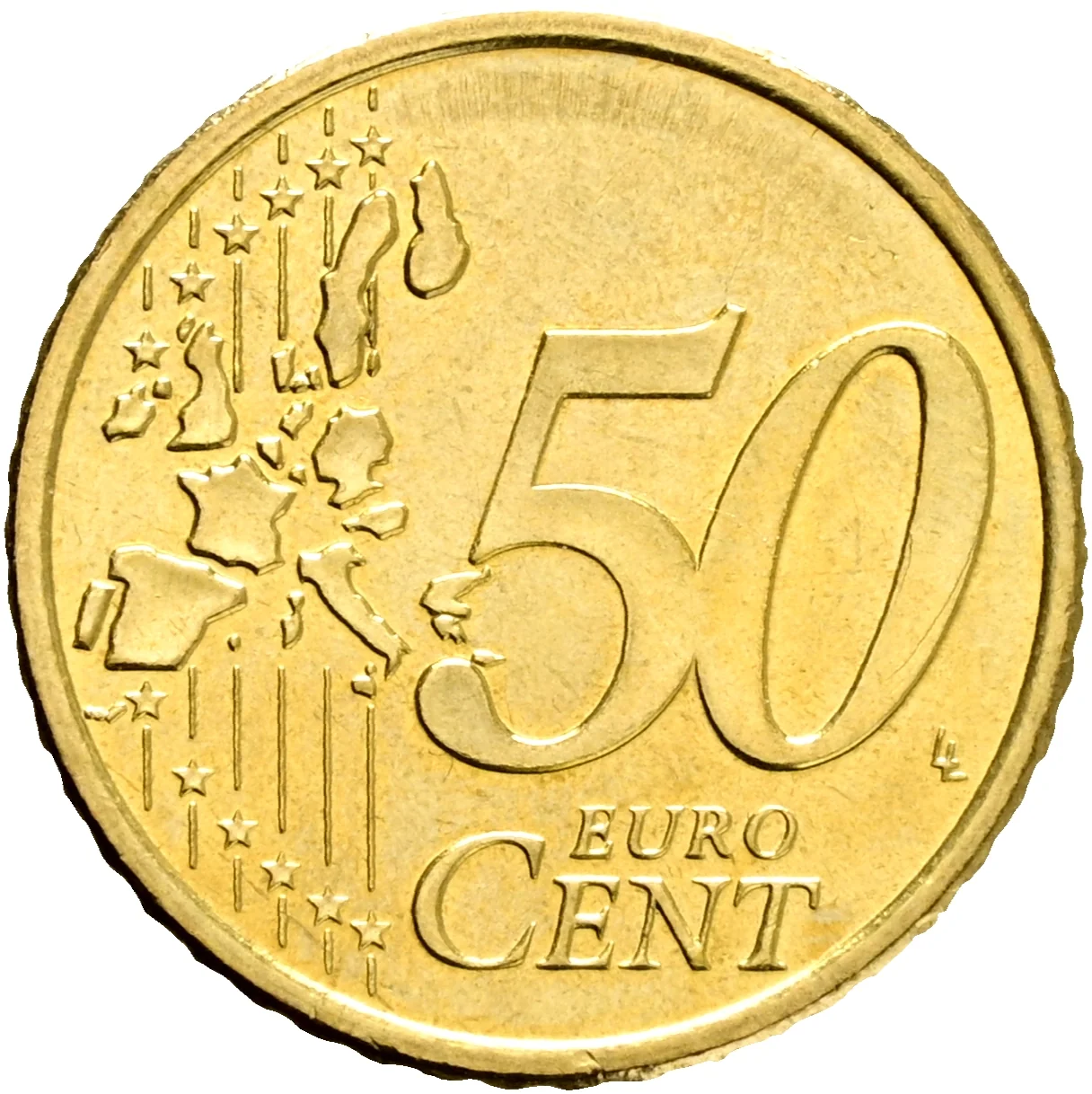
Reverse
Edge
Reeded
Categories
| Animal> Feline |
| Map |
| Symbols> Coat of Arms |
| Object> Cold weapons |
Mints
| Name | Mark |
|---|---|
| Mint of Finland | M |
Mintings
| Year | Mint Mark | Mintage | Quality | Collection |
|---|---|---|---|---|
| 1999 | — | 20,613,000 | ||
| 1999 | — | 75,000 | BU | |
| 1999 | — | 8,000 | Proof | |
| 2000 | — | 67,014,000 | ||
| 2000 | — | 75,000 | BU | |
| 2000 | — | 8,000 | Proof | |
| 2001 | — | 4,349,000 | ||
| 2001 | — | 75,000 | BU | |
| 2001 | — | 8,000 | Proof | |
| 2002 | — | 133,000 | BU | |
| 2002 | — | 13,000 | Proof | |
| 2002 | — | 1,001,000 | ||
| 2003 | — | 543,500 | ||
| 2003 | — | 14,500 | Proof | |
| 2003 | — | 232,000 | BU | |
| 2004 | — | 506,000 | ||
| 2004 | — | 118,000 | BU | |
| 2004 | — | 5,000 | Proof | |
| 2005 | — | 3,500 | Proof | |
| 2005 | — | 4,719,500 | ||
| 2005 | — | 77,000 | BU | |
| 2006 | — | 6,774,400 | ||
| 2006 | — | 72,300 | BU | |
| 2006 | — | 3,300 | Proof |
Historical background
In 1999, Finland underwent a profound and historic monetary transition as it became a founding member of the European Economic and Monetary Union (EMU). On January 1st, the national currency, the Finnish markka (FIM), was irrevocably fixed to the euro at the exchange rate of 5.94573 markkaa to one euro. This move marked the culmination of a deliberate policy path begun in the early 1990s, following a severe banking crisis and deep recession. Finland had pegged the markka to the European Currency Unit (ECU) in 1991 and later entered the European Exchange Rate Mechanism (ERM II) in 1996, demonstrating its commitment to European integration and stable monetary policy as prerequisites for euro adoption.
The year itself was characterized by a dual-currency period. While the euro became the official currency for electronic and accounting purposes, Finnish markka banknotes and coins remained the sole legal tender for everyday cash transactions. This created a unique economic environment where prices were often displayed in both currencies to familiarize the public with the new system. The change was managed by the Bank of Finland, which worked in conjunction with the new European Central Bank (ECB) to implement the single monetary policy, transferring sovereignty over interest rates and currency issuance to the supranational institution in Frankfurt.
The background to this shift was deeply rooted in Finland's geopolitical and economic strategy. After the collapse of the Soviet Union, a major trading partner, Finland sought greater stability and integration with Western Europe, leading to EU membership in 1995. Adopting the euro was seen as a logical step to cement this alignment, reduce exchange rate risks for its export-driven economy, and lower transaction costs within its primary European market. Thus, 1999 represented not just a technical currency change, but a strategic reorientation of Finland's economic policy and identity within the European framework.
The year itself was characterized by a dual-currency period. While the euro became the official currency for electronic and accounting purposes, Finnish markka banknotes and coins remained the sole legal tender for everyday cash transactions. This created a unique economic environment where prices were often displayed in both currencies to familiarize the public with the new system. The change was managed by the Bank of Finland, which worked in conjunction with the new European Central Bank (ECB) to implement the single monetary policy, transferring sovereignty over interest rates and currency issuance to the supranational institution in Frankfurt.
The background to this shift was deeply rooted in Finland's geopolitical and economic strategy. After the collapse of the Soviet Union, a major trading partner, Finland sought greater stability and integration with Western Europe, leading to EU membership in 1995. Adopting the euro was seen as a logical step to cement this alignment, reduce exchange rate risks for its export-driven economy, and lower transaction costs within its primary European market. Thus, 1999 represented not just a technical currency change, but a strategic reorientation of Finland's economic policy and identity within the European framework.
Series: 1999 Finland circulation coins
🌱 Very Common