

10 Colones (Central Bank) – Costa Rica
Circulating commemorative coins
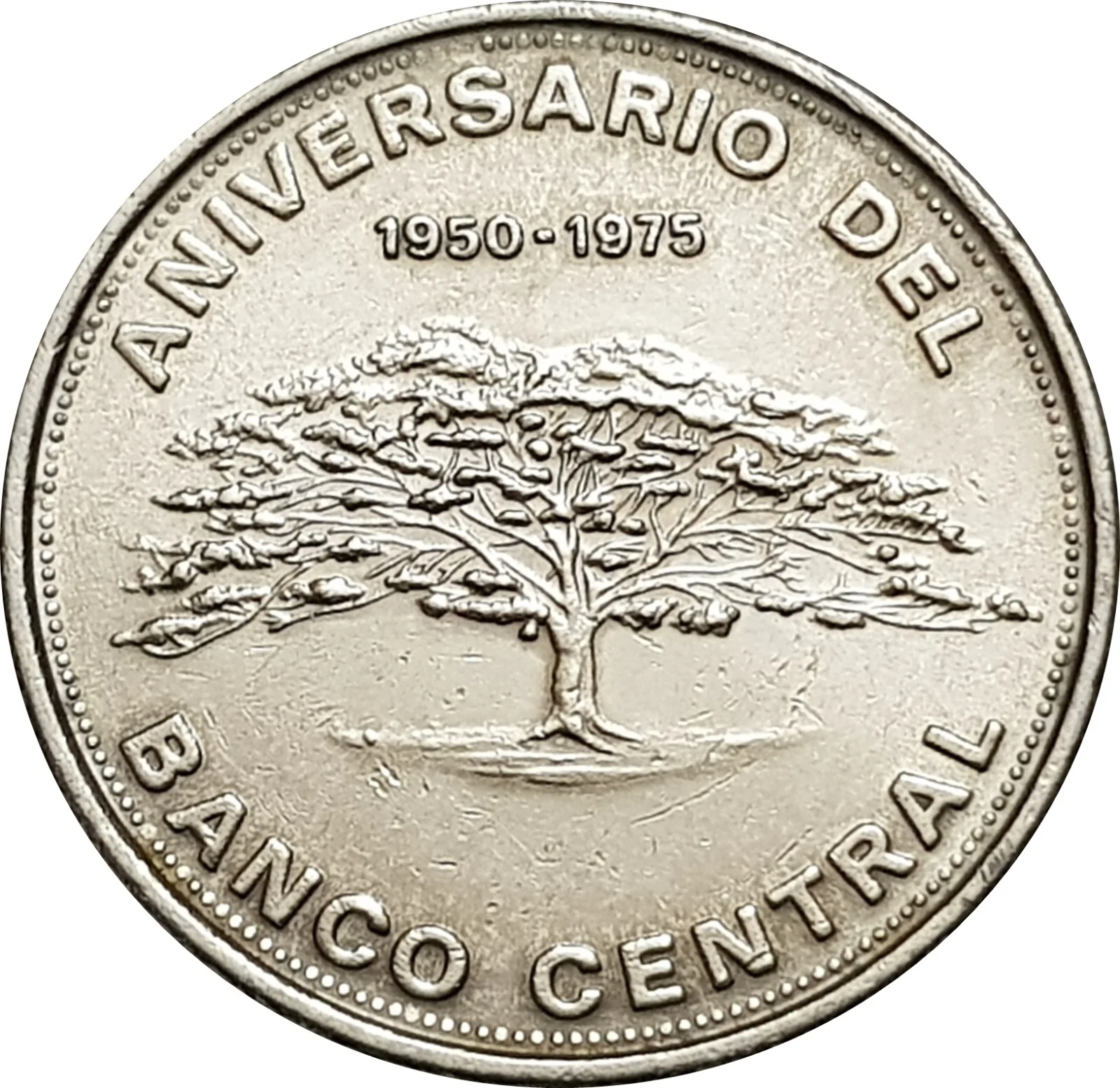
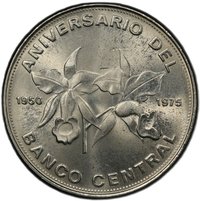
Commemoration: 25th Anniversary of the Central Bank
Costa Rica
Context
Year: 1975
Issuer: Costa Rica 
Issuing organization: Central Bank of Costa Rica
Period:
(since 1948)
Currency:
(since 1896)
Demonetized: Yes
Total mintage: 495,115
Material
References
KM: #Click to copy to clipboard204
Numista: #9391
Value
Exchange value: 10 CRC
Obverse
Description:
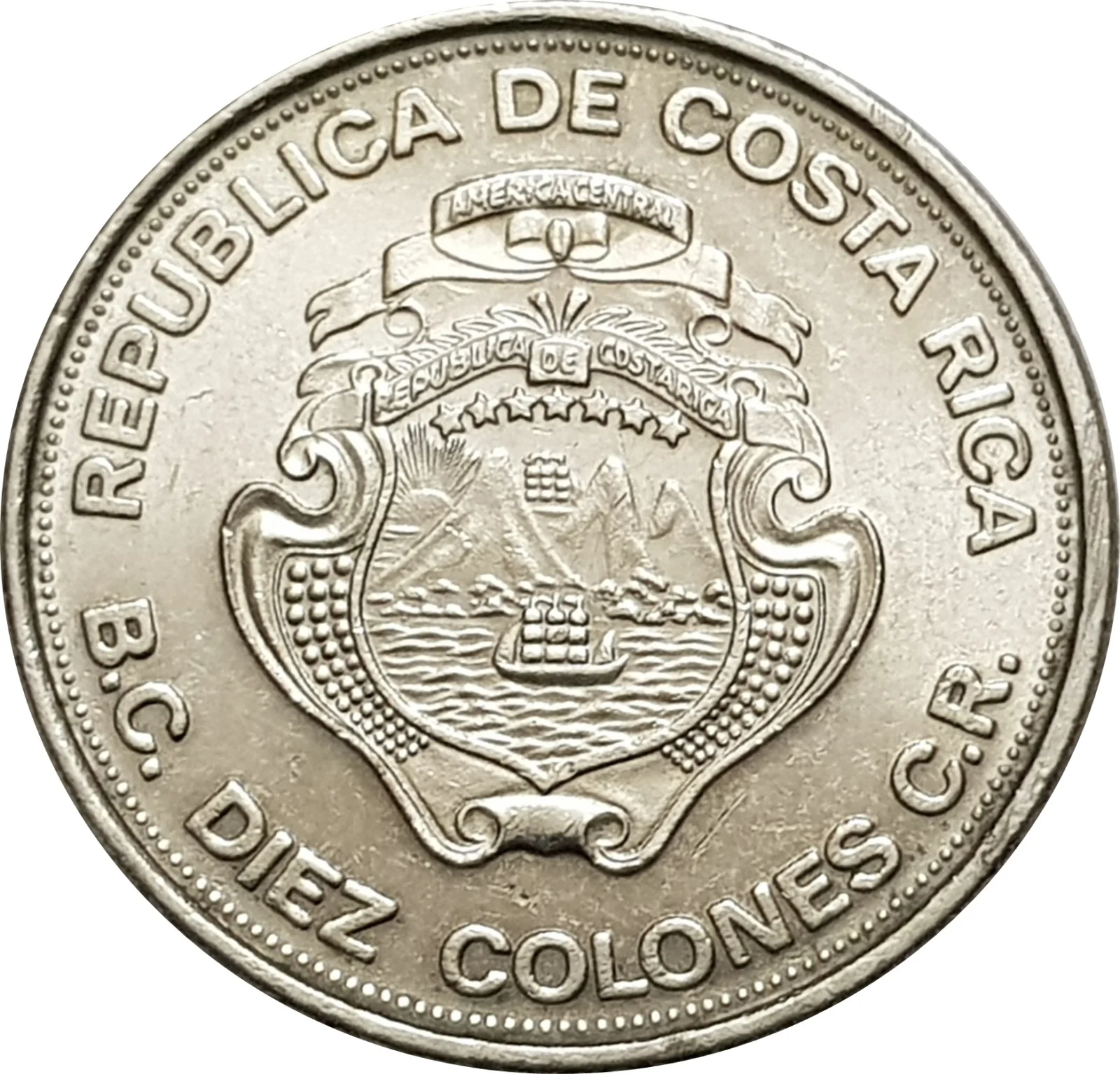
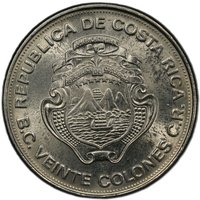
Costa Rica's coat of arms features seven stars for its provinces, three volcanoes for its mountain ranges, two ships for its position between the Atlantic and Pacific, and a sunrise.
Inscription:
REPUBLICA DE COSTA RICA
AMERICA CENTRAL
REPUBLICA DE COSTA RICA
B.C. DIEZ COLONES C.R.
AMERICA CENTRAL
REPUBLICA DE COSTA RICA
B.C. DIEZ COLONES C.R.
Translation:
REPUBLIC OF COSTA RICA
CENTRAL AMERICA
REPUBLIC OF COSTA RICA
B.C. TEN COLONES C.R.
CENTRAL AMERICA
REPUBLIC OF COSTA RICA
B.C. TEN COLONES C.R.
Script: Latin
Language: Spanish
Reverse
Edge
Reeded
Categories
| Symbols> Coat of Arms |
| Geography> Mountain |
| Plant> Tree |
| Transportation> Watercraft |
Mints
| Name | Mark |
|---|---|
| VDM Metals / Vereinigte Deutsche Metallwerke | — |
Mintings
| Year | Mint Mark | Mintage | Quality | Collection |
|---|---|---|---|---|
| 1975 | — | 495,115 |
Historical background
In 1975, Costa Rica's currency situation was characterized by a managed exchange rate regime under the Bretton Woods system, with the colón pegged to the U.S. dollar. The official exchange rate was fixed at 8.57 colones per dollar, a rate that had been maintained since 1974. However, this official peg masked underlying economic pressures. The country was experiencing persistent fiscal deficits, largely financed by central bank credit, which fueled inflation and eroded the colón's real value. This created a growing divergence between the official rate and the currency's true market value, leading to pressures on foreign reserves.
Economically, the period was one of transition and strain. Costa Rica was still benefiting from the high coffee prices of the early 1970s, but this boom was beginning to wane. The first oil shock of 1973 had significantly increased import costs, worsening the trade balance and putting downward pressure on the colón. Furthermore, the expansionary fiscal policies of the administration of President Daniel Oduber, including significant public investment and social spending, contributed to growing macroeconomic imbalances. These factors collectively created a classic scenario for an overvalued currency, which discouraged exports (beyond the booming coffee sector) and encouraged imports, further depleting reserves.
Consequently, 1975 set the stage for the profound currency crisis that would erupt later in the decade. While the fixed exchange rate was officially maintained, the mounting pressures led to the emergence and growth of a parallel black market for U.S. dollars, where the colón traded at a significant discount. This disparity signaled a loss of confidence and foreshadowed the inevitable breakdown of the fixed parity. The unsustainable policies of this period ultimately culminated in a major economic crisis in the early 1980s, necessitating a devaluation, the adoption of a crawling peg system, and structural adjustment programs supported by the International Monetary Fund.
Economically, the period was one of transition and strain. Costa Rica was still benefiting from the high coffee prices of the early 1970s, but this boom was beginning to wane. The first oil shock of 1973 had significantly increased import costs, worsening the trade balance and putting downward pressure on the colón. Furthermore, the expansionary fiscal policies of the administration of President Daniel Oduber, including significant public investment and social spending, contributed to growing macroeconomic imbalances. These factors collectively created a classic scenario for an overvalued currency, which discouraged exports (beyond the booming coffee sector) and encouraged imports, further depleting reserves.
Consequently, 1975 set the stage for the profound currency crisis that would erupt later in the decade. While the fixed exchange rate was officially maintained, the mounting pressures led to the emergence and growth of a parallel black market for U.S. dollars, where the colón traded at a significant discount. This disparity signaled a loss of confidence and foreshadowed the inevitable breakdown of the fixed parity. The unsustainable policies of this period ultimately culminated in a major economic crisis in the early 1980s, necessitating a devaluation, the adoption of a crawling peg system, and structural adjustment programs supported by the International Monetary Fund.
🌱 Common