

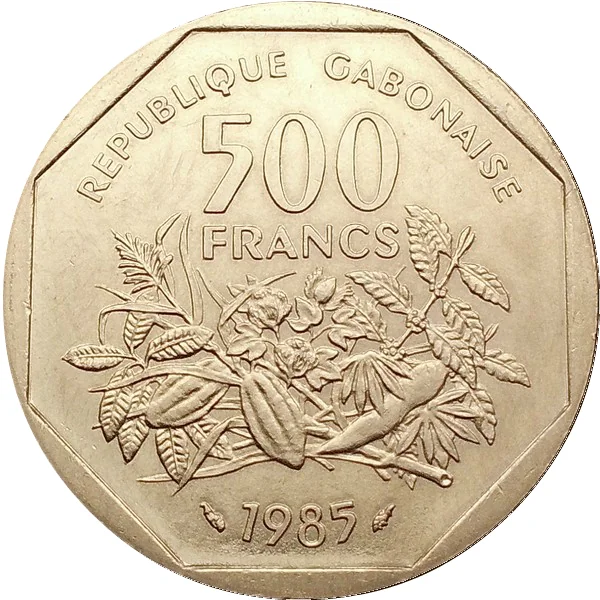
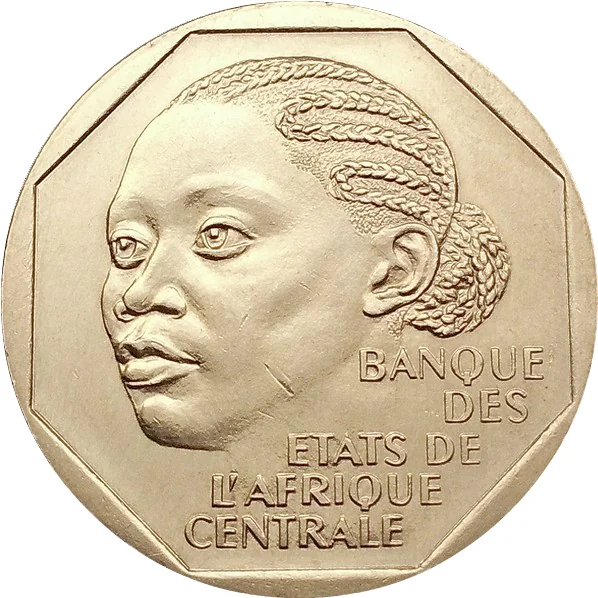
500 francs cfa – Gabon
Add to wishlist
Gabon
Context
Material
Diameter: 30 mm
Weight: 11 g
Thickness: 1.8 mm
Shape: Round
Composition: Copper-nickel
Technique: Milled
Alignment: Coin alignment
flip
References
KM: #
Numista: #9314
Value
Exchange value: 500 XAF
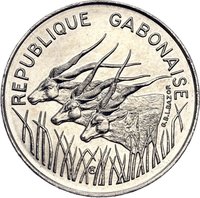
Obverse
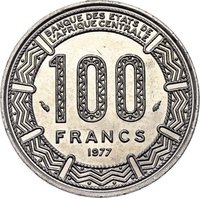
Reverse
Edge
Plain
Mints
| Name | Mark |
|---|---|
| Monnaie de Paris | — |
Mintings
| Year | Mint Mark | Mintage | Quality | Collection |
|---|---|---|---|---|
| 1985 | — | 1,500,000 |
Historical background
In 1985, Gabon's currency situation was firmly anchored within the CFA franc system, a legacy of its colonial past. As a member of the Communauté Financière Africaine (CFA), Gabon used the CFA franc (XAF), which was pegged at a fixed and guaranteed exchange rate to the French franc (FF). This peg was set at 1 French franc = 50 CFA francs, a rate established in 1948 and providing significant monetary stability. The arrangement required Gabon to deposit a substantial portion of its foreign reserves with the French Treasury, which in return guaranteed the currency's convertibility.
This stability, however, came with trade-offs and existed within a challenging economic context. Gabon was a mid-tier oil producer, and its economy was heavily dependent on crude oil exports, which accounted for the vast majority of its foreign earnings. The global oil price collapse of 1986 was imminent, but even in 1985, the country was grappling with the consequences of earlier boom-era spending and significant external debt. While the fixed peg shielded Gabon from direct currency volatility, it also limited the central bank's ability to use monetary policy, such as devaluation, to adjust to economic shocks and declining competitiveness.
Consequently, the primary economic pressures in 1985 were not manifested as a currency crisis per se, but as a growing fiscal and debt crisis within a rigid monetary framework. The fixed exchange rate, combined with high government spending, contributed to an overvalued CFA franc, which made Gabon's non-oil exports less competitive and encouraged imports. The situation created underlying strains, setting the stage for the severe austerity measures and negotiations with the IMF and World Bank that would follow in the late 1980s, as the oil price shock dramatically exposed the economy's vulnerabilities.
This stability, however, came with trade-offs and existed within a challenging economic context. Gabon was a mid-tier oil producer, and its economy was heavily dependent on crude oil exports, which accounted for the vast majority of its foreign earnings. The global oil price collapse of 1986 was imminent, but even in 1985, the country was grappling with the consequences of earlier boom-era spending and significant external debt. While the fixed peg shielded Gabon from direct currency volatility, it also limited the central bank's ability to use monetary policy, such as devaluation, to adjust to economic shocks and declining competitiveness.
Consequently, the primary economic pressures in 1985 were not manifested as a currency crisis per se, but as a growing fiscal and debt crisis within a rigid monetary framework. The fixed exchange rate, combined with high government spending, contributed to an overvalued CFA franc, which made Gabon's non-oil exports less competitive and encouraged imports. The situation created underlying strains, setting the stage for the severe austerity measures and negotiations with the IMF and World Bank that would follow in the late 1980s, as the oil price shock dramatically exposed the economy's vulnerabilities.
🌱 Fairly Common