

½ penny – Ghana
Add to wishlist
Ghana
Context
Year: 1958
Issuer: Ghana
Ruler: Elizabeth II
Currency:
(1958—1965)
Demonetization: 17 September 1966
Total mintage: 32,220,000
Material
References
KM: #
Numista: #9295
Obverse
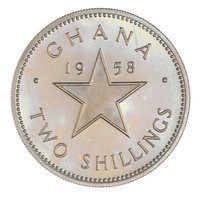
Description:
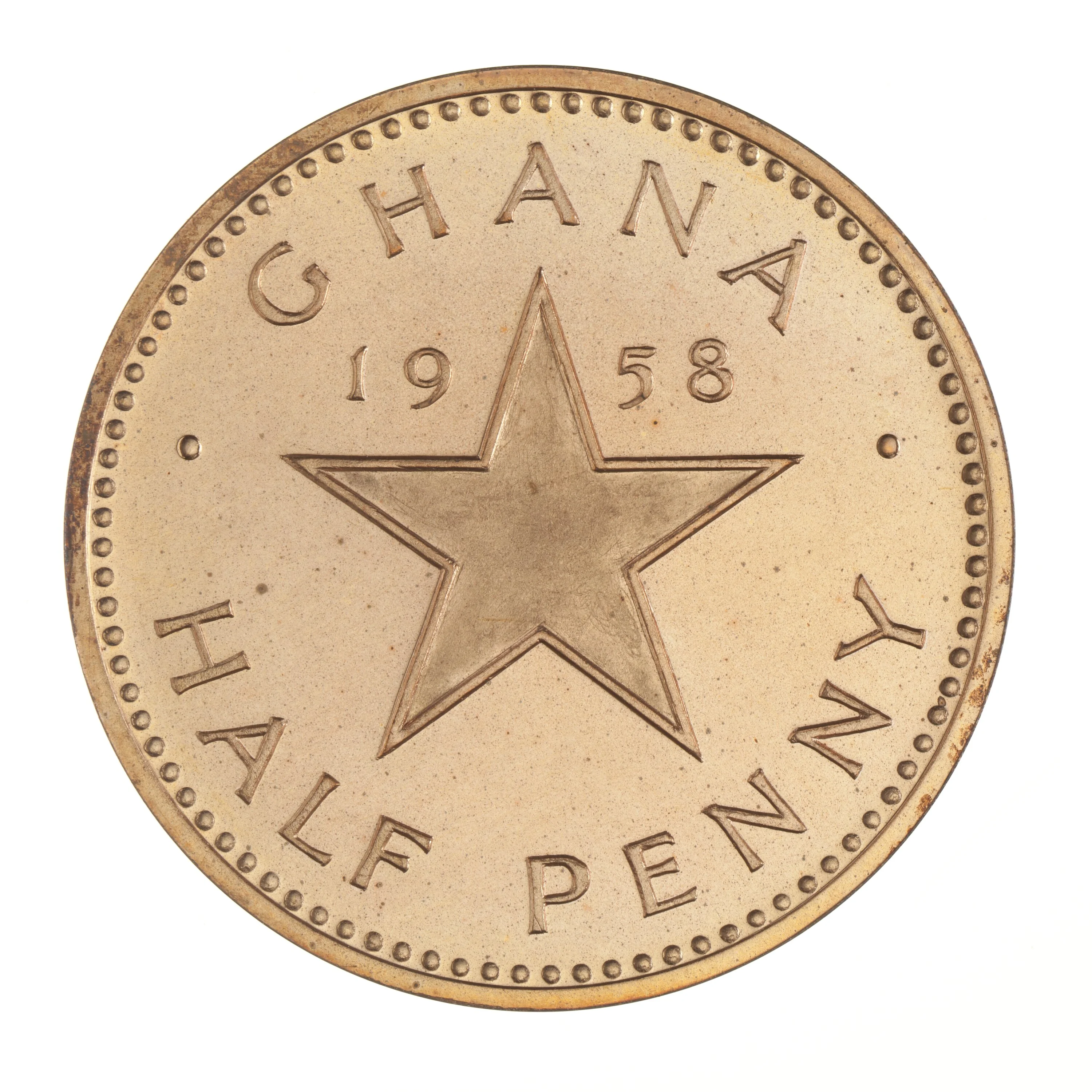
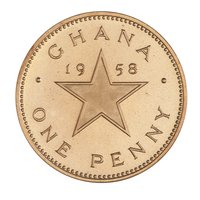
Star rating below date.
Inscription:
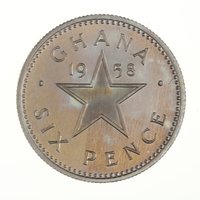
GHANA
1958
HALF PENNY
1958
HALF PENNY
Translation:
GHANA
1958
HALF PENNY
1958
HALF PENNY
Script: Latin
Language: English
Engraver: P.K.K. Quaidoo
Reverse
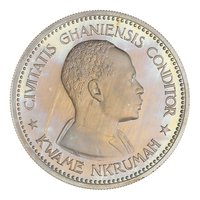
Description:
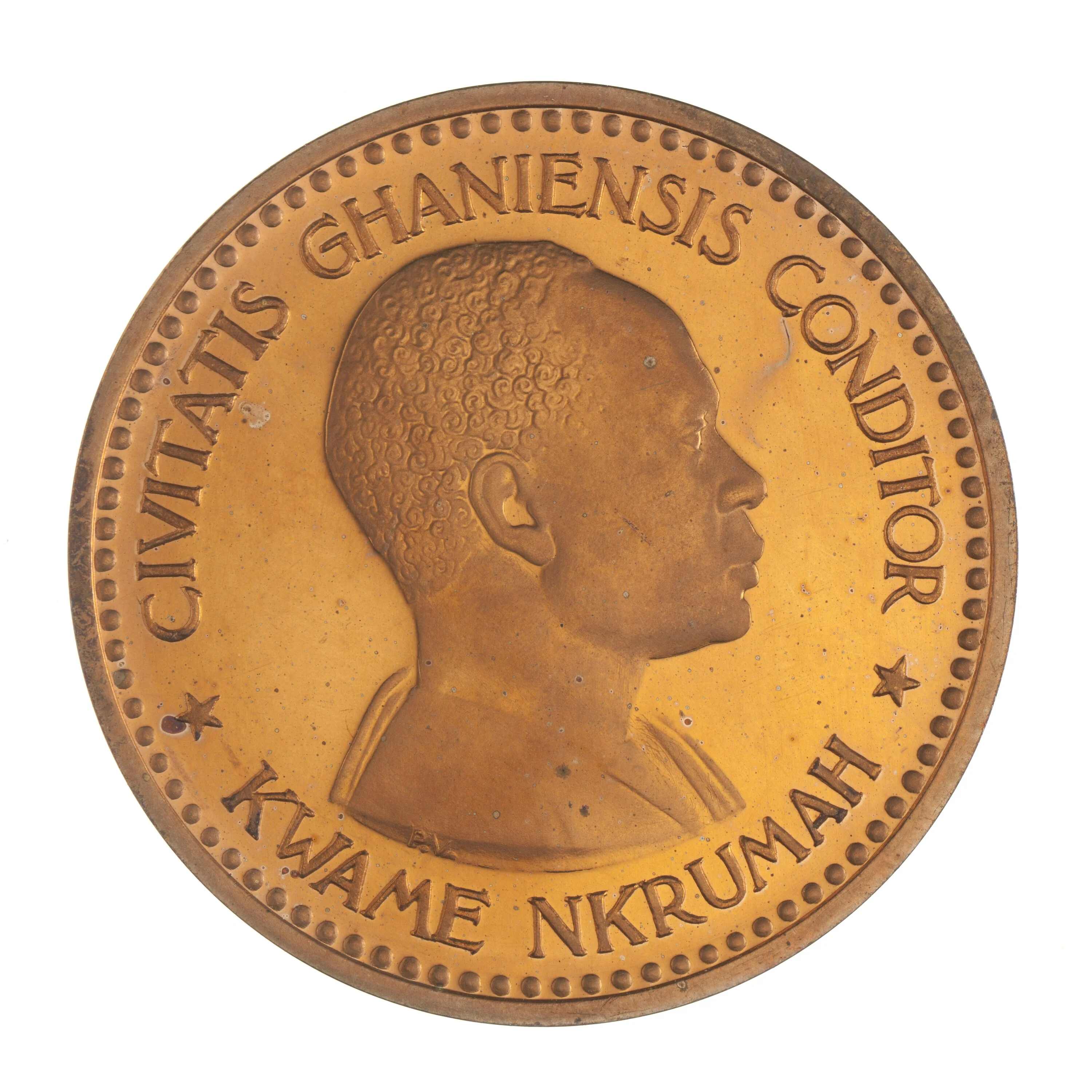
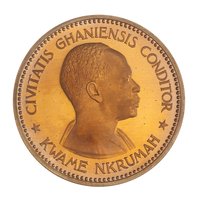
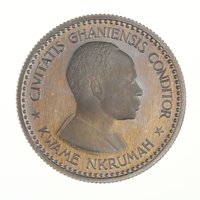
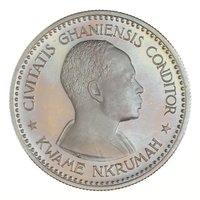
Kwame Nkrumah bust, right profile.
Inscription:
CIVITATIS GHANIENSIS CONDITOR
P.V.
KWAME NKRUMAH
P.V.
KWAME NKRUMAH
Translation:
Founder of the Nation of Ghana
P.V.
KWAME NKRUMAH
P.V.
KWAME NKRUMAH
Script: Latin
Engraver: Paul Vincze
Edge
Plain
Categories
| Person> Politician |
Mints
| Name | Mark |
|---|---|
| Royal Mint (Tower Hill) | — |
Mintings
| Year | Mint Mark | Mintage | Quality | Collection |
|---|---|---|---|---|
| 1958 | — | 32,200,000 | ||
| 1958 | — | 20,000 | Proof |
Historical background
In 1958, Ghana's currency situation was defined by its recent independence and the ongoing process of establishing full monetary sovereignty. The nation, having gained independence from Britain in 1957, still operated within the colonial monetary framework of the West African Currency Board (WACB). This system pegged the West African pound to the British pound sterling, with currency issuance fully backed by sterling reserves held in London. While this provided stability and facilitated international trade, it meant Ghana had no control over its own monetary policy, interest rates, or money supply, limiting the government's ability to finance its ambitious development plans.
Prime Minister Kwame Nkrumah's government viewed this arrangement as an unacceptable vestige of colonial economic control. The desire for a national currency was both a symbolic assertion of sovereignty and a practical necessity for the state-led industrialization and modernization projects outlined in the country's first development plan. Consequently, 1958 was a year of active preparation and legislative groundwork. The Bank of Ghana Ordinance was passed in February, paving the way for the establishment of a central bank, with the explicit intent to issue a distinct Ghanaian currency and manage the country's financial affairs independently.
Thus, the currency situation in 1958 was one of transition and imminent change. The old WACB system remained technically in operation, but its days were numbered. The political and economic momentum was decisively moving toward the introduction of the Ghanaian pound, which would be launched by the new Bank of Ghana in July 1959. The period was therefore characterized by behind-the-scenes planning for the conversion, the accumulation of necessary reserves, and the building of institutional capacity, setting the stage for a major shift in the nation's economic architecture.
Prime Minister Kwame Nkrumah's government viewed this arrangement as an unacceptable vestige of colonial economic control. The desire for a national currency was both a symbolic assertion of sovereignty and a practical necessity for the state-led industrialization and modernization projects outlined in the country's first development plan. Consequently, 1958 was a year of active preparation and legislative groundwork. The Bank of Ghana Ordinance was passed in February, paving the way for the establishment of a central bank, with the explicit intent to issue a distinct Ghanaian currency and manage the country's financial affairs independently.
Thus, the currency situation in 1958 was one of transition and imminent change. The old WACB system remained technically in operation, but its days were numbered. The political and economic momentum was decisively moving toward the introduction of the Ghanaian pound, which would be launched by the new Bank of Ghana in July 1959. The period was therefore characterized by behind-the-scenes planning for the conversion, the accumulation of necessary reserves, and the building of institutional capacity, setting the stage for a major shift in the nation's economic architecture.
Series: 1958 Ghana circulation coins
🌱 Common