

½ gersh – Ethiopian Empire
Add to wishlist
Ethiopia
Context
Year: 1896
Ethiopian Year:: 1888
Country: Ethiopia
Issuer: Ethiopian Empire
Ruler: Menelik II
Currency:
(1893—1931)
Demonetized: Yes
Total mintage: 200
References
KM: #
Numista: #92606
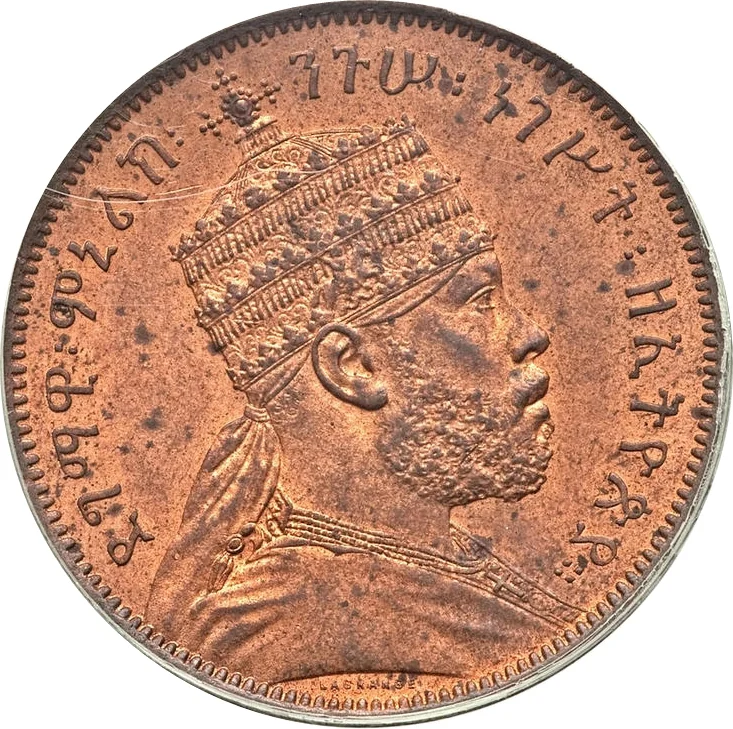
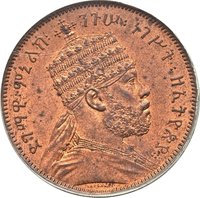
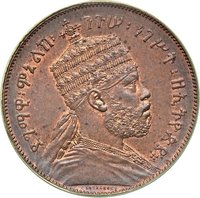
Obverse
Description:
Crowned right-facing bust.
Inscription:
ዳግማዊ፡ምኒልክ፡ ንጉሠ ፡ ነገሥት ፡ ዘኢትዮጵያ።
LA GRANGE
LA GRANGE
Translation:
Menelik II, King of Kings of Ethiopia.
La Grange.
La Grange.
Engraver: Jean Lagrange
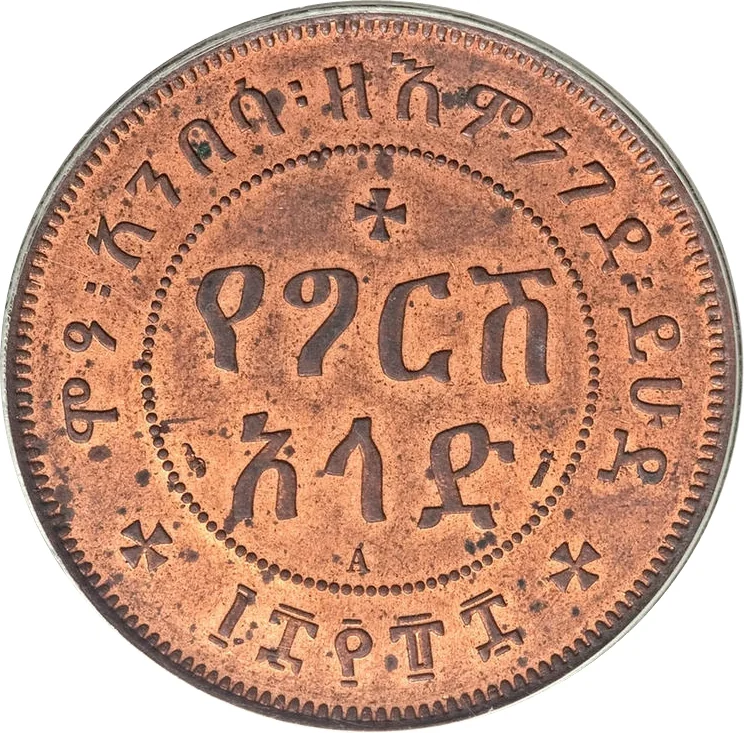
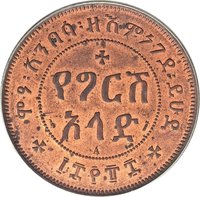
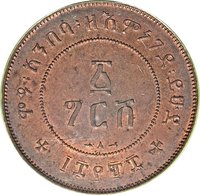
Reverse
Description:
Central denomination
Inscription:
ሞዓ ፡ አንበሳ ፡ ዘእምነገደ ፡ ይሁዳ
✠
የግርሸ
አላድ
A
✠ ፲፰፻፹፰ ✠
✠
የግርሸ
አላድ
A
✠ ፲፰፻፹፰ ✠
Translation:
Moa Anbessa of the Tribe of Judah.
✠
Yergershe
Alad
A
✠ 1888 ✠
✠
Yergershe
Alad
A
✠ 1888 ✠
Engraver: Jean Lagrange
Edge
Mints
| Name | Mark |
|---|---|
| Monnaie de Paris | (A) |
Mintings
| Year | Mint Mark | Mintage | Quality | Collection |
|---|---|---|---|---|
| 1896 | — | 200 |
Historical background
In 1896, the Ethiopian Empire under Emperor Menelik II operated with a complex and fragmented monetary system, a reflection of its diverse economic ties and sovereign ambitions. The primary circulating currency was the Maria Theresa thaler (MT$), a large silver coin minted in Austria but used extensively across the Horn of Africa and the Red Sea trade routes. Its consistent silver content and recognizable image made it the de facto standard for large transactions and state finance. Alongside the thaler, a variety of older domestic coinage, barter, and commodity money (like salt bars called amole) facilitated local and regional trade, creating a multi-layered economy.
This dependence on a foreign-minted coin posed a significant political and economic challenge. Menelik II saw a unified, national currency as essential for modern statehood, economic independence, and asserting Ethiopia's prestige following his decisive victory over Italy at the Battle of Adwa in March 1896. Prior to this, he had already taken steps toward monetary reform, authorizing the first modern Ethiopian coins—copper besa and silver gersh—from the Paris Mint in 1894. However, these new coins struggled to gain public trust and circulate widely against the entrenched thaler.
Therefore, the post-Adwa period in 1896 was a pivotal moment of transition. The military triumph bolstered Menelik's authority and accelerated his modernization projects, including the drive for a sovereign currency. The situation was one of a deliberate, state-led push to replace the heterogeneous system with a decimalized national coinage (ultimately leading to the birr), while the practical reality on the ground remained dominated by the venerable Maria Theresa thaler and traditional forms of money. The currency landscape thus mirrored the empire itself: a historic African power consciously forging a centralized modern identity while managing deep-rooted and diverse economic traditions.
This dependence on a foreign-minted coin posed a significant political and economic challenge. Menelik II saw a unified, national currency as essential for modern statehood, economic independence, and asserting Ethiopia's prestige following his decisive victory over Italy at the Battle of Adwa in March 1896. Prior to this, he had already taken steps toward monetary reform, authorizing the first modern Ethiopian coins—copper besa and silver gersh—from the Paris Mint in 1894. However, these new coins struggled to gain public trust and circulate widely against the entrenched thaler.
Therefore, the post-Adwa period in 1896 was a pivotal moment of transition. The military triumph bolstered Menelik's authority and accelerated his modernization projects, including the drive for a sovereign currency. The situation was one of a deliberate, state-led push to replace the heterogeneous system with a decimalized national coinage (ultimately leading to the birr), while the practical reality on the ground remained dominated by the venerable Maria Theresa thaler and traditional forms of money. The currency landscape thus mirrored the empire itself: a historic African power consciously forging a centralized modern identity while managing deep-rooted and diverse economic traditions.
✨ Legendary