

10 Bututs – The Gambia
Gambia
Context
Year: 1971
Country: Gambia 
Issuer: The Gambia
Period:
(since 1970)
Currency:
(since 1971)
Total mintage: 3,032,000
Material
References
KM: #Click to copy to clipboard10
Numista: #925
Value
Exchange value: 0.10 GMD
Obverse
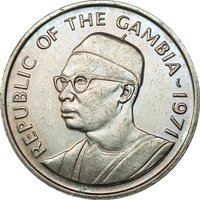
Description:
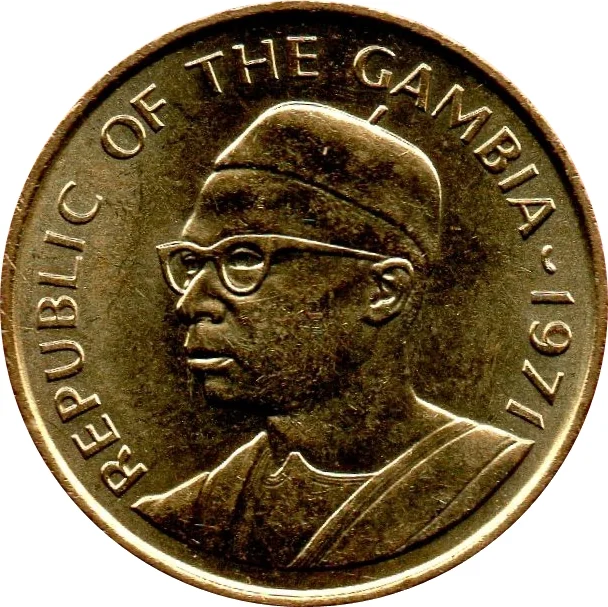
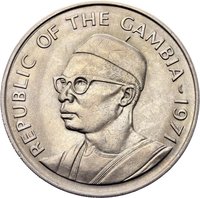
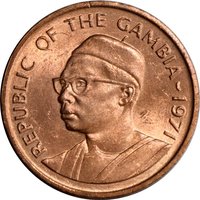
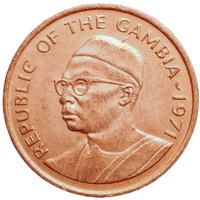
Official portrait of President Sir Dawda Jawara
Inscription:
REPUBLIC OF THE GAMBIA ~ 1971
Script: Latin
Engraver: Michael Rizzello
Reverse
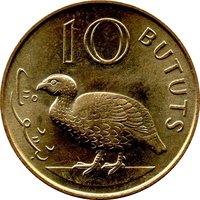
Description:
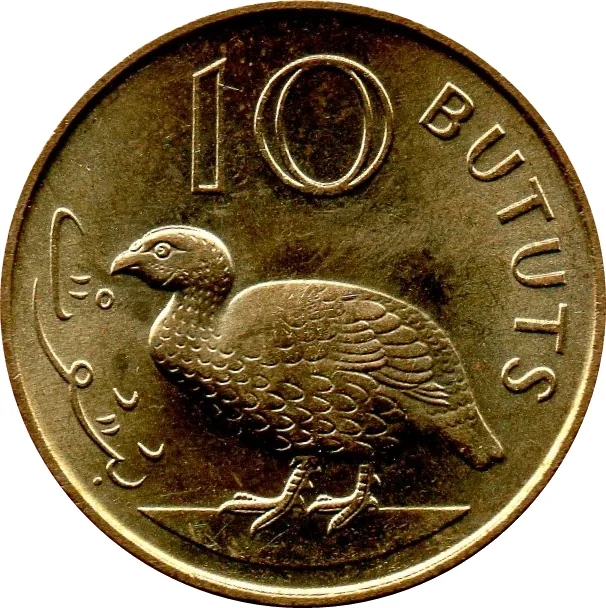
Double-spurred francolin (right)
Inscription:
10 BUTUTS
بتوت
بتوت
Translation:
Ten Bututs
Language: Arabic
Engraver: Michael Rizzello
Edge
Plain
Categories
| Animal> Bird |
| Person> Politician |
Mints
| Name | Mark |
|---|---|
| Royal Mint | — |
Mintings
| Year | Mint Mark | Mintage | Quality | Collection |
|---|---|---|---|---|
| 1971 | — | 3,000,000 | ||
| 1971 | — | 32,000 | Proof |
Historical background
In 1971, The Gambia's currency situation was defined by its recent independence and its continued economic ties to the United Kingdom. Having gained sovereignty in 1965, the nation initially used the British West African pound and then the Gambian pound, which remained pegged at par to the British pound sterling. This arrangement meant The Gambia's monetary policy and currency value were effectively anchored to the UK's economy, a system that provided stability but offered little independent control over monetary affairs.
This dependency was formally addressed on July 1, 1971, with a significant monetary reform: the introduction of a new decimal currency, the dalasi. Replacing the Gambian pound at a rate of 1 pound = 5 dalasi (with 1 dalasi = 100 bututs), the change was more than a simple redenomination. It was a symbolic assertion of national identity and economic self-determination. The new banknotes and coins featured distinctly Gambian symbols and figures, moving away from British iconography.
Despite this move toward a sovereign monetary system, The Gambia remained within the sterling area, and the dalasi maintained a fixed peg to the pound sterling. Therefore, while the currency had a new name and form, its value was still directly influenced by the British economy and the fluctuations of sterling. This hybrid position in 1971—a national currency operating within a colonial-era financial framework—reflected the broader challenges of a newly independent state navigating the practicalities of economic autonomy while preserving crucial external stability.
This dependency was formally addressed on July 1, 1971, with a significant monetary reform: the introduction of a new decimal currency, the dalasi. Replacing the Gambian pound at a rate of 1 pound = 5 dalasi (with 1 dalasi = 100 bututs), the change was more than a simple redenomination. It was a symbolic assertion of national identity and economic self-determination. The new banknotes and coins featured distinctly Gambian symbols and figures, moving away from British iconography.
Despite this move toward a sovereign monetary system, The Gambia remained within the sterling area, and the dalasi maintained a fixed peg to the pound sterling. Therefore, while the currency had a new name and form, its value was still directly influenced by the British economy and the fluctuations of sterling. This hybrid position in 1971—a national currency operating within a colonial-era financial framework—reflected the broader challenges of a newly independent state navigating the practicalities of economic autonomy while preserving crucial external stability.
🌱 Very Common