

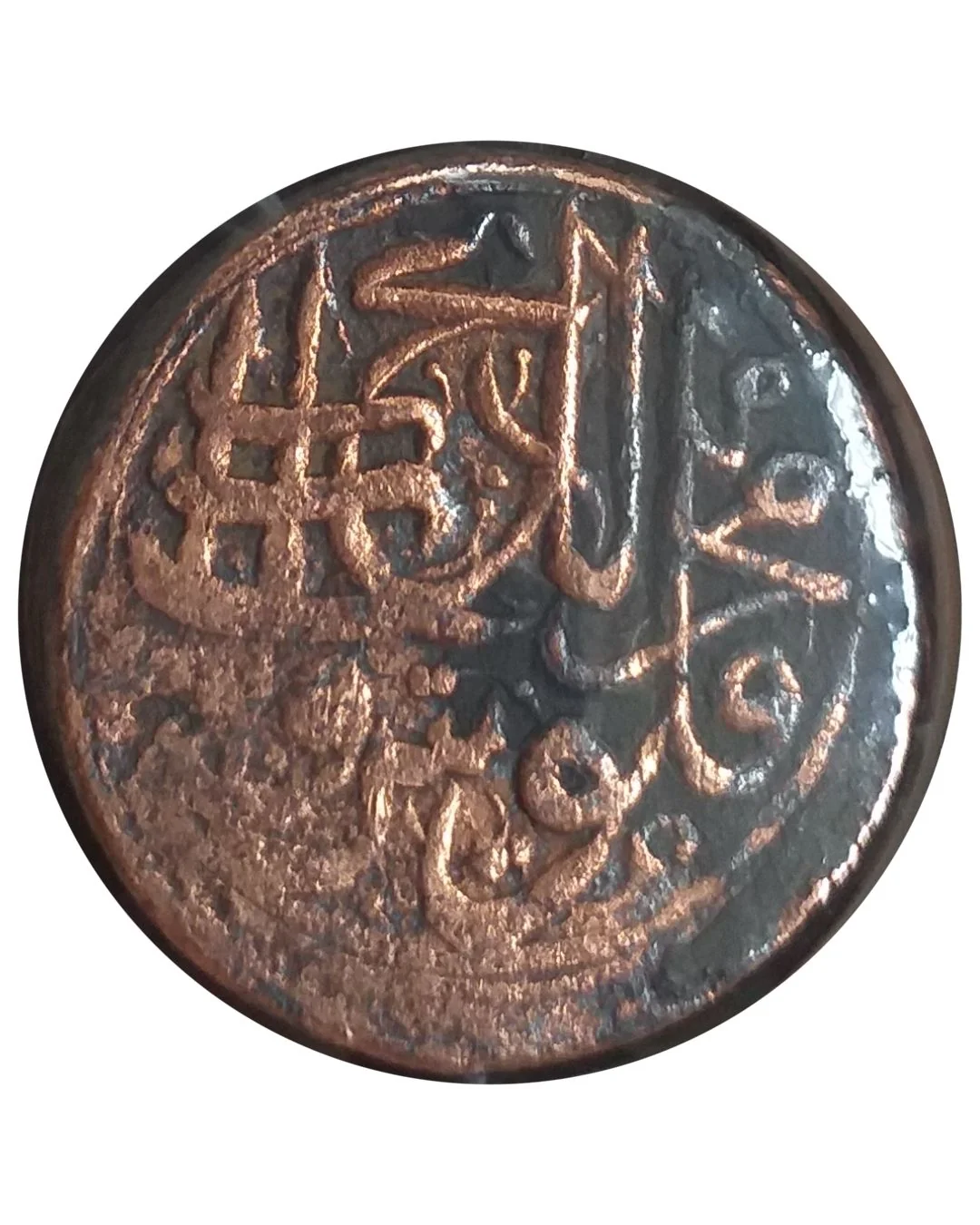
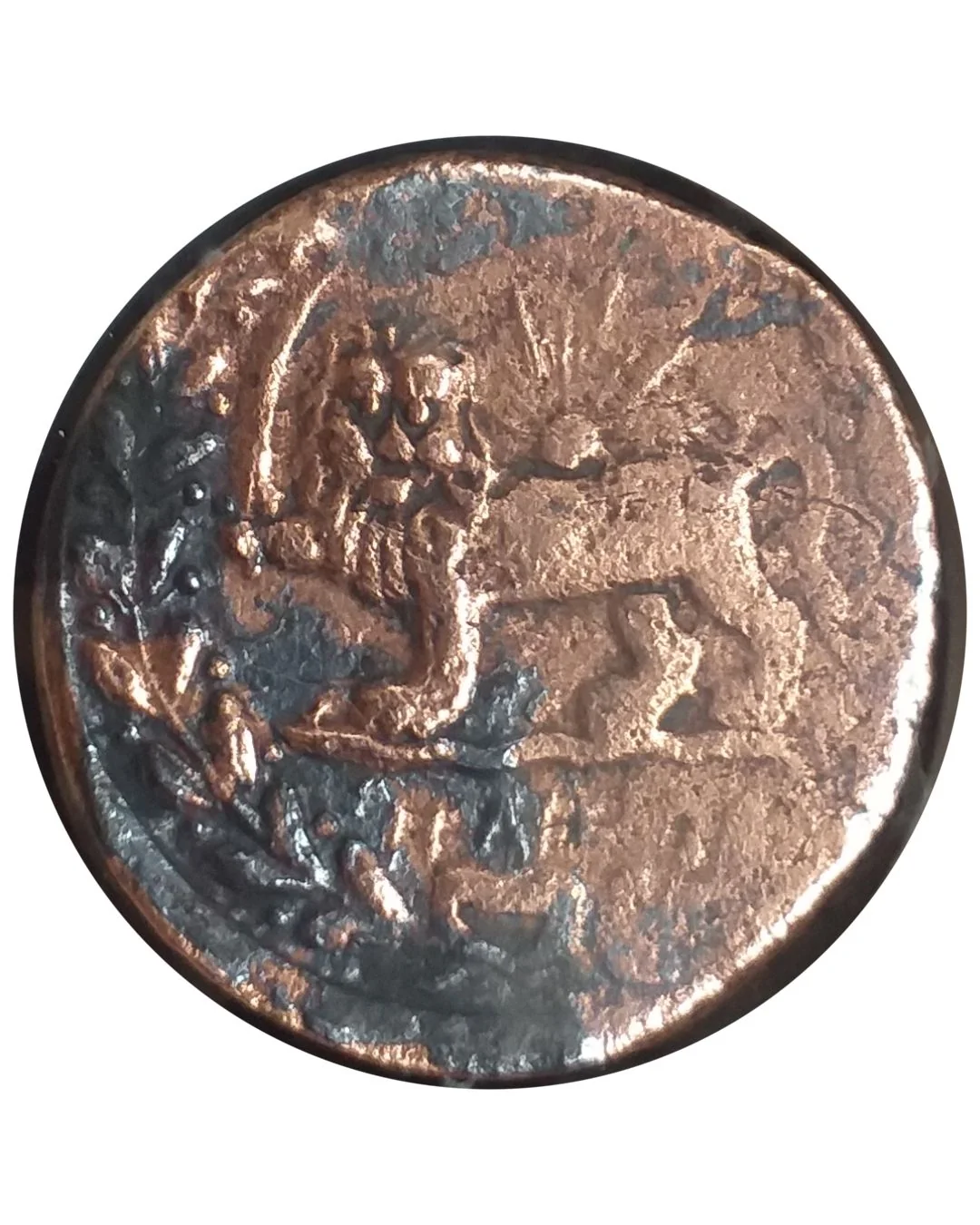
1 falus – Iran
Add to wishlist
Iran
Context
Year: 1867
Islamic (Hijri) Year:: 1283
Issuer: Iran
Ruler: Naser al-Din Shah
Currency:
(1825—1932)
Demonetized: Yes
Material
Diameter: 23 mm
Weight: 8 g
Thickness: 2 mm
Shape: Irregular round
Composition: Copper
Magnetic: No
Technique: Milled
References
KM: #
Numista: #92386
Obverse
Reverse
Edge
Mints
| Name | Mark |
|---|---|
| Tehran | — |
Mintings
| Year | Mint Mark | Mintage | Quality | Collection |
|---|---|---|---|---|
| 1867 | — | — |
Historical background
In 1867, Iran’s monetary system was in a state of profound disarray, characterized by a chaotic mix of domestic and foreign coinage. The primary unit, the silver qiran (also spelled kran), was heavily debased, with its silver content varying significantly from year to year and mint to mint. This instability was compounded by the widespread circulation of thousands of different coin types, including older Persian coins, Ottoman, Russian, and British Indian rupees, and even Maria Theresa thalers. The lack of a strong, centralized minting authority meant that provincial rulers often issued their own inferior coins, leading to a complex and unreliable exchange environment that hampered both domestic trade and foreign commerce.
The root causes of this crisis were deeply entrenched. The Qajar state, financially weakened by military defeats, costly royal extravagance, and a series of unfavorable foreign concessions, resorted to chronic debasement of the coinage to meet its budgetary shortfalls. Furthermore, the global shift toward the gold standard in the 19th century depressed the value of silver, Iran’s monetary metal, exacerbating the country's economic vulnerability. This monetary instability directly facilitated the growing influence of European powers, particularly Britain and Russia, whose banks and trading houses began to dominate financial transactions, often dealing in their own more stable currencies and further undermining confidence in the national coinage.
Consequently, the year 1867 fell within a prolonged period of monetary dysfunction that would eventually prompt attempts at reform. While major centralized changes, like the introduction of a modern rial currency, were still a few years away (formally adopted in 1932), the pressures of the 1860s highlighted the urgent need for a uniform national currency. The situation underscored how Iran’s weak fiscal governance and integration into the global economy on unequal terms had created a financial system that was fragmented, inflationary, and a significant obstacle to modern economic development.
The root causes of this crisis were deeply entrenched. The Qajar state, financially weakened by military defeats, costly royal extravagance, and a series of unfavorable foreign concessions, resorted to chronic debasement of the coinage to meet its budgetary shortfalls. Furthermore, the global shift toward the gold standard in the 19th century depressed the value of silver, Iran’s monetary metal, exacerbating the country's economic vulnerability. This monetary instability directly facilitated the growing influence of European powers, particularly Britain and Russia, whose banks and trading houses began to dominate financial transactions, often dealing in their own more stable currencies and further undermining confidence in the national coinage.
Consequently, the year 1867 fell within a prolonged period of monetary dysfunction that would eventually prompt attempts at reform. While major centralized changes, like the introduction of a modern rial currency, were still a few years away (formally adopted in 1932), the pressures of the 1860s highlighted the urgent need for a uniform national currency. The situation underscored how Iran’s weak fiscal governance and integration into the global economy on unequal terms had created a financial system that was fragmented, inflationary, and a significant obstacle to modern economic development.

✨ Legendary