

20 Pence – Isle of Man
Context
Years: 1982–1983
Country: British Crown dependencies
Issuer: Isle of Man 
Ruler: Elizabeth II
Currency:
(since 1971)
Total mintage: 500
Material
Diameter: 21.4 mm
Weight: 11.3 g
Platinum weight: 10.73 g
Shape: Equilateral curve heptagon
Composition: 95% Platinum
Technique: Milled
Alignment: Medal alignment
flip
References
KM: #Click to copy to clipboard90c
Numista: #92172
Value
Exchange value: 0.20 IMP
Bullion value: $0.00
Obverse
Description:
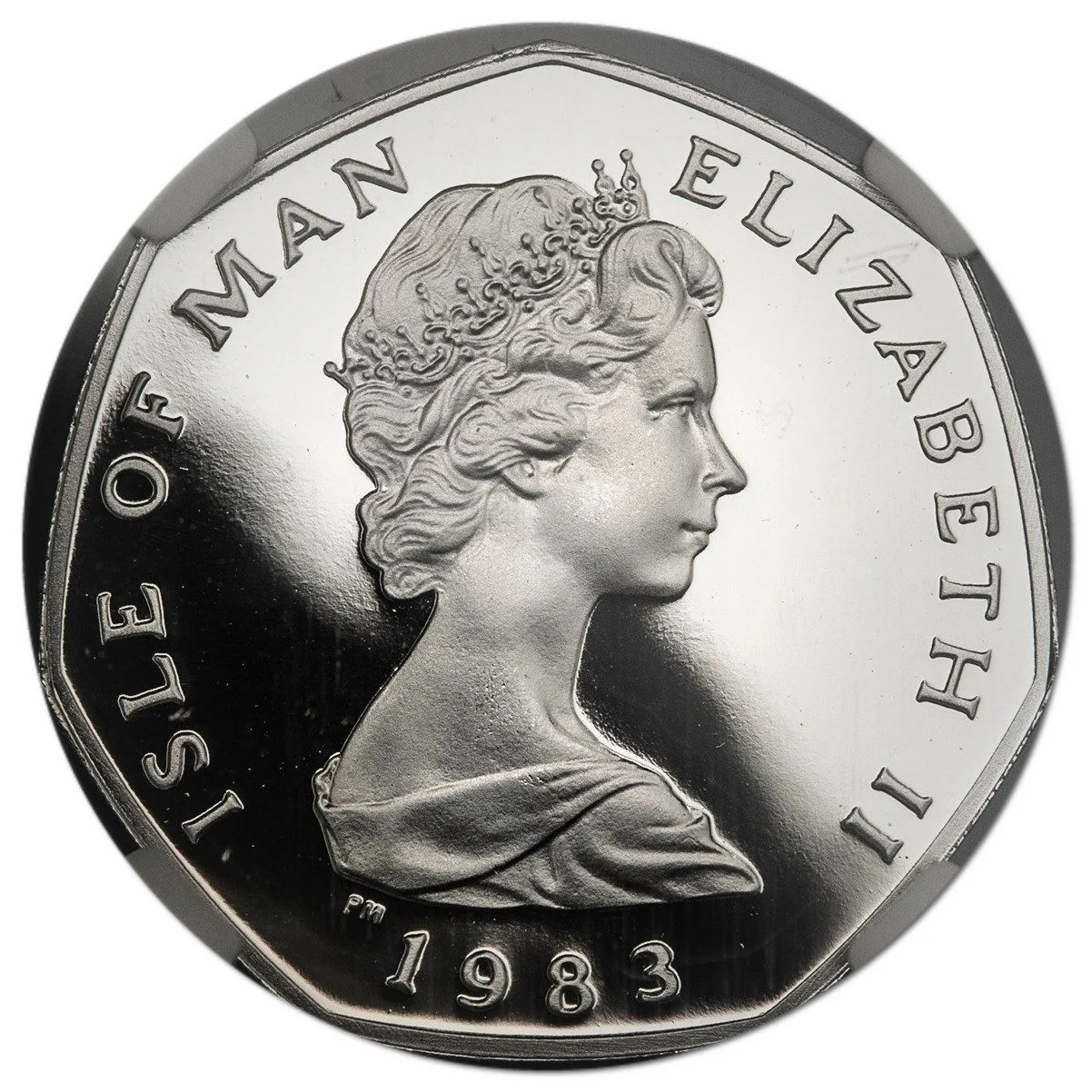
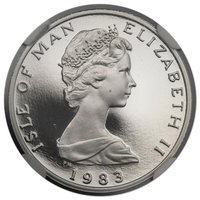
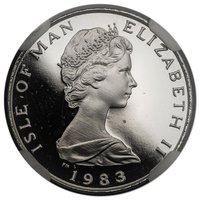
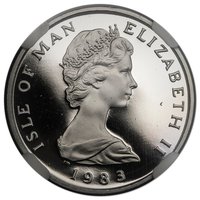
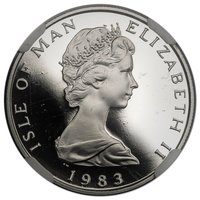
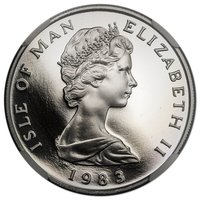
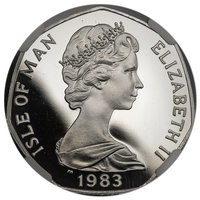
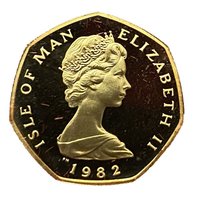
Queen Elizabeth II facing right, wearing the Girls of Great Britain and Ireland Tiara, with legend surrounding and date beneath.
Inscription:
ISLE OF MAN ELIZABETH II
PM
1983
PM
1983
Translation:
ISLE OF MAN ELIZABETH II
By the Grace of God, Queen, Defender of the Faith
1983
By the Grace of God, Queen, Defender of the Faith
1983
Script: Latin
Engraver: Arnold Machin
Reverse
Description:
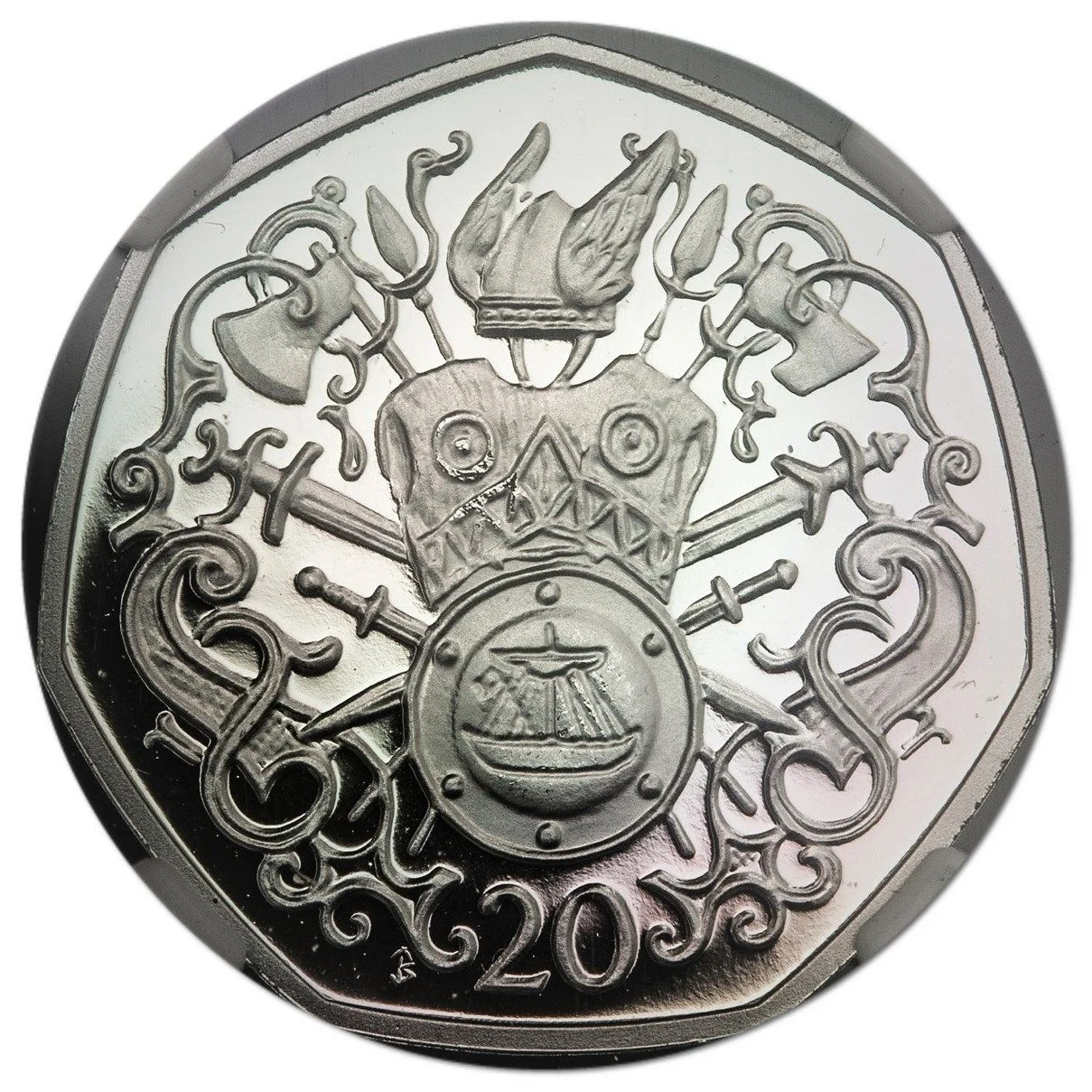
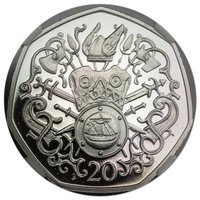
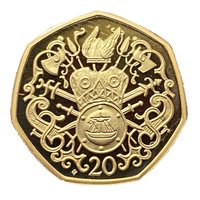
A montage of 9th-13th century Norse arms and armor, featuring a winged helmet, breastplate, broadswords, spears, axes, daggers, and a shield with a galley emblem.
Inscription:
20
Script: Latin
Engraver: Leslie Lindsay
Edge
Plain
Categories
| Object> Armour |
| Transportation> Watercraft |
| Object> Cold weapons |
Mints
| Name | Mark |
|---|---|
| Pobjoy Mint | (PM) |
Mintings
| Year | Mint Mark | Mintage | Quality | Collection |
|---|---|---|---|---|
| 1982 | PM | 500 | Proof | |
| 1983 | PM | — | Proof |
Historical background
In 1982, the Isle of Man enjoyed a unique and stable currency situation, defined by its long-standing relationship with the United Kingdom. The Manx government issued its own distinct banknotes and coins, denominated in pounds sterling, which circulated alongside Bank of England notes. This system, established under the Isle of Man Currency Act of 1961, was underpinned by a strict requirement: the Isle of Man government had to hold an equivalent amount of sterling reserves for every Manx pound note issued, ensuring a 1:1 parity with the UK pound. This peg provided economic stability and guaranteed acceptance of Manx currency across the British Isles.
The year 1982 fell within a period of significant economic transition for the UK, marked by high inflation and industrial restructuring under Prime Minister Margaret Thatcher. However, the Isle of Man's economy was beginning to diverge, actively developing its offshore financial services sector. This growing industry benefited from the currency peg, which offered predictability for international business and banking, while the island's fiscal autonomy allowed it to set its own tax rates. The stability of the sterling link was therefore crucial, providing a trusted monetary foundation for this new economic strategy.
Consequently, there was no "currency crisis" on the island in 1982. Instead, the situation was one of deliberate and managed dependency. The Manx authorities maintained full control over the design and issuance of their physical currency, a key symbol of national identity, while ceding broader monetary policy to the Bank of England. This arrangement allowed the Isle of Man to benefit from the credibility of a major currency while fostering the low-tax, finance-led economic model that would define its prosperity in the coming decades.
The year 1982 fell within a period of significant economic transition for the UK, marked by high inflation and industrial restructuring under Prime Minister Margaret Thatcher. However, the Isle of Man's economy was beginning to diverge, actively developing its offshore financial services sector. This growing industry benefited from the currency peg, which offered predictability for international business and banking, while the island's fiscal autonomy allowed it to set its own tax rates. The stability of the sterling link was therefore crucial, providing a trusted monetary foundation for this new economic strategy.
Consequently, there was no "currency crisis" on the island in 1982. Instead, the situation was one of deliberate and managed dependency. The Manx authorities maintained full control over the design and issuance of their physical currency, a key symbol of national identity, while ceding broader monetary policy to the Bank of England. This arrangement allowed the Isle of Man to benefit from the credibility of a major currency while fostering the low-tax, finance-led economic model that would define its prosperity in the coming decades.
Series: 1980 series - platinum
✨ Legendary