

75 Dollars – Canada
Non-circulating coins
Commemoration: Vancouver 2010 Winter Olympic Games
Series: 2010 Winter Olympics, Vancouver
Canada
Context

Material
References
KM: #Click to copy to clipboard749
Numista: #10385
Value
Exchange value: 75 CAD = $54.85
Bullion value: $1169.95
Inflation-adjusted value: 111.24 CAD
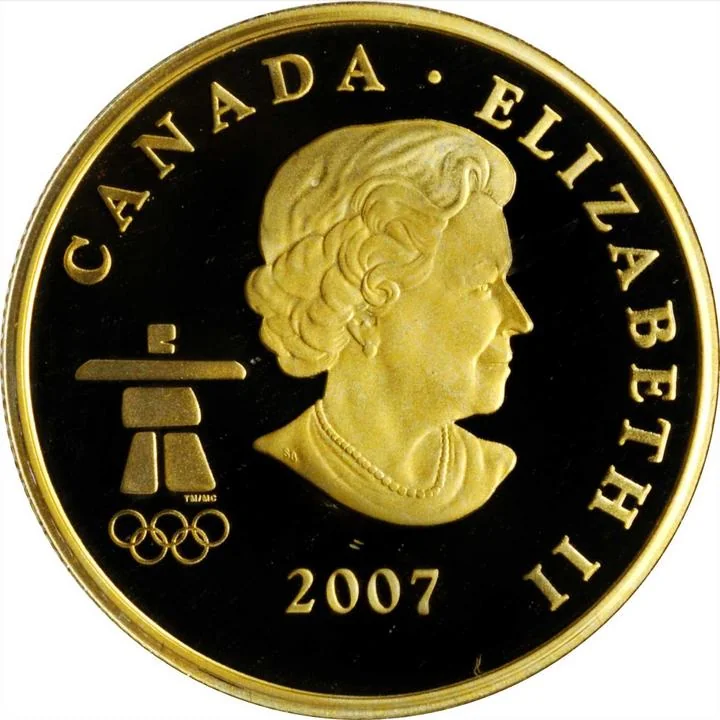
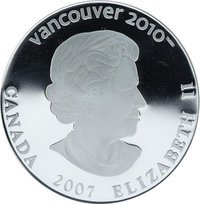
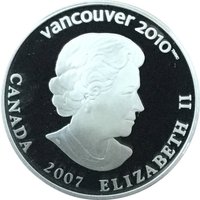
Obverse
Description:
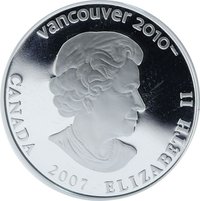
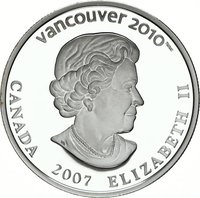
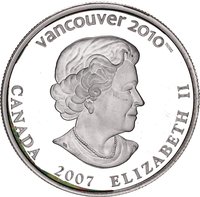
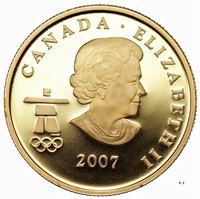
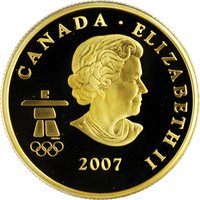
Queen Elizabeth II at 77, facing right, wearing necklace and earrings. Vancouver 2010 Olympic logo at left.
Inscription:
CANADA • ELIZABETH II
2007
2007
Script: Latin
Engraver: Susan Taylor
Designer: Susanna Blunt
Reverse
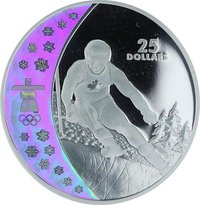
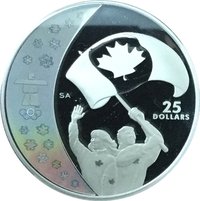
Description:
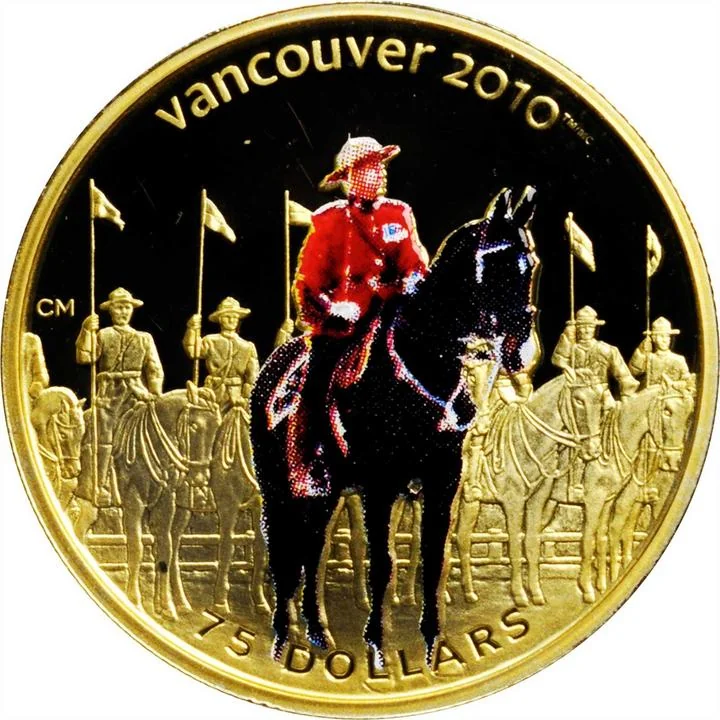
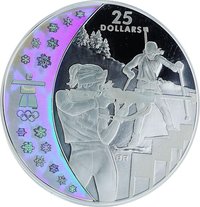
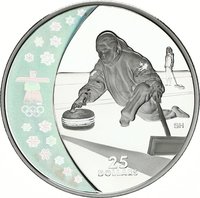
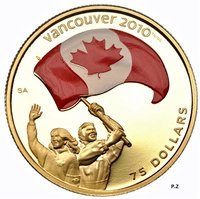
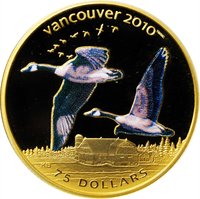
RCMP officer on horseback in color.
Inscription:
Vancouver 2010
75 DOLLARS
75 DOLLARS
Script: Latin
Designer: Cecily Mok
Edge
Serrated
Categories
| Animal> Horse |
| Sport> Winter Olympic Games |
Mints
| Name | Mark |
|---|---|
| Royal Canadian Mint of Ottawa | — |
Mintings
| Year | Mint Mark | Mintage | Quality | Collection |
|---|---|---|---|---|
| 2007 | — | 6,687 | Proof |
Historical background
In 2007, the Canadian dollar, often called the "loonie," experienced a dramatic and historic surge in value, reaching parity with the United States dollar for the first time in over three decades. This remarkable ascent was primarily driven by a powerful combination of high global commodity prices and a relatively weak U.S. dollar. As a major exporter of oil, natural gas, and minerals, Canada benefited enormously from the global resource boom, which increased international demand for Canadian dollars to purchase these commodities. Concurrently, concerns about the U.S. housing market and broader economy weighed on the American currency, further propelling the loonie's rise.
This newfound strength presented a complex economic picture. On one hand, it boosted consumer purchasing power for imported goods and cross-border shopping, while also making foreign acquisitions by Canadian companies more affordable. On the other hand, it posed significant challenges for Canada's export-oriented manufacturing sector, particularly the automotive and forestry industries in Ontario and Quebec. These sectors faced intense pressure as their goods became more expensive for foreign buyers, leading to plant closures and job losses. The Bank of Canada, under Governor David Dodge, was tasked with balancing these competing forces, ultimately cutting interest rates in December 2007 to cushion the economic slowdown, a move that marked the beginning of a response to both the currency's impact and the emerging global financial crisis.
The year concluded with the loonie not only achieving parity but soaring past it, peaking at an all-time high of approximately US$1.10 in November. This peak represented the culmination of a rapid five-year appreciation from a low of US$0.62 in 2002. However, the backdrop was shifting rapidly; by late 2007, early signs of the U.S. subprime mortgage crisis were emerging, which would soon erupt into a global financial panic. Thus, the currency situation of 2007 stands as a distinct, volatile chapter—a period of commodity-fueled national confidence that immediately preceded the profound global economic turmoil of 2008-2009, which would subsequently see the Canadian dollar retreat from its historic highs.
This newfound strength presented a complex economic picture. On one hand, it boosted consumer purchasing power for imported goods and cross-border shopping, while also making foreign acquisitions by Canadian companies more affordable. On the other hand, it posed significant challenges for Canada's export-oriented manufacturing sector, particularly the automotive and forestry industries in Ontario and Quebec. These sectors faced intense pressure as their goods became more expensive for foreign buyers, leading to plant closures and job losses. The Bank of Canada, under Governor David Dodge, was tasked with balancing these competing forces, ultimately cutting interest rates in December 2007 to cushion the economic slowdown, a move that marked the beginning of a response to both the currency's impact and the emerging global financial crisis.
The year concluded with the loonie not only achieving parity but soaring past it, peaking at an all-time high of approximately US$1.10 in November. This peak represented the culmination of a rapid five-year appreciation from a low of US$0.62 in 2002. However, the backdrop was shifting rapidly; by late 2007, early signs of the U.S. subprime mortgage crisis were emerging, which would soon erupt into a global financial panic. Thus, the currency situation of 2007 stands as a distinct, volatile chapter—a period of commodity-fueled national confidence that immediately preceded the profound global economic turmoil of 2008-2009, which would subsequently see the Canadian dollar retreat from its historic highs.
Series: 2010 Winter Olympics, Vancouver
💎 Extremely Rare