

25 Cents – Netherlands
Netherlands
Context
Years: 1898–1906
Issuer: Netherlands 
Ruler: Wilhelmina
Currency:
(1817—2001)
Demonetized: Yes
Total mintage: 9,200,003
Material
References
KM: #Click to copy to clipboard120
Numista: #9183
Value
Exchange value: 0.25 NLG
Bullion value: $6.48
Obverse
Description:
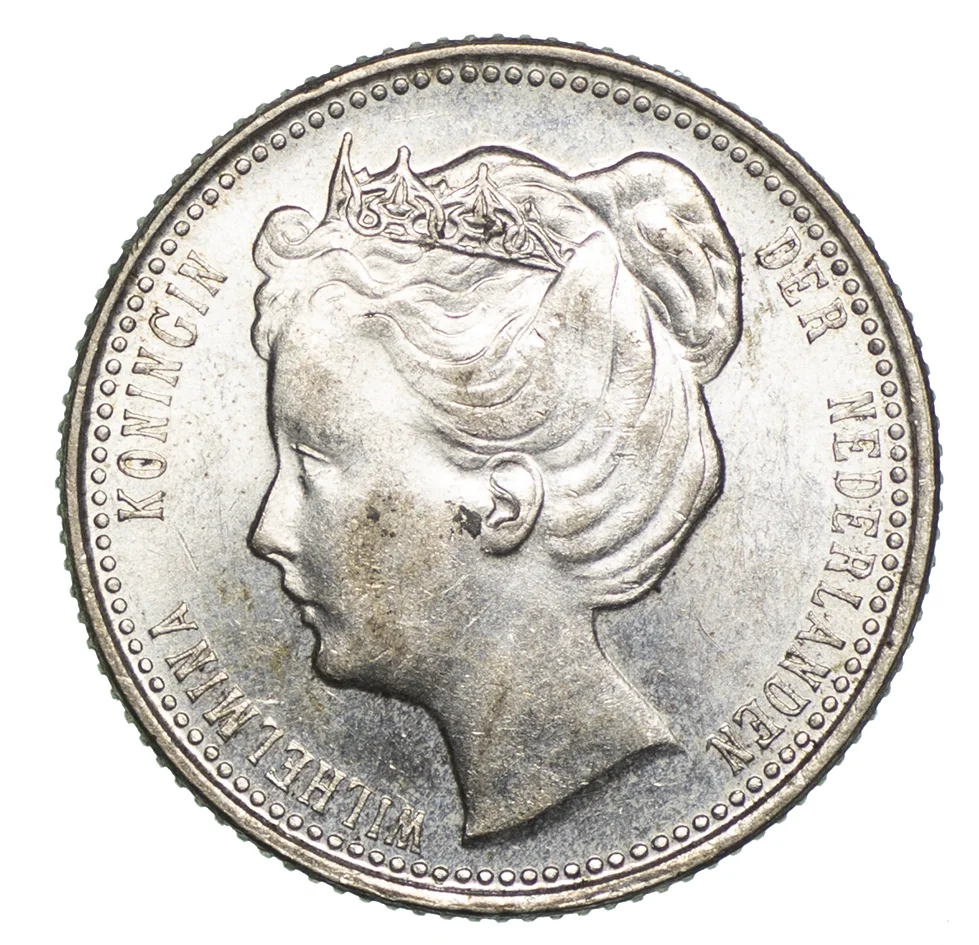
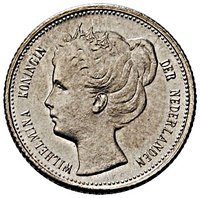
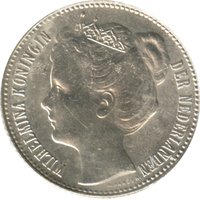
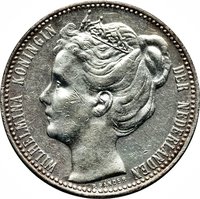
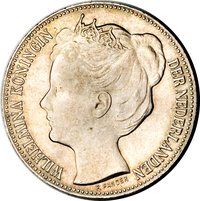
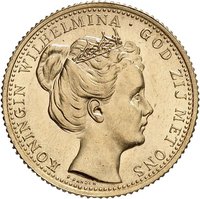
Queen Wilhelmina in tiara, facing left.
Inscription:
WILHELMINA KONINGIN DER NEDERLANDEN
Translation:
Wilhelmina Queen of the Netherlands
Script: Latin
Language: Dutch
Engraver: Pier Pander
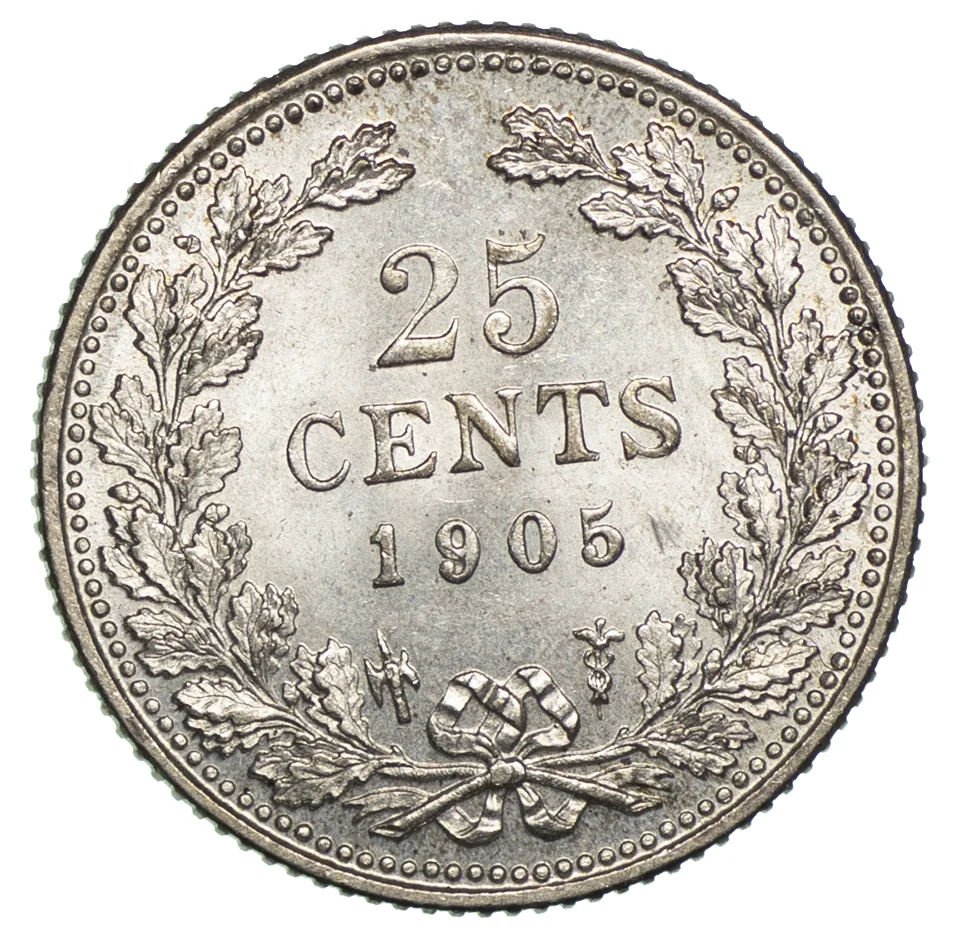
Reverse
Edge
Milled
Mints
| Name | Mark |
|---|---|
| Royal Dutch Mint | — |
Mintings
| Year | Mint Mark | Mintage | Quality | Collection |
|---|---|---|---|---|
| 1898 | — | 400,000 | ||
| 1901 | — | 1,600,000 | ||
| 1901 | — | 3 | Proof | |
| 1902 | — | 1,200,000 | ||
| 1903 | — | 1,200,000 | ||
| 1904 | — | 1,600,000 | ||
| 1905 | — | 1,200,000 | ||
| 1906 | — | 2,000,000 |
Historical background
In 1898, the Netherlands operated under a well-established gold standard, with the gulden (or guilder) as its national currency. This system, formally adopted in 1875, pegged the value of the gulden to a fixed quantity of gold, ensuring monetary stability and facilitating international trade. The currency was managed by De Nederlandsche Bank (DNB), which held substantial gold reserves to back the banknotes in circulation, although actual gold and silver coins remained in common daily use alongside paper money.
The period was one of financial conservatism and relative stability, but not without underlying tensions. The late 19th century saw ongoing debates across Europe regarding the merits of bimetallism (using both gold and silver) versus the gold standard alone. While the Netherlands was firmly in the gold camp, global fluctuations in silver prices impacted its trading relationships. Furthermore, the last decades of the century were marked by a prolonged economic depression known as the "Long Depression" (1873–1896), which had pressured prices and created deflationary tendencies, a common challenge for gold-standard economies.
Looking forward, 1898 fell in a period of quiet before a significant monetary shift. The stability of the gulden was a point of national pride, yet there were growing discussions about potential currency union with neighboring countries. These conversations would eventually culminate, decades later, in the formation of the Benelux and, ultimately, the Euro. Thus, the currency situation in 1898 represented the mature phase of a classical gold-standard regime, providing a solid but somewhat rigid framework for the Dutch economy as it entered the 20th century.
The period was one of financial conservatism and relative stability, but not without underlying tensions. The late 19th century saw ongoing debates across Europe regarding the merits of bimetallism (using both gold and silver) versus the gold standard alone. While the Netherlands was firmly in the gold camp, global fluctuations in silver prices impacted its trading relationships. Furthermore, the last decades of the century were marked by a prolonged economic depression known as the "Long Depression" (1873–1896), which had pressured prices and created deflationary tendencies, a common challenge for gold-standard economies.
Looking forward, 1898 fell in a period of quiet before a significant monetary shift. The stability of the gulden was a point of national pride, yet there were growing discussions about potential currency union with neighboring countries. These conversations would eventually culminate, decades later, in the formation of the Benelux and, ultimately, the Euro. Thus, the currency situation in 1898 represented the mature phase of a classical gold-standard regime, providing a solid but somewhat rigid framework for the Dutch economy as it entered the 20th century.
🌱 Common