

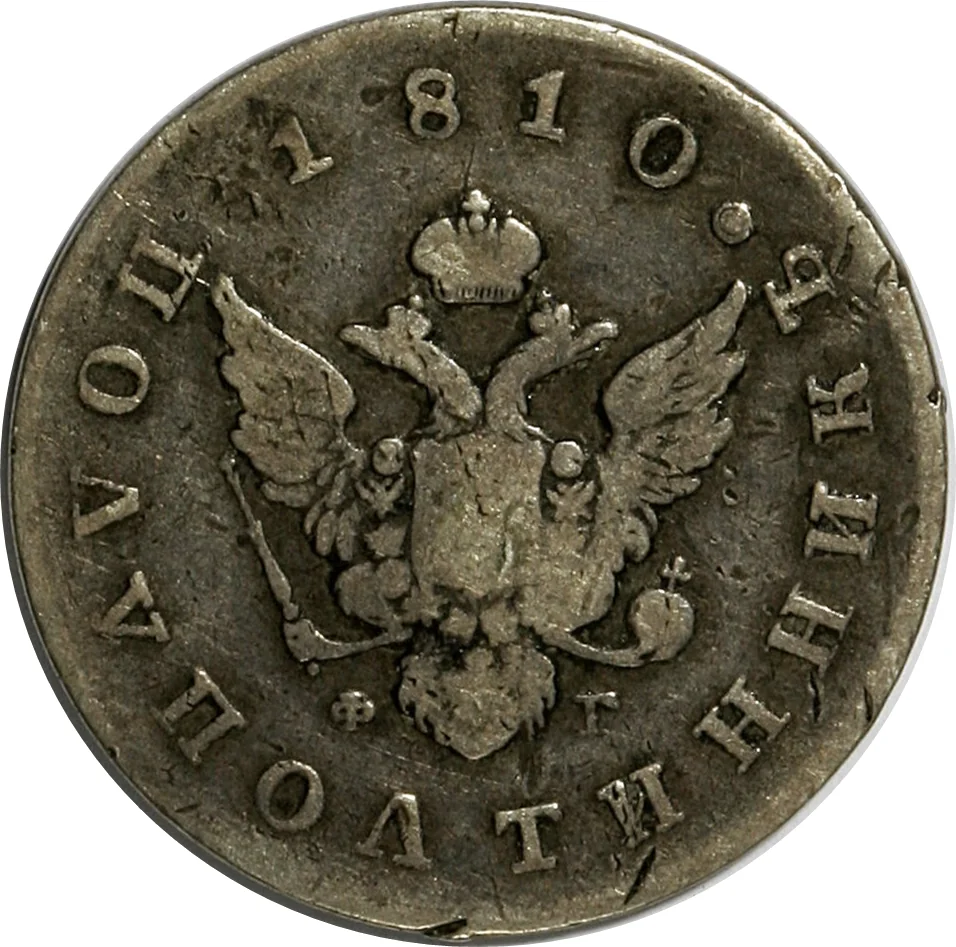
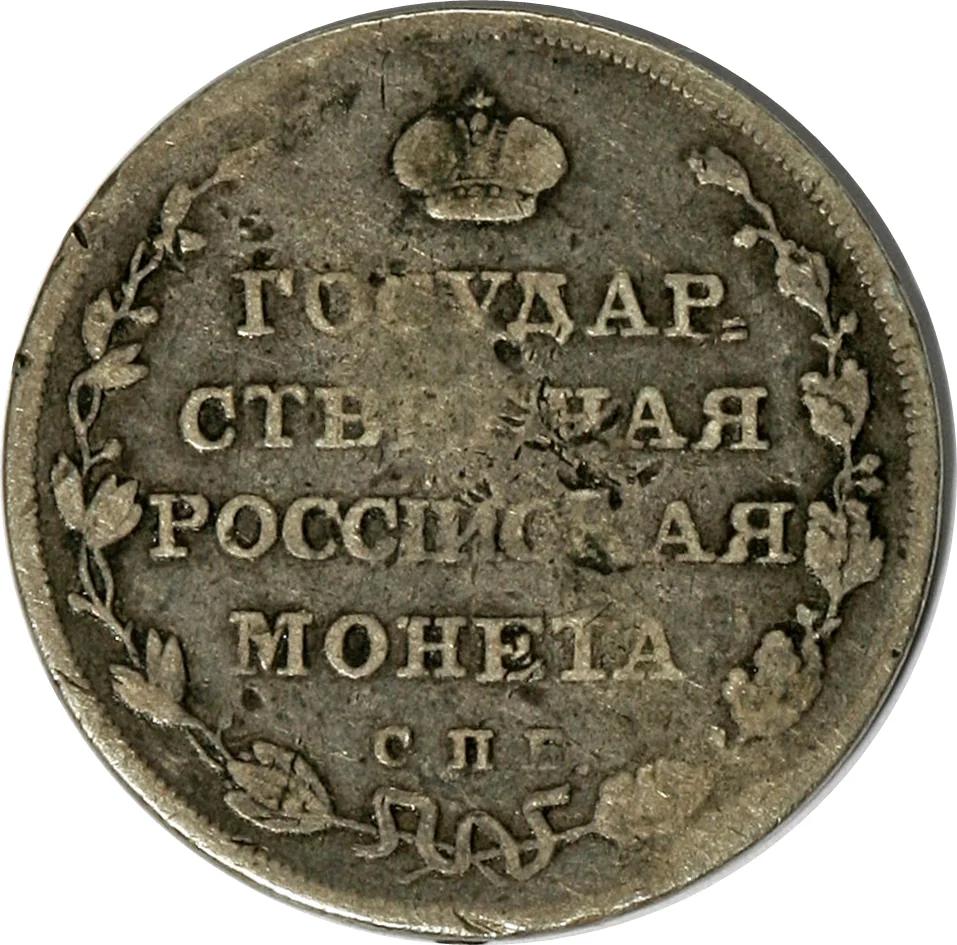
½ poltina – Russian Empire
Add to wishlist
Russia
Context
Years: 1808–1810
Country: Russia
Issuer: Russian Empire
Ruler: Alexander I
Currency:
(1700—1917)
Demonetized: Yes
Total mintage: 106,536
Material
References
Numista: #91803
Value
Bullion value: $11.40
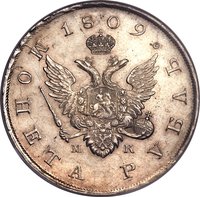
Obverse
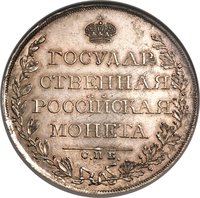
Reverse
Edge
Threadlike
Mintings
| Year | Mint Mark | Mintage | Quality | Collection |
|---|---|---|---|---|
| 1808 | СПБ | — | BU | |
| 1809 | СПБ | 40,000 | BU | |
| 1810 | СПБ | 66,536 | BU |
Historical background
In 1808, the currency system of the Russian Empire was in a state of profound strain, a direct consequence of the Napoleonic Wars and the Continental System. Emperor Alexander I's government was engaged in massive military spending, financing campaigns against France, the Ottoman Empire, and Sweden. With traditional tax revenues insufficient, the state turned to the unrestrained printing of paper money, known as assignatsii (assignats). This led to severe inflation, as the volume of assignats in circulation ballooned while their metallic backing evaporated, creating a wide and growing gap between the value of paper rubles and silver rubles.
The fundamental problem was a classic one of fiduciary currency without confidence. The assignat, introduced by Catherine the Great in 1769, was originally convertible to copper coin. However, by 1808, convertibility had been suspended, and public trust had eroded. The paper ruble traded at a significant discount to its nominal value in silver, effectively creating a dual-currency economy where prices and contracts often had to account for the difference. This depreciation disrupted trade, complicated state finances, and placed a heavy burden on the population, particularly those on fixed incomes like soldiers and civil servants.
Despite recognizing the crisis, the government's options in 1808 were limited by the ongoing war effort. Minister of Finance Dmitry Guryev advocated for monetary reform and stabilization, but any substantive action, such as a withdrawal of assignats from circulation or a return to a metallic standard, was politically and economically impossible during a time of such immense fiscal pressure. Therefore, the year 1808 represents a point of acute symptom within a longer period of monetary instability that would plague Russia until the thorough reforms of Count Yegor Kankrin in the 1839-1843 period.
The fundamental problem was a classic one of fiduciary currency without confidence. The assignat, introduced by Catherine the Great in 1769, was originally convertible to copper coin. However, by 1808, convertibility had been suspended, and public trust had eroded. The paper ruble traded at a significant discount to its nominal value in silver, effectively creating a dual-currency economy where prices and contracts often had to account for the difference. This depreciation disrupted trade, complicated state finances, and placed a heavy burden on the population, particularly those on fixed incomes like soldiers and civil servants.
Despite recognizing the crisis, the government's options in 1808 were limited by the ongoing war effort. Minister of Finance Dmitry Guryev advocated for monetary reform and stabilization, but any substantive action, such as a withdrawal of assignats from circulation or a return to a metallic standard, was politically and economically impossible during a time of such immense fiscal pressure. Therefore, the year 1808 represents a point of acute symptom within a longer period of monetary instability that would plague Russia until the thorough reforms of Count Yegor Kankrin in the 1839-1843 period.
✨ Legendary