

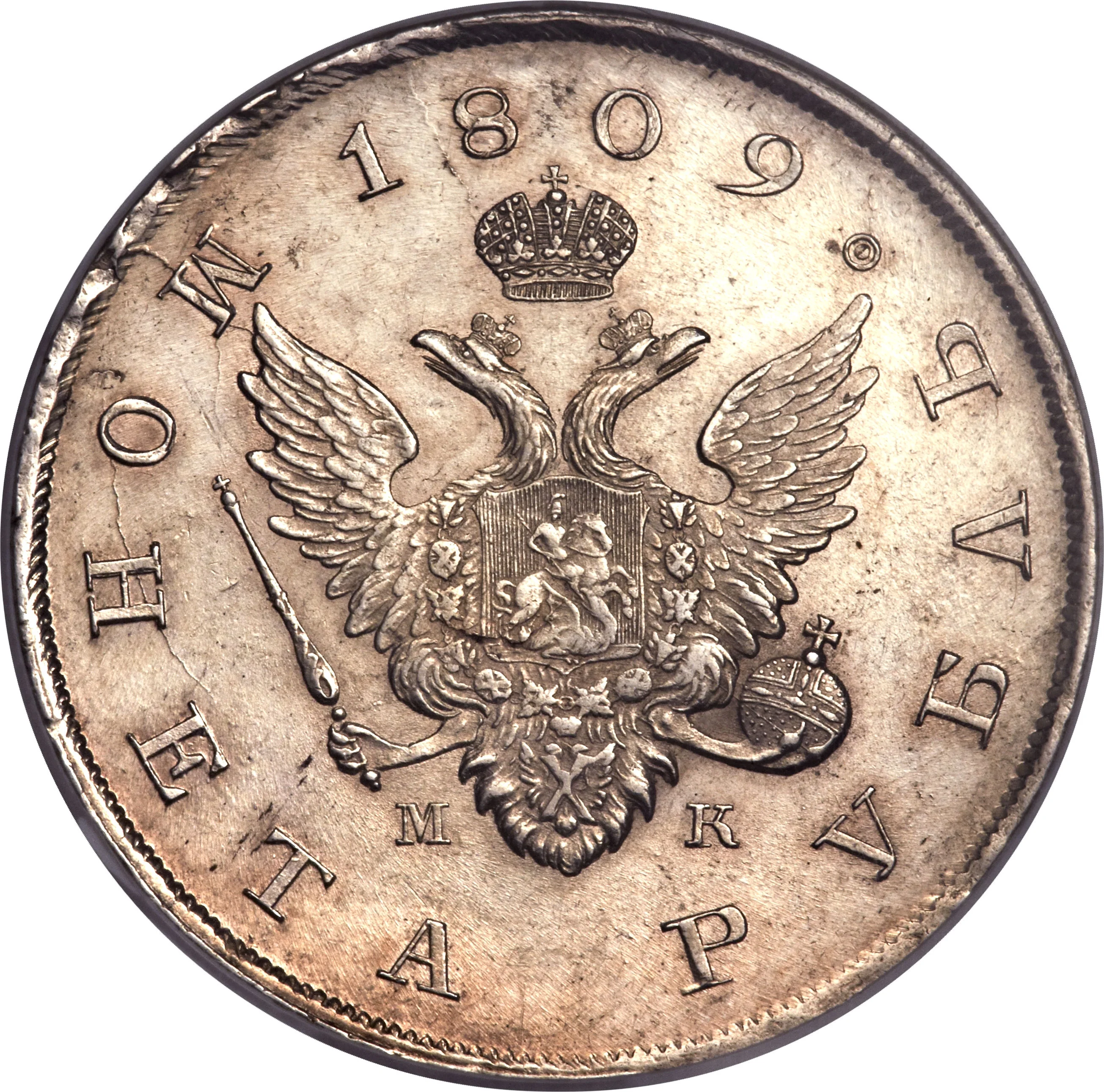
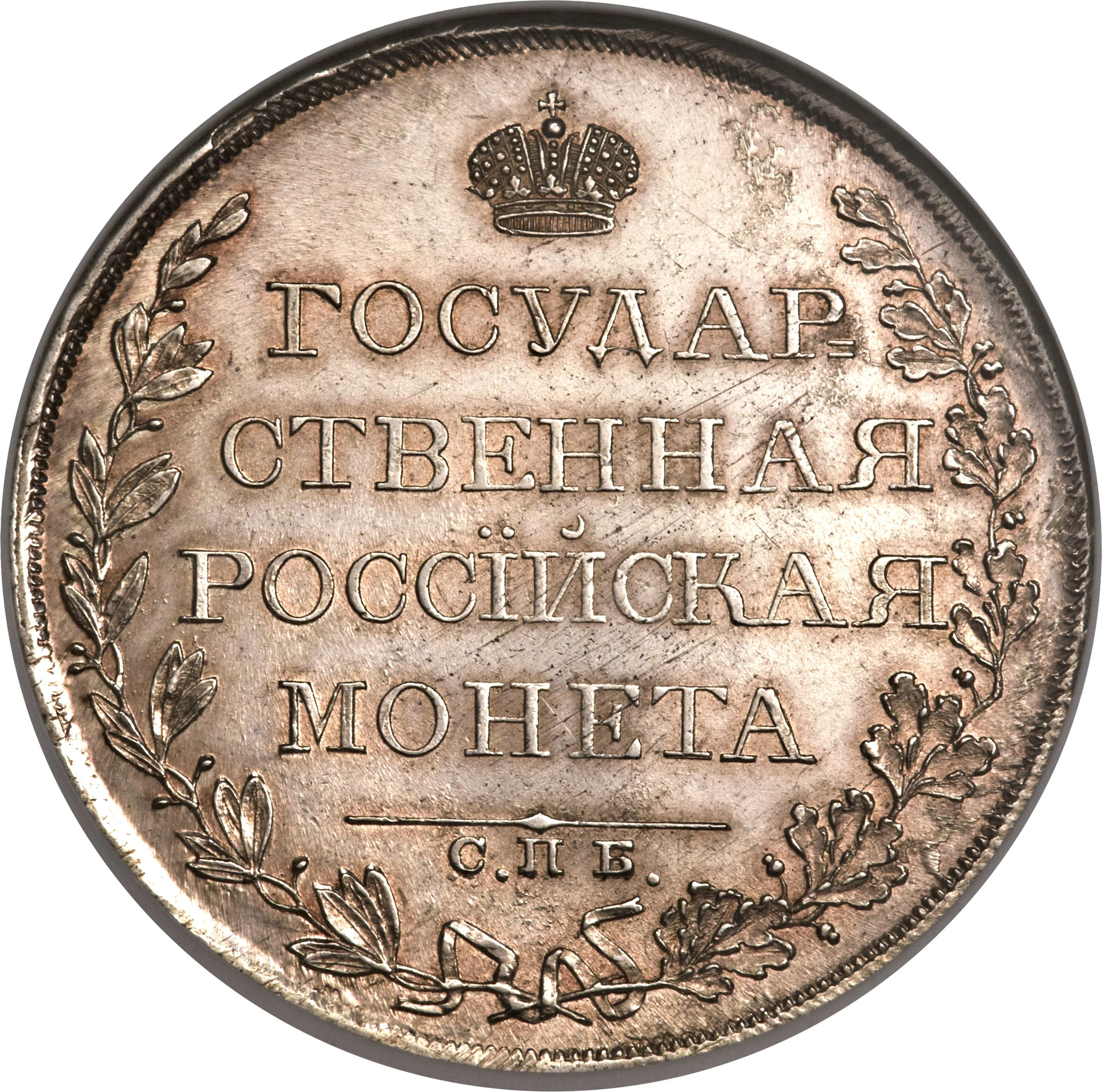
1 ruble – Russian Empire
Add to wishlist
Russia
Context
Years: 1807–1810
Country: Russia
Issuer: Russian Empire
Ruler: Alexander I
Currency:
(1700—1917)
Demonetized: Yes
Total mintage: 2,215,663
Material
References
Numista: #26912
Value
Bullion value: $45.62
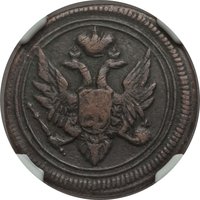
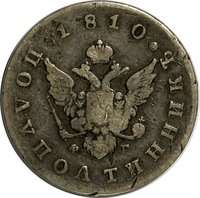
Obverse
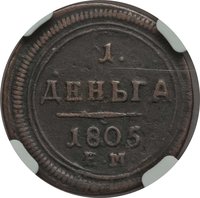
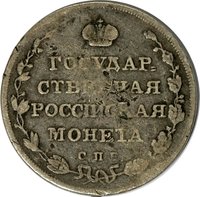
Reverse
Edge
Smooth with inscription
Legend:
СЕР∙83 1/3 ПРОБЫ 4 ЗОЛ∙82 14/25 ДОЛИ ∙
Translation:
SER 83 1/3 PURITY 4 GOLD 82 14/25 PARTS ∙
Language: Russian
Mintings
| Year | Mint Mark | Mintage | Quality | Collection |
|---|---|---|---|---|
| 1807 | СПБ | 533,000 | BU | |
| 1808 | СПБ | — | BU | |
| 1809 | СПБ | — | BU | |
| 1810 | СПБ | 1,682,663 | BU |
Historical background
In 1807, the Russian Empire's currency system was a complex and strained bimetallic structure based on the silver ruble and the copper kopeck. The state's primary circulating coin was the silver ruble, but its value was officially pegged to a gold standard that did not reflect market realities, creating a persistent imbalance. Furthermore, vast quantities of low-value copper coins facilitated everyday trade but were cumbersome and vulnerable to counterfeiting. This system was under severe pressure due to the immense fiscal demands of the Napoleonic Wars, particularly the costly campaigns of 1805-1807 and the looming conflict with Britain, which forced the government to seek extraordinary financial measures.
A critical feature of the period was the dramatic increase in the issuance of paper money, known as assignatsii (assignats). First introduced in 1769, these banknotes were intended to be fully convertible into silver, but by 1807, this promise was collapsing. To finance the war, the government printed assignats excessively, leading to rampant inflation and a sharp decline in their market value against silver coinage. By 1807, the paper ruble traded at a significant discount to the silver ruble, creating a chaotic dual-currency economy where prices were often quoted differently depending on the medium of exchange.
The situation was further destabilized by Russia's participation in the Continental System, Napoleon's blockade against British trade, declared in late 1806. This policy severed a major economic relationship, reducing vital export revenues and disrupting the flow of specie (gold and silver) into Russia. Consequently, the state's ability to back its paper currency with precious metals weakened further. Thus, in 1807, the currency system was caught in a vicious cycle: wartime deficits drove inflationary paper issues, while geopolitical isolation undermined the metallic reserve needed to maintain confidence, setting the stage for a prolonged period of monetary instability in the decades to follow.
A critical feature of the period was the dramatic increase in the issuance of paper money, known as assignatsii (assignats). First introduced in 1769, these banknotes were intended to be fully convertible into silver, but by 1807, this promise was collapsing. To finance the war, the government printed assignats excessively, leading to rampant inflation and a sharp decline in their market value against silver coinage. By 1807, the paper ruble traded at a significant discount to the silver ruble, creating a chaotic dual-currency economy where prices were often quoted differently depending on the medium of exchange.
The situation was further destabilized by Russia's participation in the Continental System, Napoleon's blockade against British trade, declared in late 1806. This policy severed a major economic relationship, reducing vital export revenues and disrupting the flow of specie (gold and silver) into Russia. Consequently, the state's ability to back its paper currency with precious metals weakened further. Thus, in 1807, the currency system was caught in a vicious cycle: wartime deficits drove inflationary paper issues, while geopolitical isolation undermined the metallic reserve needed to maintain confidence, setting the stage for a prolonged period of monetary instability in the decades to follow.
💎 Very Rare