

20 Qirsh – Mahdist State
Sudan
Context

Material
References
KM: #Click to copy to clipboard14
Numista: #91747
Obverse
Description:
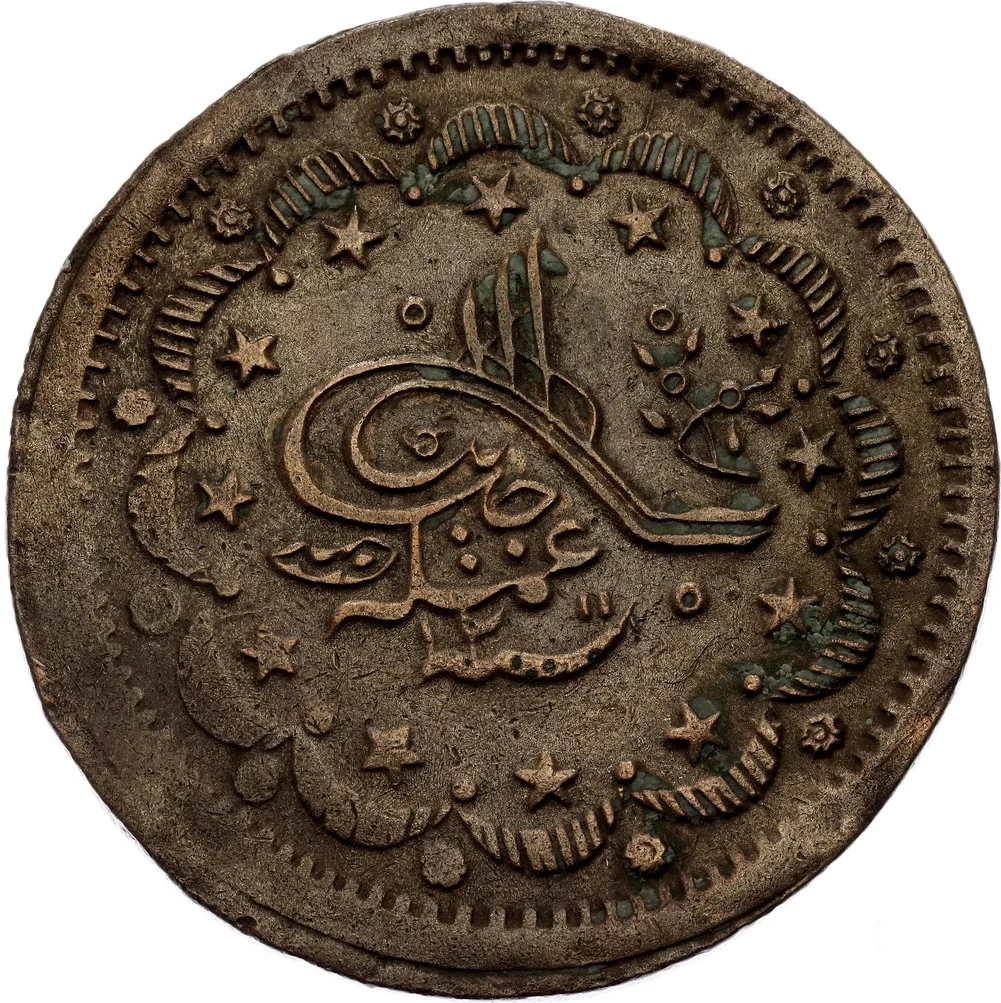
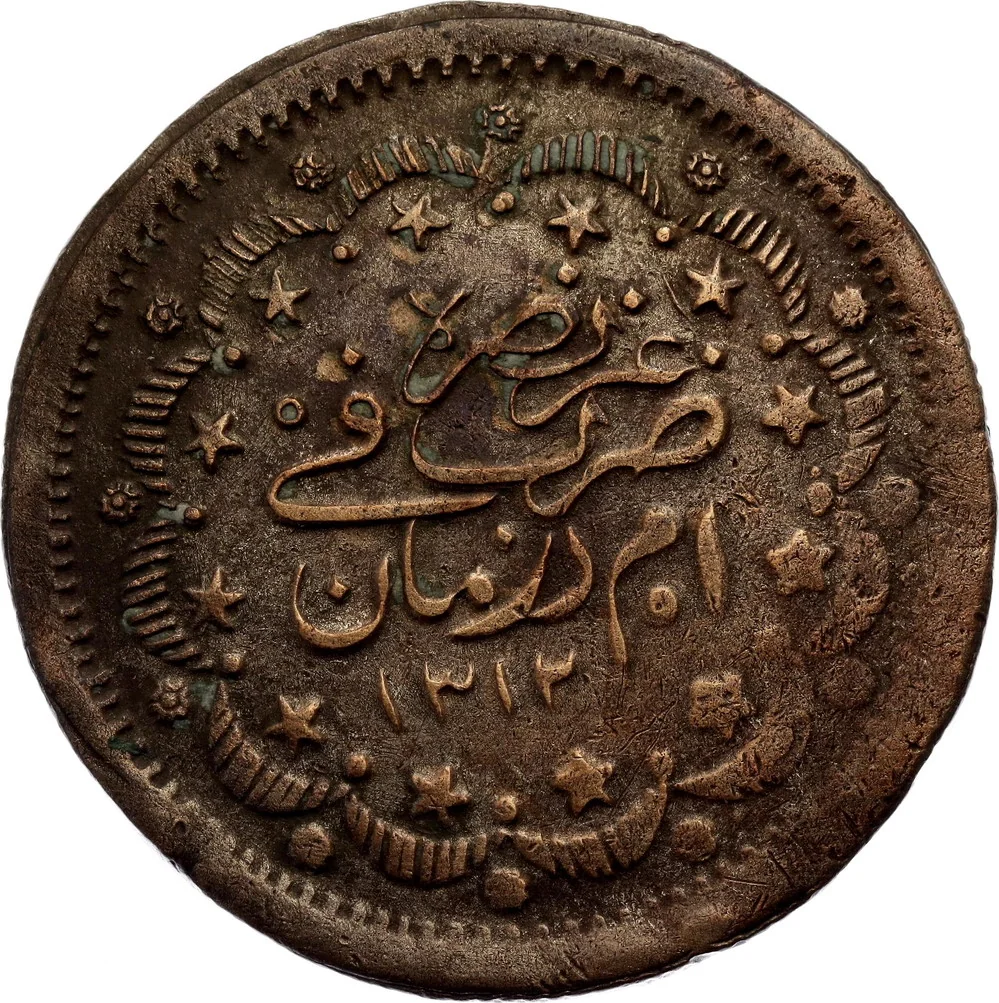
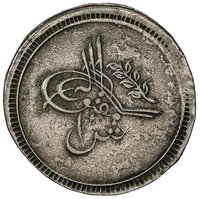
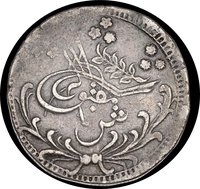
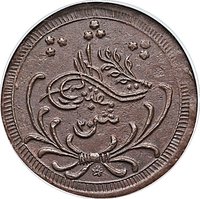
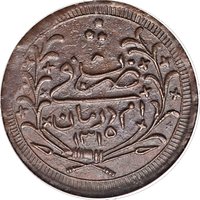
Toughra encircled by stars, crescents, roses, and the regnal year.
Script: Arabic
Reverse
Edge
Mints
| Name | Mark |
|---|---|
| Omdurman | — |
Mintings
| Year | Mint Mark | Mintage | Quality | Collection |
|---|---|---|---|---|
| 1893 | — | — | ||
| 1894 | — | — | ||
| 1895 | — | — |
Historical background
By 1893, the Mahdist State in Sudan faced a severe and deteriorating currency crisis, a direct consequence of its economic isolation and the immense strain of continuous warfare. The state’s financial system, inherited from the Turco-Egyptian administration, had collapsed. The traditional gold and silver coinage had largely disappeared, drained by trade imbalances, hoarding, and the state's own military expenditures. In their place, the Khalifa Abdullahi’s government relied heavily on a debased and inflated copper currency, the mikhammasiah (five-para piece) and umm qurūn (twenty-para piece), which were minted in vast quantities at the Omdurman arsenal.
This reliance on copper coinage led to rampant inflation and a catastrophic loss of public confidence. The intrinsic value of the coins was negligible, and their official exchange rate against the remaining silver rivals was enforced by harsh decree, creating a vast disparity with market realities. This situation was exacerbated by a blockade-like environment, as traditional trade routes were severed, and European powers restricted commerce. The shortage of essential goods, combined with the flood of copper coins, meant prices for basic commodities like grain and cloth soared, causing widespread hardship and famine among the civilian population.
Ultimately, the currency situation of 1893 was a critical symptom of the Mahdist State’s broader vulnerabilities. The economy was geared almost exclusively towards sustaining the army, with taxation and confiscation failing to offset the lack of productive economic activity or bullion reserves. The monetary chaos undermined internal stability, eroded the legitimacy of the Khalifa’s rule, and severely weakened the state’s capacity to resist the impending Anglo-Egyptian reconquest, which would culminate in the Battle of Omdurman in 1898.
This reliance on copper coinage led to rampant inflation and a catastrophic loss of public confidence. The intrinsic value of the coins was negligible, and their official exchange rate against the remaining silver rivals was enforced by harsh decree, creating a vast disparity with market realities. This situation was exacerbated by a blockade-like environment, as traditional trade routes were severed, and European powers restricted commerce. The shortage of essential goods, combined with the flood of copper coins, meant prices for basic commodities like grain and cloth soared, causing widespread hardship and famine among the civilian population.
Ultimately, the currency situation of 1893 was a critical symptom of the Mahdist State’s broader vulnerabilities. The economy was geared almost exclusively towards sustaining the army, with taxation and confiscation failing to offset the lack of productive economic activity or bullion reserves. The monetary chaos undermined internal stability, eroded the legitimacy of the Khalifa’s rule, and severely weakened the state’s capacity to resist the impending Anglo-Egyptian reconquest, which would culminate in the Battle of Omdurman in 1898.

💎 Extremely Rare