

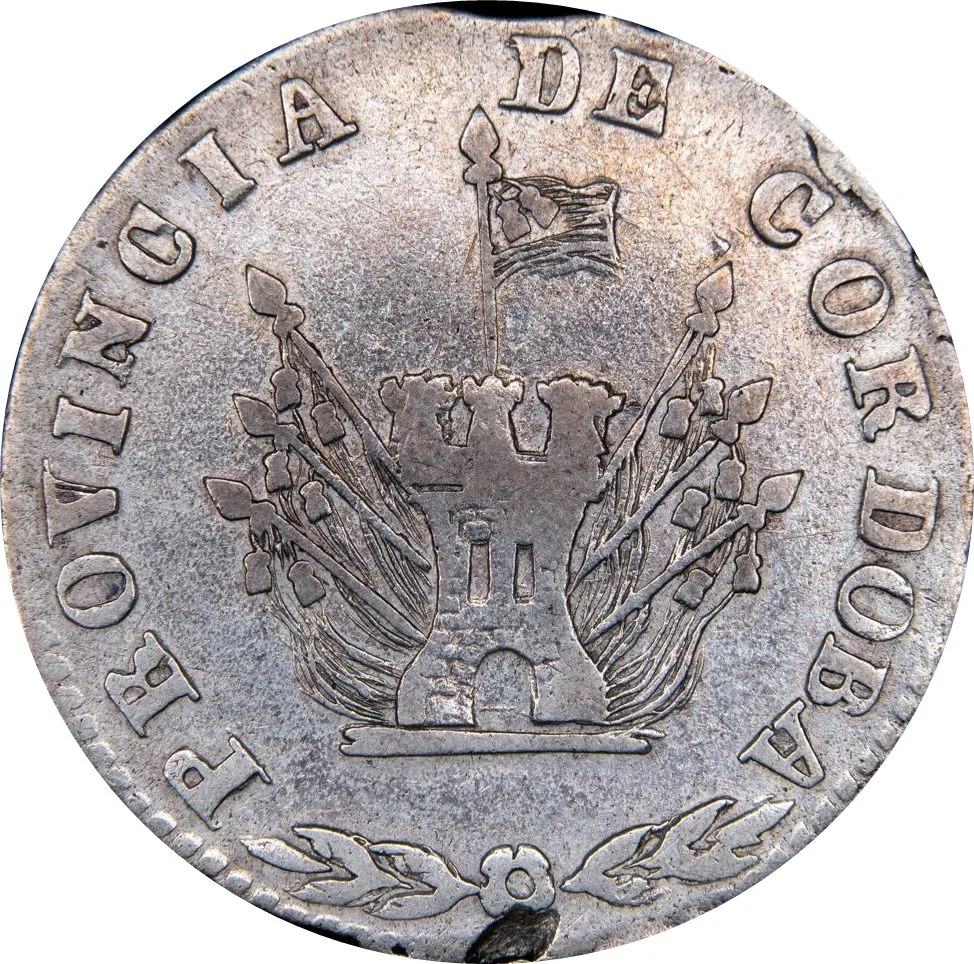
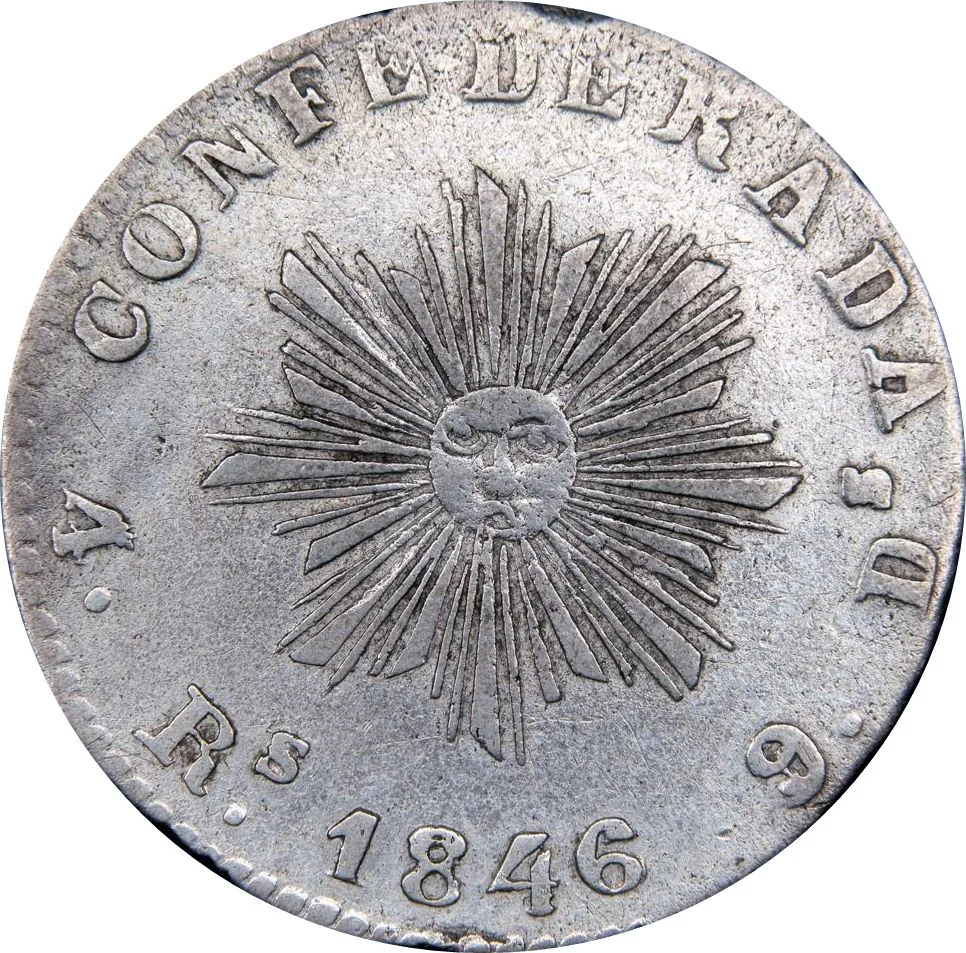
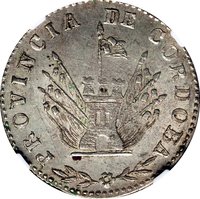
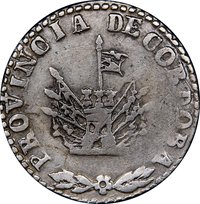
Obverse
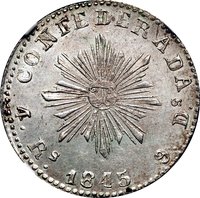
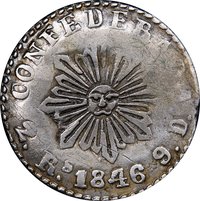
Reverse
Edge
Mints
| Name | Mark |
|---|---|
| Córdoba | — |
Mintings
| Year | Mint Mark | Mintage | Quality | Collection |
|---|---|---|---|---|
| 1846 | — | — |
Historical background
In 1846, the currency situation in the province of Córdoba, Argentina, was emblematic of the broader monetary chaos that plagued the nation during the Guerra Grande or Argentine Civil Wars. Following the dissolution of the national mint and the bankruptcy of the Banco Nacional in the 1820s and 1830s, there was no unified national currency. Instead, individual provinces, foreign coins, and private issuers all circulated simultaneously, leading to a complex and unstable monetary environment. Córdoba, like its neighbors, was forced to issue its own paper money to finance its government and military expenditures, as the constant inter-provincial conflicts drained its hard currency reserves of gold and silver.
The primary currency in circulation was the peso moneda corriente, a paper note issued by the provincial government. However, these bills suffered from severe depreciation due to over-issuance and a lack of public confidence. Their value fluctuated wildly against the much scarcer and more trusted peso fuerte (hard silver peso) and foreign coins like the Spanish real or British sovereigns. This created a dual-price system where goods had one price in weak paper and a much lower price in strong specie, crippling commerce and creating widespread economic uncertainty for merchants and laborers alike.
This monetary disorder was both a cause and a symptom of Córdoba's integration into the wider conflict between the Federalist forces of Juan Manuel de Rosas, who dominated Buenos Aires, and the Unitarian opposition. The province's finances were strained by its military commitments, forcing further note emissions and deepening inflation. Consequently, by 1846, the people of Córdoba navigated a daily economy of confusing exchange rates, depreciating paper, and a reliance on barter, underscoring the profound economic fragmentation of Argentina before its eventual national unification and monetary consolidation decades later.
The primary currency in circulation was the peso moneda corriente, a paper note issued by the provincial government. However, these bills suffered from severe depreciation due to over-issuance and a lack of public confidence. Their value fluctuated wildly against the much scarcer and more trusted peso fuerte (hard silver peso) and foreign coins like the Spanish real or British sovereigns. This created a dual-price system where goods had one price in weak paper and a much lower price in strong specie, crippling commerce and creating widespread economic uncertainty for merchants and laborers alike.
This monetary disorder was both a cause and a symptom of Córdoba's integration into the wider conflict between the Federalist forces of Juan Manuel de Rosas, who dominated Buenos Aires, and the Unitarian opposition. The province's finances were strained by its military commitments, forcing further note emissions and deepening inflation. Consequently, by 1846, the people of Córdoba navigated a daily economy of confusing exchange rates, depreciating paper, and a reliance on barter, underscoring the profound economic fragmentation of Argentina before its eventual national unification and monetary consolidation decades later.
💎 Extremely Rare