

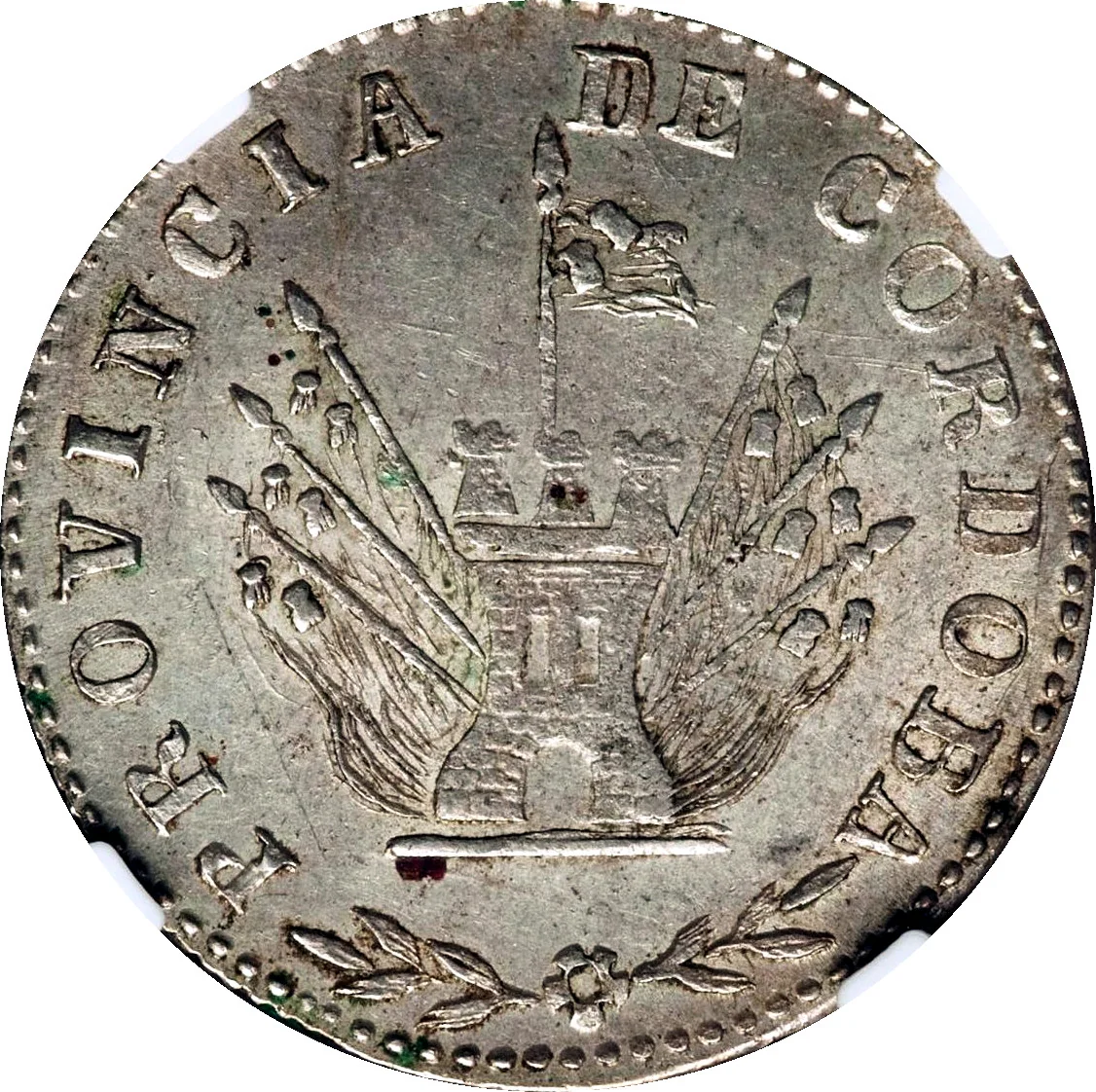
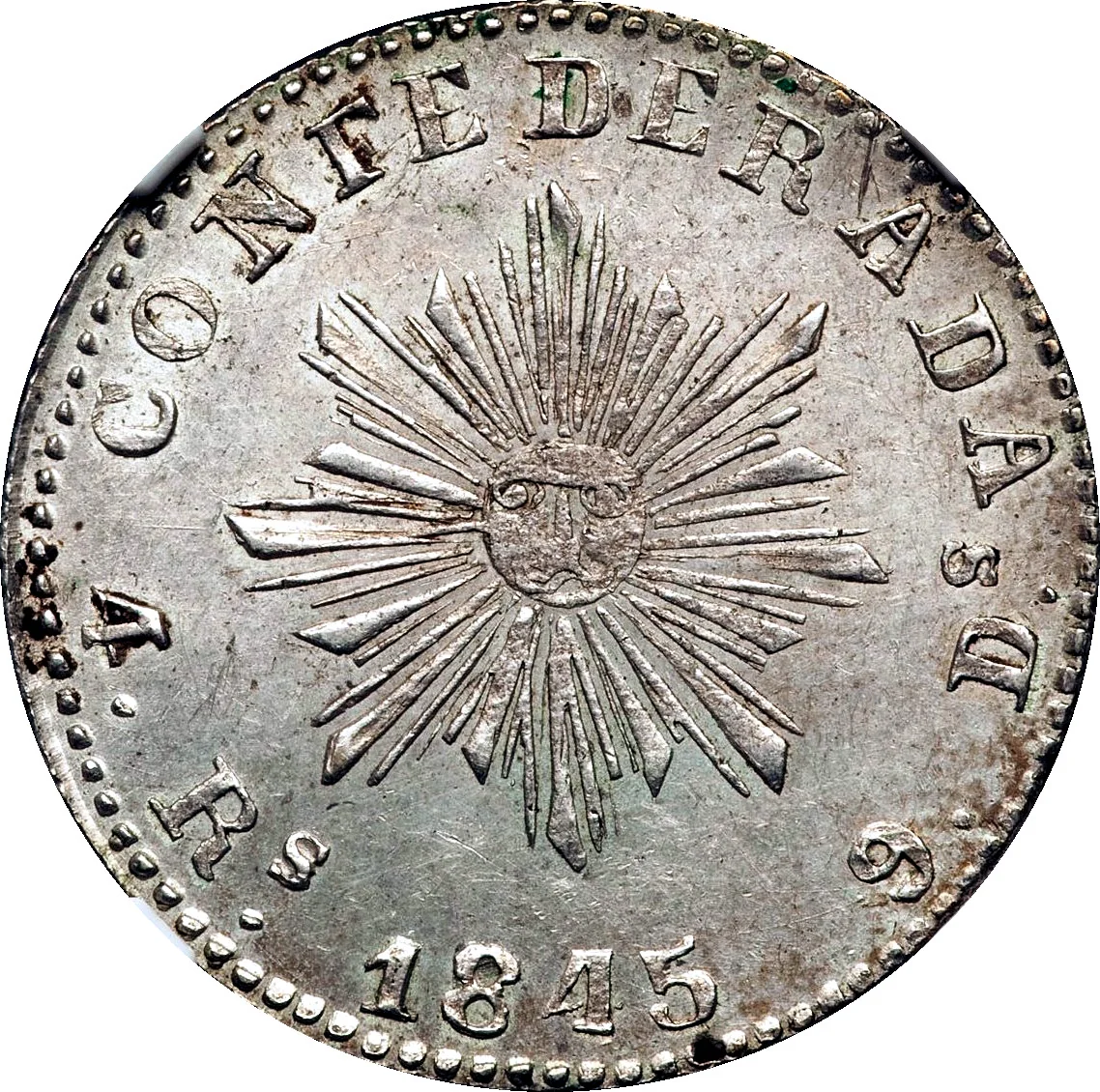
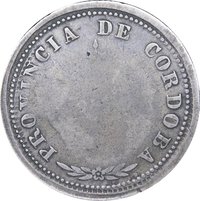
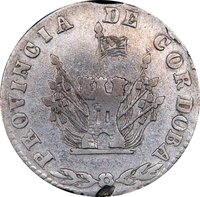
Obverse
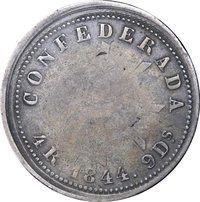
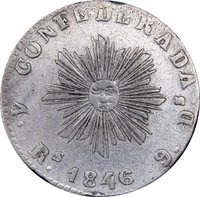
Reverse
Edge
Mints
| Name | Mark |
|---|---|
| Córdoba | — |
Mintings
| Year | Mint Mark | Mintage | Quality | Collection |
|---|---|---|---|---|
| 1845 | — | — |
Historical background
In 1845, the province of Córdoba, Argentina, was immersed in a profound monetary crisis characteristic of the turbulent post-independence and civil war period. Following the collapse of Spanish colonial authority and the absence of a strong central government, each province issued its own paper currency, known as billetes de curso forzoso (forced circulation notes). Córdoba's treasury, drained by years of conflict and the costs of maintaining militias, increasingly relied on printing money to finance its operations, leading to rampant inflation and a severe loss of public confidence.
The situation was exacerbated by the ongoing Argentine Civil Wars between the Federalist forces of Juan Manuel de Rosas, who controlled Buenos Aires and the Confederation's foreign relations, and various Unitarian factions. While nominally aligned with Rosas, Córdoba's governor, Manuel López ("Quebracho"), exercised autonomous control, including over provincial finances. The currency in circulation was largely unsupported by precious metals or tangible fiscal revenue, causing its value to plummet in relation to the hard currency still used in private transactions. A complex and unstable system of multiple, competing currencies from different provinces further crippled inter-regional trade.
Consequently, by 1845, Córdoba's paper money was deeply depreciated, fostering widespread economic hardship, market distrust, and a preference for barter or the metallic coins of earlier eras. This inflationary environment placed a heavy burden on wage earners and farmers while benefiting debtors who could repay loans with devalued notes. The crisis was a direct manifestation of the broader political fragmentation of the time, where monetary sovereignty was a tool of provincial survival, ultimately at the expense of economic stability and integration.
The situation was exacerbated by the ongoing Argentine Civil Wars between the Federalist forces of Juan Manuel de Rosas, who controlled Buenos Aires and the Confederation's foreign relations, and various Unitarian factions. While nominally aligned with Rosas, Córdoba's governor, Manuel López ("Quebracho"), exercised autonomous control, including over provincial finances. The currency in circulation was largely unsupported by precious metals or tangible fiscal revenue, causing its value to plummet in relation to the hard currency still used in private transactions. A complex and unstable system of multiple, competing currencies from different provinces further crippled inter-regional trade.
Consequently, by 1845, Córdoba's paper money was deeply depreciated, fostering widespread economic hardship, market distrust, and a preference for barter or the metallic coins of earlier eras. This inflationary environment placed a heavy burden on wage earners and farmers while benefiting debtors who could repay loans with devalued notes. The crisis was a direct manifestation of the broader political fragmentation of the time, where monetary sovereignty was a tool of provincial survival, ultimately at the expense of economic stability and integration.
💎 Extremely Rare