

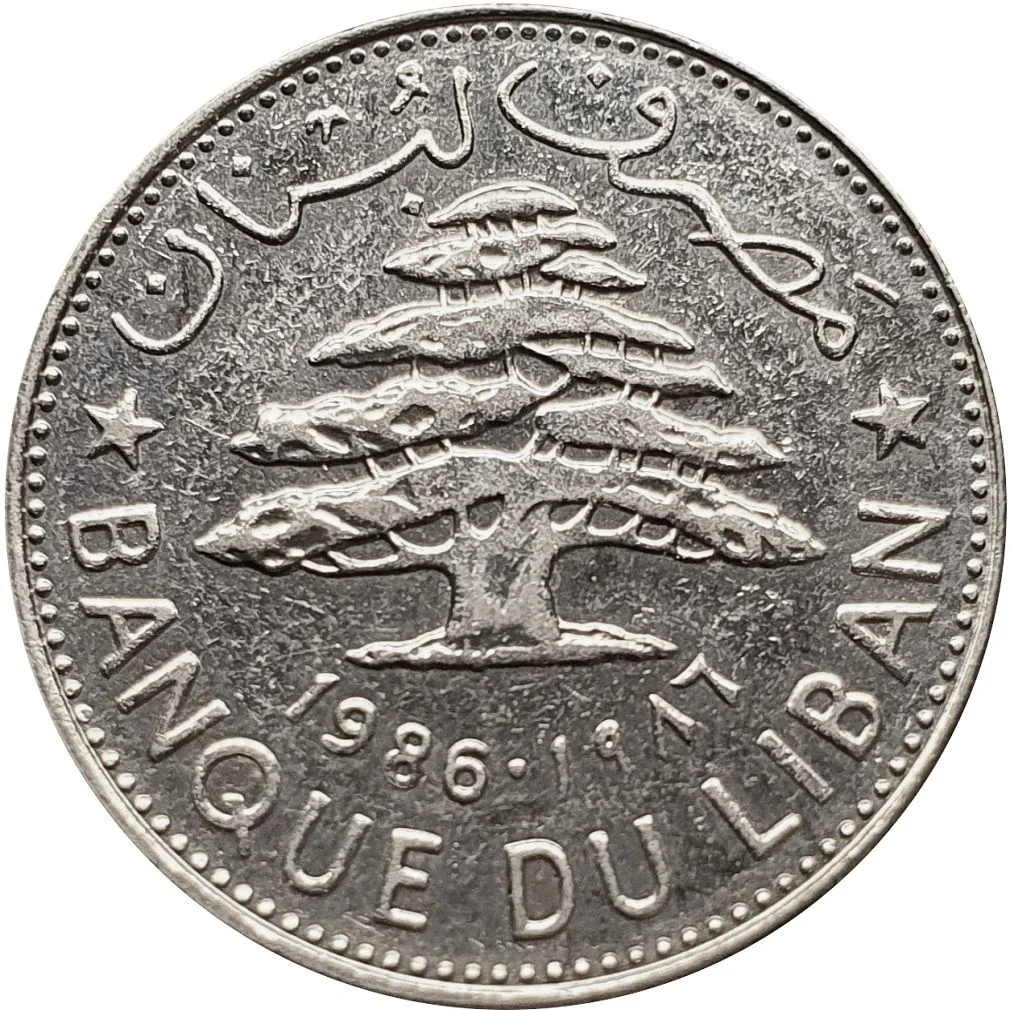
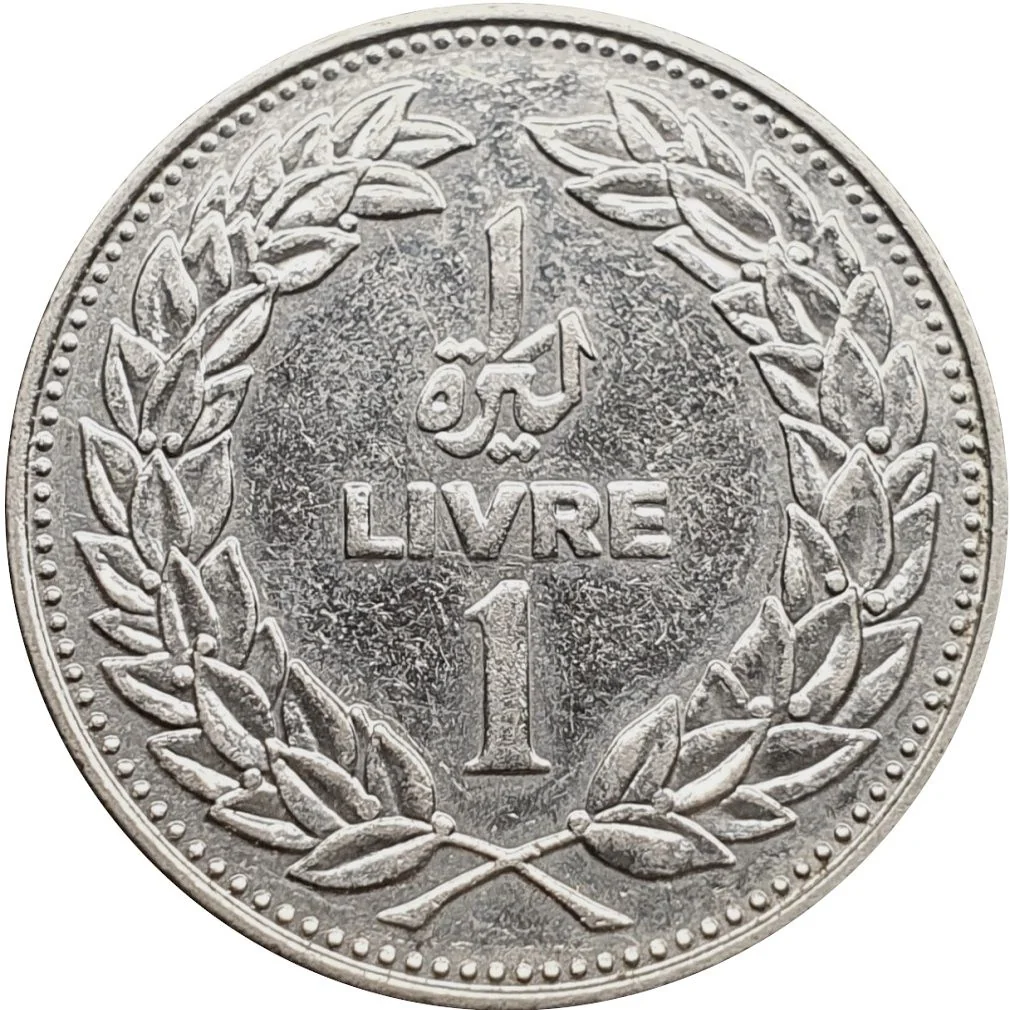
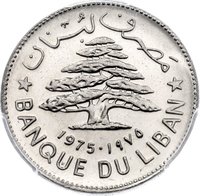
Obverse
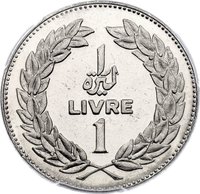
Reverse
Edge
Mintings
| Year | Mint Mark | Mintage | Quality | Collection |
|---|---|---|---|---|
| 1986 | — | 1,000 |
Historical background
By 1986, Lebanon's currency situation had descended into a state of severe crisis, marking a critical point in the country's protracted civil war. The Lebanese pound, once a symbol of stability and financial strength in the region, was in freefall due to a catastrophic combination of factors. The central government's authority had eroded, leading to massive deficit spending to fund militias and provide basic services, which was financed almost entirely by printing money. This unchecked monetary expansion, coupled with the collapse of the productive economy and widespread capital flight, triggered hyperinflation, causing the pound to lose over 90% of its value against the US dollar between 1984 and 1986 alone.
The financial landscape became fragmented and chaotic. The official exchange rate set by the Banque du Liban became entirely divorced from reality, giving rise to a vibrant and volatile black market where the dollar traded at multiples of the official rate. This dollarization of the economy accelerated, with many businesses and individuals refusing to accept the local currency for significant transactions, hoarding hard currency instead. The crisis was exacerbated by "militia economics," where various armed factions printed their own versions of Lebanese pound notes and controlled ports, siphoning off customs revenue that would have otherwise supported the national treasury.
The social consequences were devastating. Hyperinflation obliterated savings and salaries, plunging the majority of the population into poverty and creating a new class of "lira millionaires" who were, in fact, destitute. The state's inability to provide basic utilities or security, compounded by the currency's collapse, led to a complete loss of public confidence in national institutions. The 1986 currency crisis was not merely a financial event but a stark manifestation of the Lebanese state's fragmentation, setting a dire precedent for the country's future economic challenges.
The financial landscape became fragmented and chaotic. The official exchange rate set by the Banque du Liban became entirely divorced from reality, giving rise to a vibrant and volatile black market where the dollar traded at multiples of the official rate. This dollarization of the economy accelerated, with many businesses and individuals refusing to accept the local currency for significant transactions, hoarding hard currency instead. The crisis was exacerbated by "militia economics," where various armed factions printed their own versions of Lebanese pound notes and controlled ports, siphoning off customs revenue that would have otherwise supported the national treasury.
The social consequences were devastating. Hyperinflation obliterated savings and salaries, plunging the majority of the population into poverty and creating a new class of "lira millionaires" who were, in fact, destitute. The state's inability to provide basic utilities or security, compounded by the currency's collapse, led to a complete loss of public confidence in national institutions. The 1986 currency crisis was not merely a financial event but a stark manifestation of the Lebanese state's fragmentation, setting a dire precedent for the country's future economic challenges.
🌱 Fairly Common