

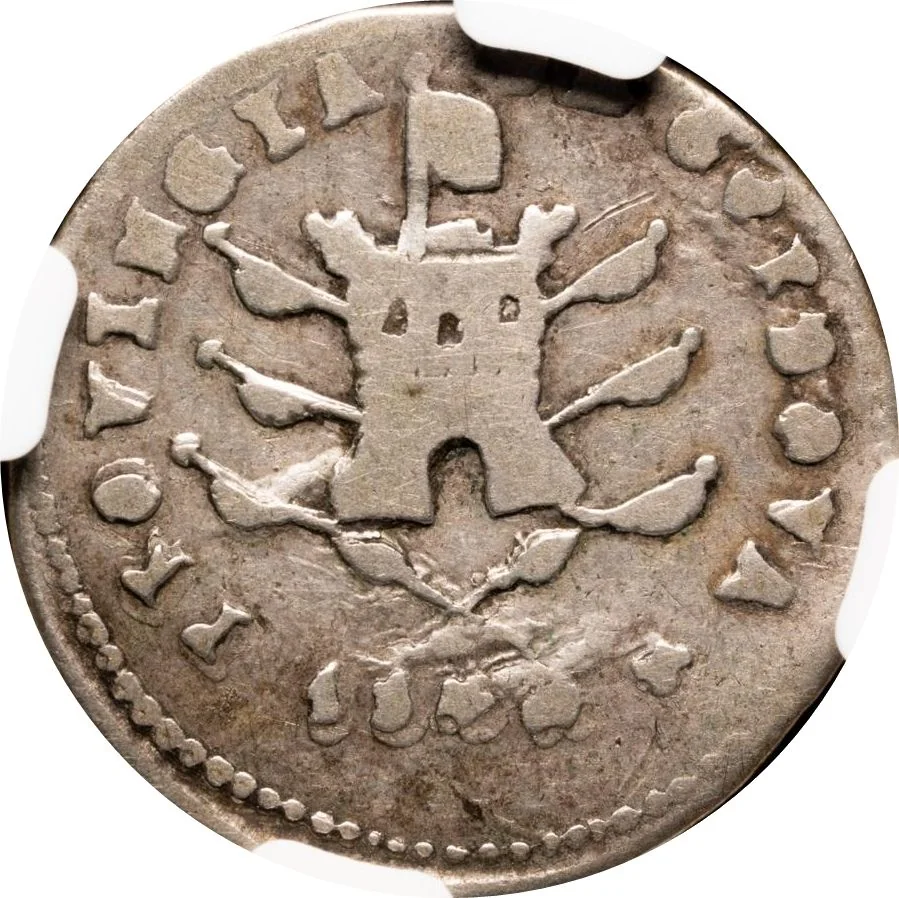

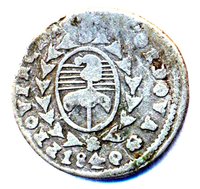
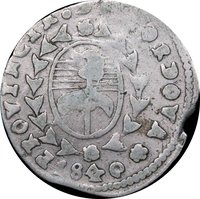
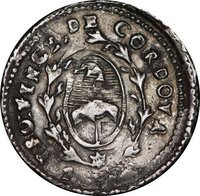
Obverse
Description:
Spears crossed, shield between.
Inscription:
PROVINCIA DE CORDOVA
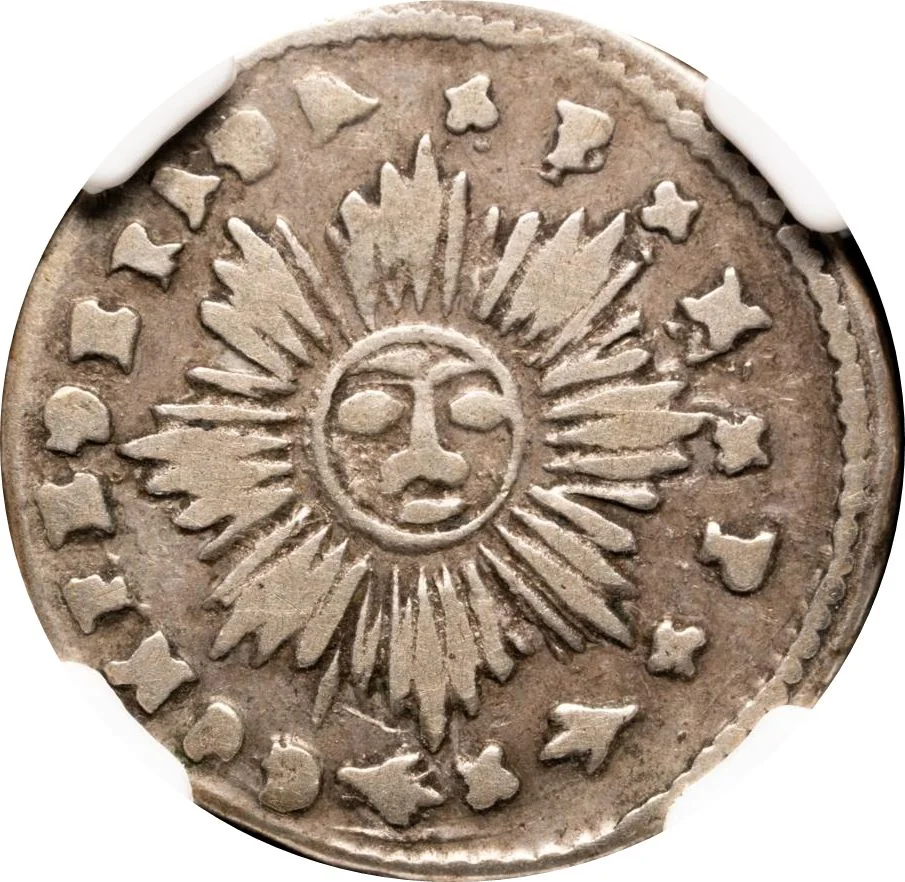
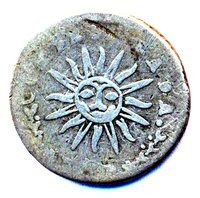
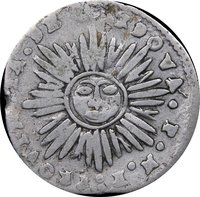
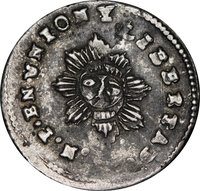
Reverse
Description:
Sun with a face.
Inscription:
CONFEDERADA P.N.P.
Edge
Smooth and reeded occasionally
Categories
| Building> Castle or fortification |
| Symbols> Coat of Arms |
| Symbol> Sun |
Mintings
| Year | Mint Mark | Mintage | Quality | Collection |
|---|---|---|---|---|
| 1840 | PNP | — |
Historical background
In 1840, the province of Córdoba, Argentina, was entangled in the complex monetary chaos that characterized the early decades of Argentine independence. Following the dissolution of the national mint and the collapse of central authority after the fall of the Unitarians in 1829, currency issuance devolved to individual provinces. Córdoba, like its neighbors, began producing its own coinage to facilitate local trade and assert provincial sovereignty. However, this led to a proliferation of currencies of varying weights, purities, and values, creating a bewildering and unstable economic environment.
The specific situation in 1840 was one of severe depreciation and confusion. Under the rule of Federalist caudillo Manuel López, the provincial government issued large quantities of low-value copper coinage (moneda de cobre) to finance its operations and military expenditures during the ongoing civil wars. This flood of coins, often poorly minted and easily counterfeited, rapidly lost purchasing power, leading to price inflation and a loss of public trust. Merchants and the public had to constantly negotiate the exchange rates between Córdoba's coins, those of other provinces (like Buenos Aires silver pesos), and even older Spanish colonial and Bolivian currencies still in circulation.
This monetary fragmentation was more than an economic nuisance; it was a direct reflection of the political fragmentation of the Argentine Confederation. The lack of a uniform, trusted currency severely hampered inter-provincial trade and economic development. For Córdoba's population in 1840, everyday transactions became a calculated risk, as the metal in one's pocket could lose value overnight based on political decrees or military fortunes, underscoring the profound instability of the era.
The specific situation in 1840 was one of severe depreciation and confusion. Under the rule of Federalist caudillo Manuel López, the provincial government issued large quantities of low-value copper coinage (moneda de cobre) to finance its operations and military expenditures during the ongoing civil wars. This flood of coins, often poorly minted and easily counterfeited, rapidly lost purchasing power, leading to price inflation and a loss of public trust. Merchants and the public had to constantly negotiate the exchange rates between Córdoba's coins, those of other provinces (like Buenos Aires silver pesos), and even older Spanish colonial and Bolivian currencies still in circulation.
This monetary fragmentation was more than an economic nuisance; it was a direct reflection of the political fragmentation of the Argentine Confederation. The lack of a uniform, trusted currency severely hampered inter-provincial trade and economic development. For Córdoba's population in 1840, everyday transactions became a calculated risk, as the metal in one's pocket could lose value overnight based on political decrees or military fortunes, underscoring the profound instability of the era.
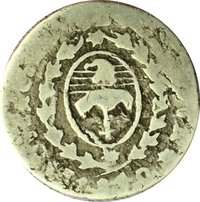
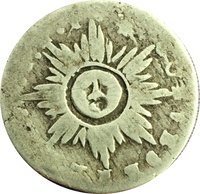
Series: 1840 Córdoba circulation coins

✨ Legendary