

1 florin – Australia
Add to wishlist
Australia
Context
Years: 1953–1954
Issuer: Australia
Ruler: Elizabeth II
Currency:
(1788—1966)
Total mintage: 14,558,000
Material
References
KM: #
Numista: #9129
Value
Bullion value: $14.34
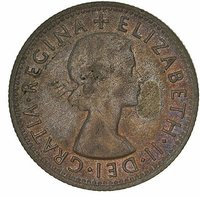
Obverse
Description:
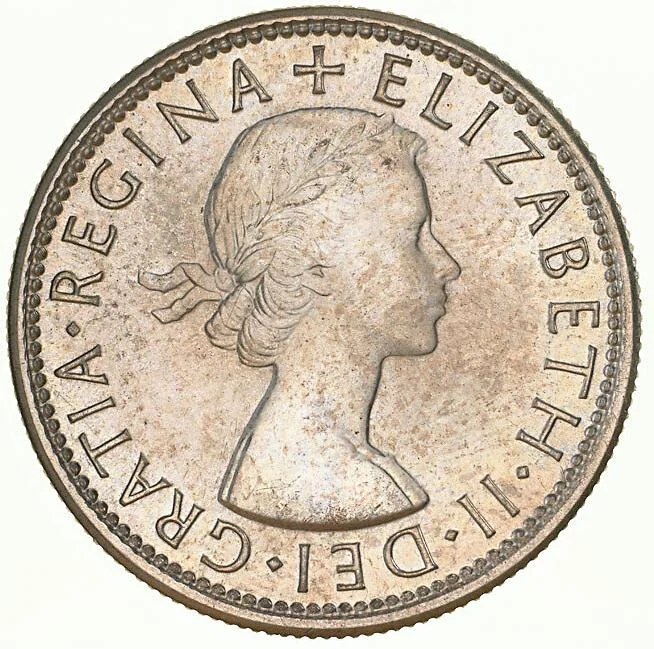
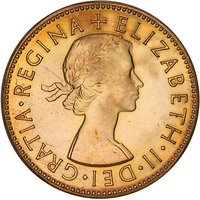
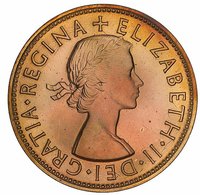
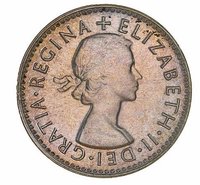
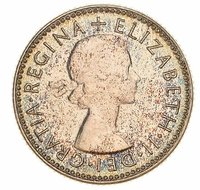
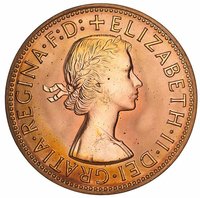
Young Elizabeth II in laurel wreath, facing right.
Inscription:
+ ELIZABETH·II·DEI·GRATIA REGINA
Translation:
Elizabeth II by the Grace of God Queen
Script: Latin
Language: Latin
Designer: Mary Gillick
Reverse
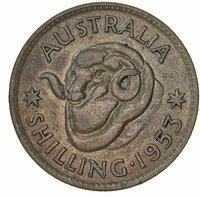
Description:
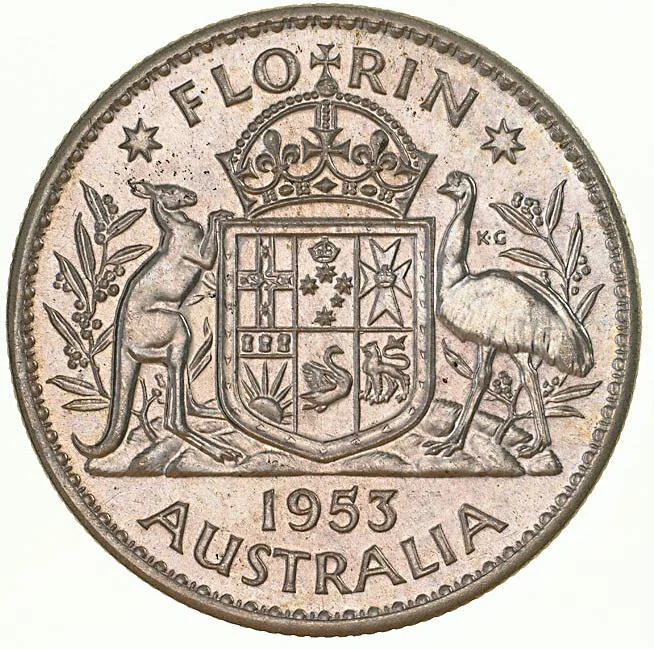
Heraldic emblem
Inscription:
*FLO RIN*
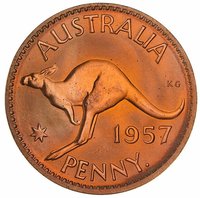
K·G
1953
AUSTRALIA
K·G
1953
AUSTRALIA
Script: Latin
Designer: George Kruger Gray
Edge
Reeded
Mints
| Name | Mark |
|---|---|
| Royal Mint | — |
Mintings
| Year | Mint Mark | Mintage | Quality | Collection |
|---|---|---|---|---|
| 1953 | — | — | ||
| 1953 | — | — | Proof | |
| 1954 | — | — | Proof | |
| 1954 | — | 14,558,000 |
Historical background
In 1953, Australia's currency system operated under the Bretton Woods framework, with the Australian pound (£A) pegged to the British pound sterling (£Stg) at parity. This meant the value of the nation's money was directly tied to the United Kingdom's currency and, by extension, to the gold standard via the fixed US dollar exchange rate. The system provided stability for international trade, which was still heavily oriented towards Britain, but it also meant Australia's monetary policy had limited independence from decisions made in London.
Domestically, the currency in circulation was a mix of paper notes issued by the Commonwealth Bank of Australia (the nation's central bank until 1960) and British-made coinage. Notably, 1953 saw the release of a new series of Australian banknotes, beginning with the £1 note featuring Queen Elizabeth II, who had ascended the throne the previous year. This issue marked a symbolic step towards a distinct national currency identity, even as the monetary system itself remained within the sterling area. Coins, however, were still predominantly British imperial denominations like pennies and shillings.
The period was one of economic transition. The post-war boom was underway, fueled by high wool prices and immigration, but the Korean War wool boom had recently subsided, leading to a slight economic softening. Inflationary pressures were a concern, and the fixed exchange rate sometimes constrained policy responses. While the system appeared stable on the surface, the reliance on sterling and the constraints of a fixed peg would, over the following decades, come under increasing strain, eventually leading to decimalisation and the creation of the Australian dollar in 1966.
Domestically, the currency in circulation was a mix of paper notes issued by the Commonwealth Bank of Australia (the nation's central bank until 1960) and British-made coinage. Notably, 1953 saw the release of a new series of Australian banknotes, beginning with the £1 note featuring Queen Elizabeth II, who had ascended the throne the previous year. This issue marked a symbolic step towards a distinct national currency identity, even as the monetary system itself remained within the sterling area. Coins, however, were still predominantly British imperial denominations like pennies and shillings.
The period was one of economic transition. The post-war boom was underway, fueled by high wool prices and immigration, but the Korean War wool boom had recently subsided, leading to a slight economic softening. Inflationary pressures were a concern, and the fixed exchange rate sometimes constrained policy responses. While the system appeared stable on the surface, the reliance on sterling and the constraints of a fixed peg would, over the following decades, come under increasing strain, eventually leading to decimalisation and the creation of the Australian dollar in 1966.
Series: 1953 Australia circulation coins
🌱 Common