

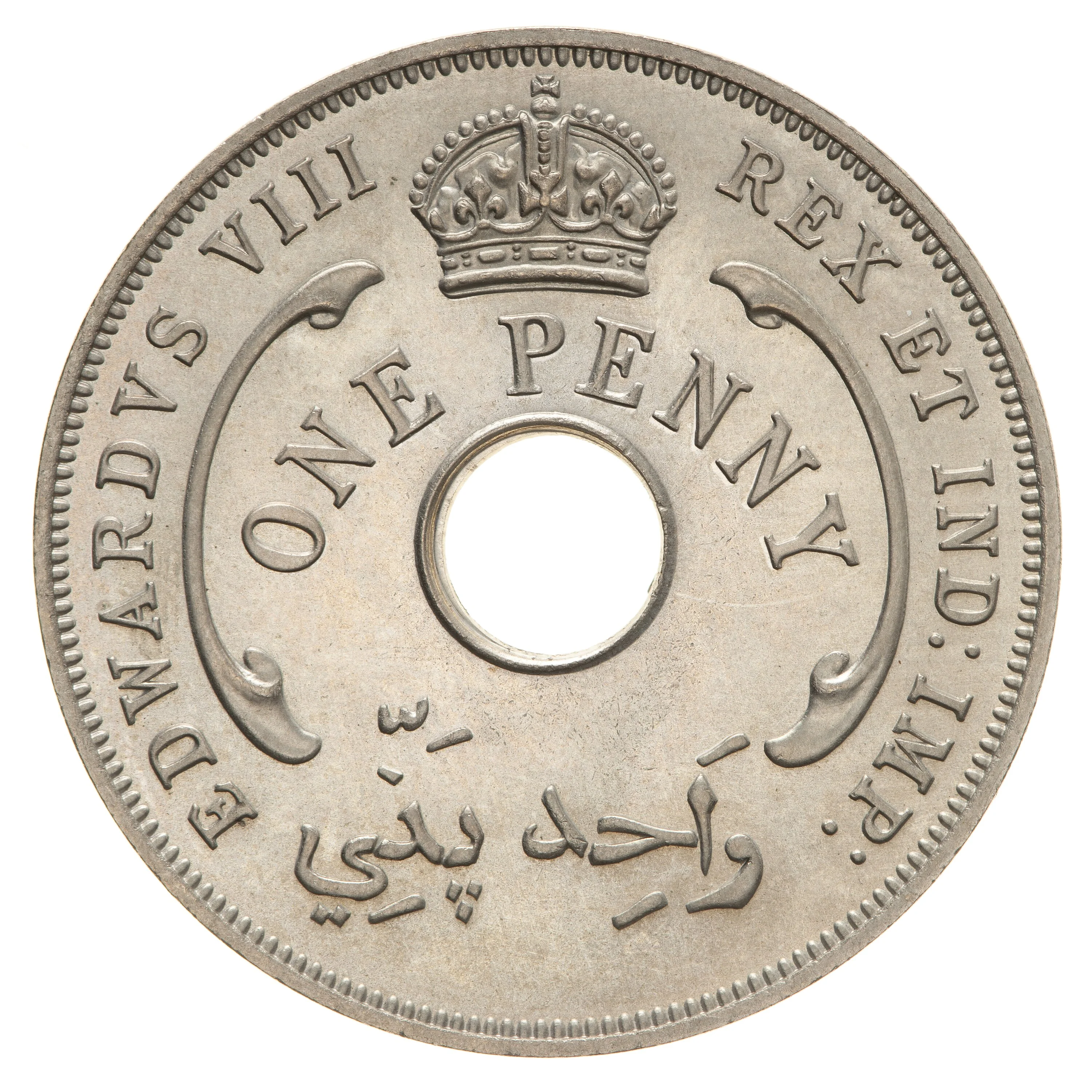
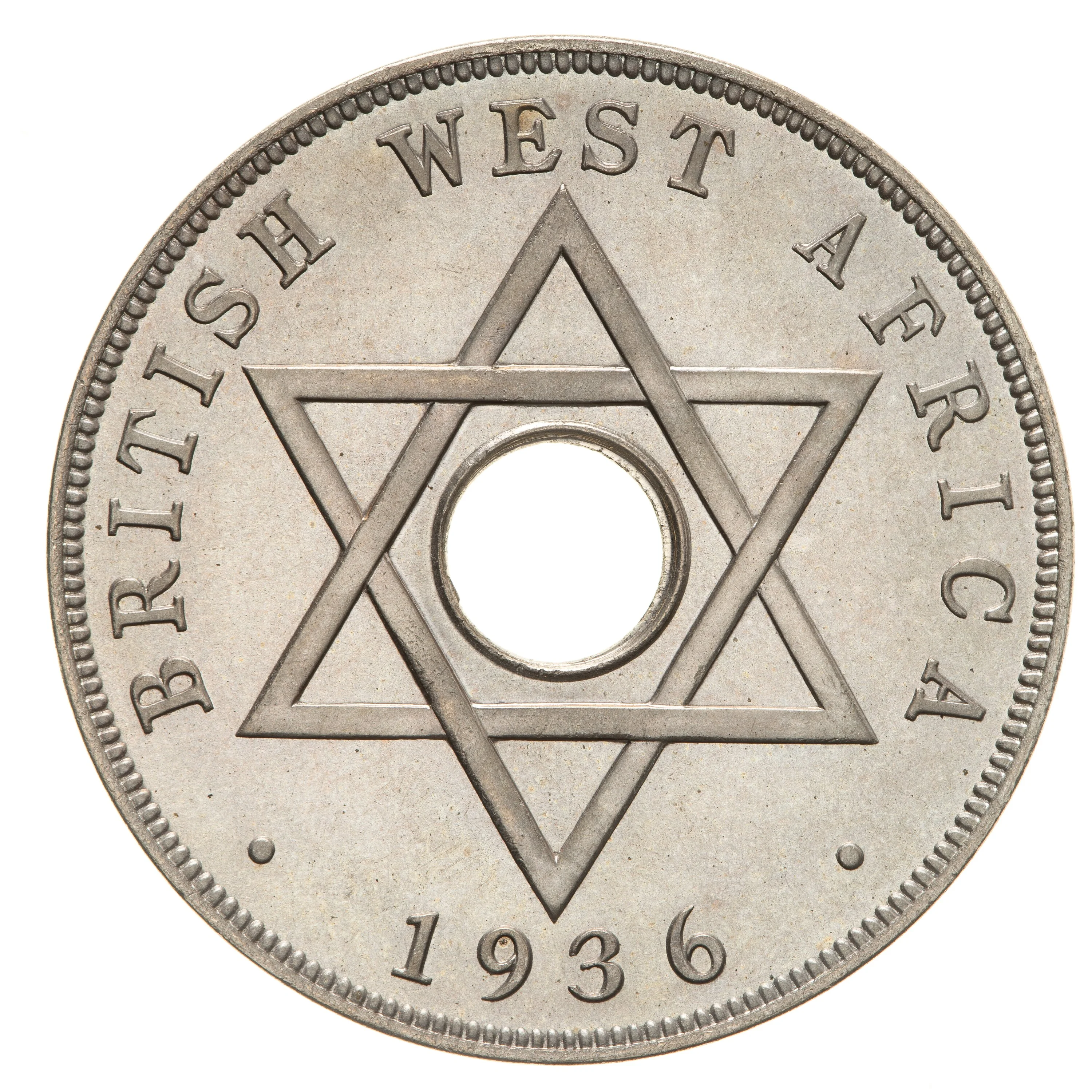
1 penny – British West Africa
Add to wishlist
Context
Year: 1936
Country: Western African States
Issuer: British West Africa
Ruler: Edward VIII
Currency:
(1907—1968)
Demonetized: Yes
Total mintage: 33,104,000
Material
Diameter: 30.5 mm
Weight: 9.45 g
Thickness: 1.8 mm
Shape: Round with a round hole
Composition: Copper-nickel
Technique: Milled
Alignment: Medal alignment
flip
References
KM: #
Numista: #9102
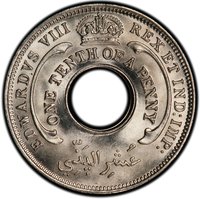
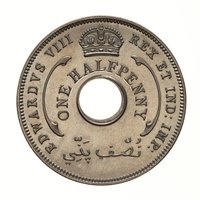
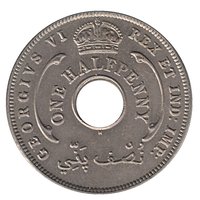
Obverse
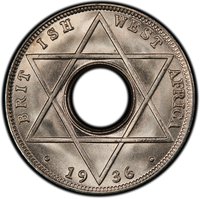
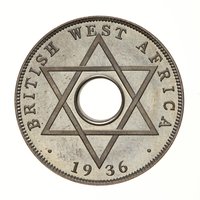
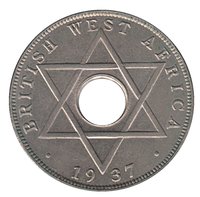
Reverse
Edge
Plain
Mints
| Name | Mark |
|---|---|
| Royal Mint (Tower Hill) | — |
| Heaton and Sons / The Mint Birmingham | H |
| Kings Norton Metal Company | KN |
Mintings
Historical background
In 1936, the currency situation in British West Africa (encompassing The Gambia, Sierra Leone, the Gold Coast, and Nigeria) was defined by the West African Currency Board (WACB), established in 1912. This system was a classic colonial monetary arrangement designed to ensure sterling convertibility and fiscal stability for British interests. The local currency, the West African pound, was rigidly pegged at par with the British pound sterling and was fully backed by sterling reserves held in London. This meant the colonies had no independent monetary policy; the primary function of the currency board was to automatically issue and redeem local currency in exchange for sterling, facilitating colonial trade and remittances.
The system prioritized the integration of West Africa into the British imperial economy over local developmental needs. Export crops like cocoa, palm oil, and groundnuts were financed and traded in sterling, ensuring profits were easily repatriated to London. While the WACB provided price stability and eliminated exchange rate risk for British merchants and administrators, it also meant that the money supply was determined not by the economic conditions in West Africa, but by the colonies' balance of payments with Britain. This often led to deflationary pressures and a lack of credit for local enterprise, as the currency could not be created to stimulate internal economic activity.
By the mid-1930s, this arrangement faced growing, though not yet overt, criticism. The Great Depression had exposed the vulnerabilities of economies tied to a few volatile commodity exports, and the rigid currency board system was seen by some emerging nationalist thinkers and economists as an instrument that stifled local banking and industrial development. However, in 1936, the system remained firmly entrenched, operating smoothly to serve its primary purpose: ensuring monetary stability and sterling convertibility for the benefit of colonial administration and British commercial interests, with West Africa's own financial autonomy deferred to a future post-colonial era.
The system prioritized the integration of West Africa into the British imperial economy over local developmental needs. Export crops like cocoa, palm oil, and groundnuts were financed and traded in sterling, ensuring profits were easily repatriated to London. While the WACB provided price stability and eliminated exchange rate risk for British merchants and administrators, it also meant that the money supply was determined not by the economic conditions in West Africa, but by the colonies' balance of payments with Britain. This often led to deflationary pressures and a lack of credit for local enterprise, as the currency could not be created to stimulate internal economic activity.
By the mid-1930s, this arrangement faced growing, though not yet overt, criticism. The Great Depression had exposed the vulnerabilities of economies tied to a few volatile commodity exports, and the rigid currency board system was seen by some emerging nationalist thinkers and economists as an instrument that stifled local banking and industrial development. However, in 1936, the system remained firmly entrenched, operating smoothly to serve its primary purpose: ensuring monetary stability and sterling convertibility for the benefit of colonial administration and British commercial interests, with West Africa's own financial autonomy deferred to a future post-colonial era.
🌱 Common