

Peru
Context
Material
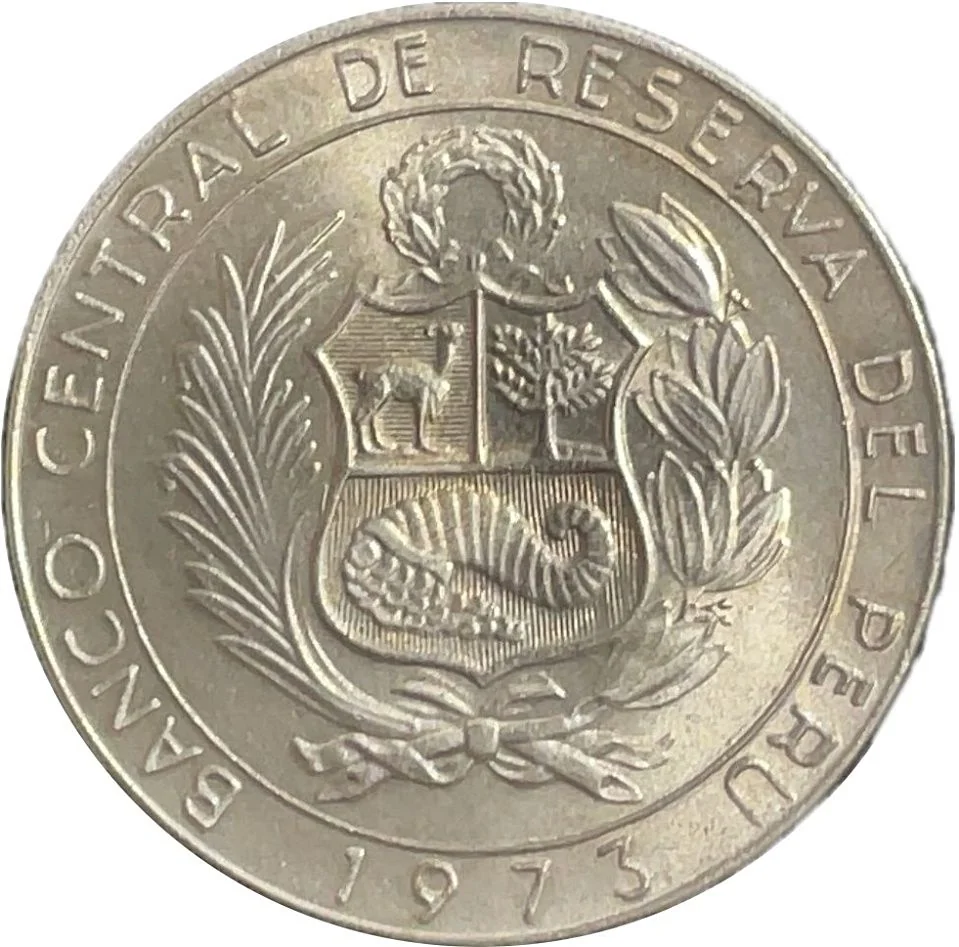
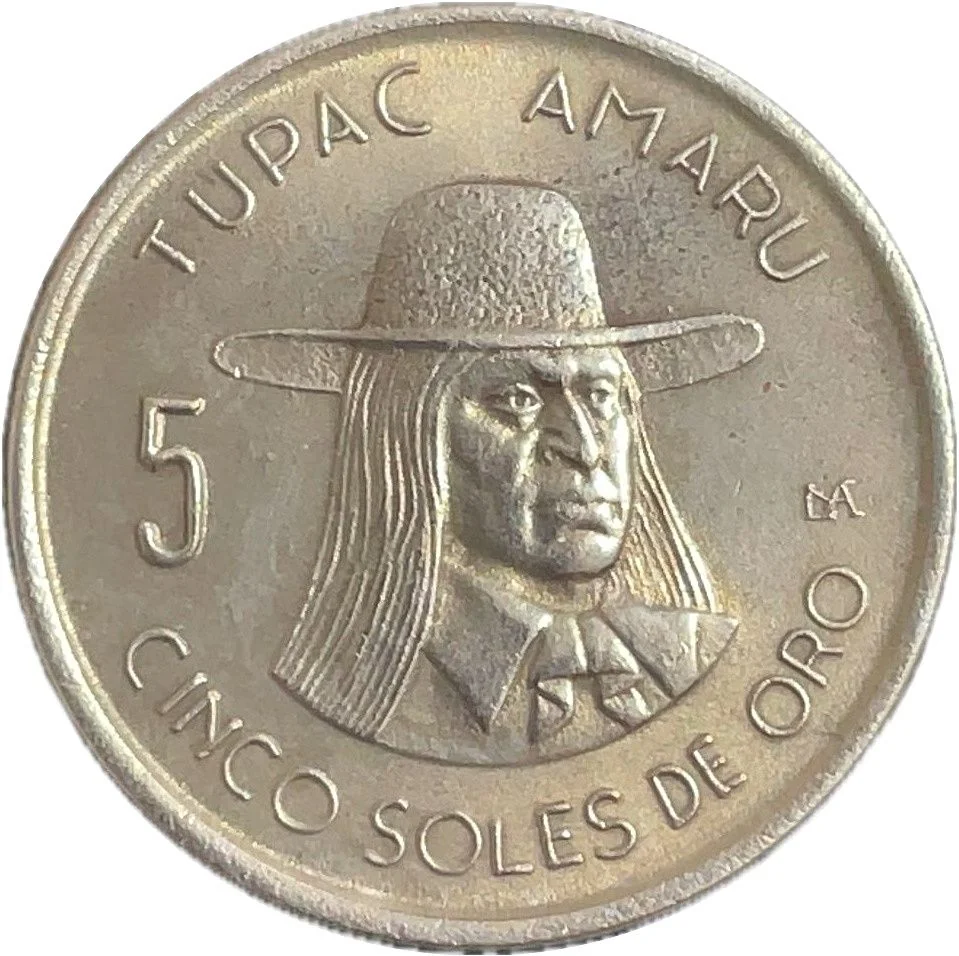
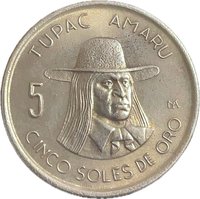
Diameter: 25.57 mm
Weight: 7.88 g
Thickness: 2.2 mm
Shape: Round
Composition: Copper-nickel
Standard: Silver quarter ounce
Technique: Milled
Alignment: Coin alignment
flip
References
KM: #Click to copy to clipboard257
Numista: #9098
Value
Exchange value: 5 PEH
Categories
| Symbol> Cornucopia |
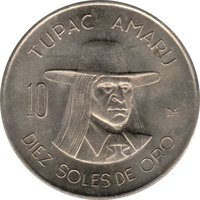
| Person> Military leader |
| Object> Hat |
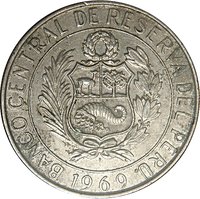
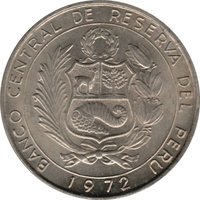
| Symbols> Coat of Arms |
Mintings
| Year | Mint Mark | Mintage | Quality | Collection |
|---|---|---|---|---|
| 1972 | — | 2,068,000 | ||
| 1973 | — | 475,000 | ||
| 1974 | — | — | ||
| 1975 | — | — |
Historical background
In 1972, Peru was under the left-leaning military government of General Juan Velasco Alvarado, who had seized power in 1968. The regime pursued a nationalist and reformist agenda, marked by sweeping land reforms, the nationalization of key industries (notably the expropriation of the International Petroleum Company in 1968), and a state-led development model. This period saw significant economic expansion, fueled by high public spending and favorable terms of trade, with the Peruvian sol maintaining a fixed exchange rate of S/. 38.70 per US dollar, a peg established in 1960.
However, beneath this apparent stability, significant pressures were building. The government's expansive fiscal policies, financed by foreign borrowing and central bank credit, began to stoke inflationary pressures. While price controls on essential goods masked the full effect for consumers, the money supply was growing rapidly. Furthermore, the fixed exchange rate, combined with a complex system of multiple rates for different transactions, was becoming increasingly overvalued. This overvaluation discouraged non-traditional exports and encouraged imports, slowly eroding the country's balance of payments position.
Consequently, 1972 represents the calm before the storm. The structural imbalances created by Velasco's policies—fiscal deficits, monetary expansion, and an overvalued currency—were not yet catastrophic, but they were firmly entrenched. The economy was still buoyed by external factors, yet the foundations for the severe economic crises, devaluations, and hyperinflation that would plague Peru in the late 1970s and 1980s were being laid during this period of controlled prices and a seemingly stable sol.
However, beneath this apparent stability, significant pressures were building. The government's expansive fiscal policies, financed by foreign borrowing and central bank credit, began to stoke inflationary pressures. While price controls on essential goods masked the full effect for consumers, the money supply was growing rapidly. Furthermore, the fixed exchange rate, combined with a complex system of multiple rates for different transactions, was becoming increasingly overvalued. This overvaluation discouraged non-traditional exports and encouraged imports, slowly eroding the country's balance of payments position.
Consequently, 1972 represents the calm before the storm. The structural imbalances created by Velasco's policies—fiscal deficits, monetary expansion, and an overvalued currency—were not yet catastrophic, but they were firmly entrenched. The economy was still buoyed by external factors, yet the foundations for the severe economic crises, devaluations, and hyperinflation that would plague Peru in the late 1970s and 1980s were being laid during this period of controlled prices and a seemingly stable sol.
🌱 Common