

Peru
Context

Material
Diameter: 31 mm
Weight: 10 g
Thickness: 1.73 mm
Shape: Round
Composition: Copper-nickel
Technique: Milled
Alignment: Coin alignment
flip
References
KM: #Click to copy to clipboard253
Numista: #5894
Value
Exchange value: 10 PEH
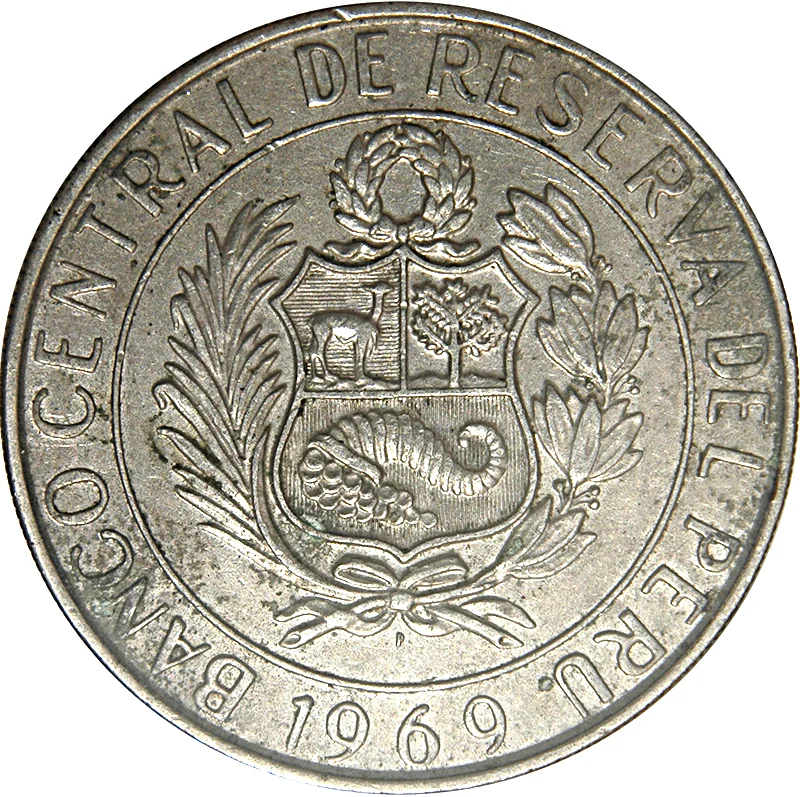
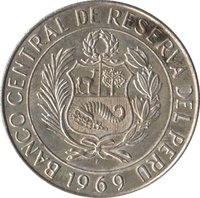
Obverse
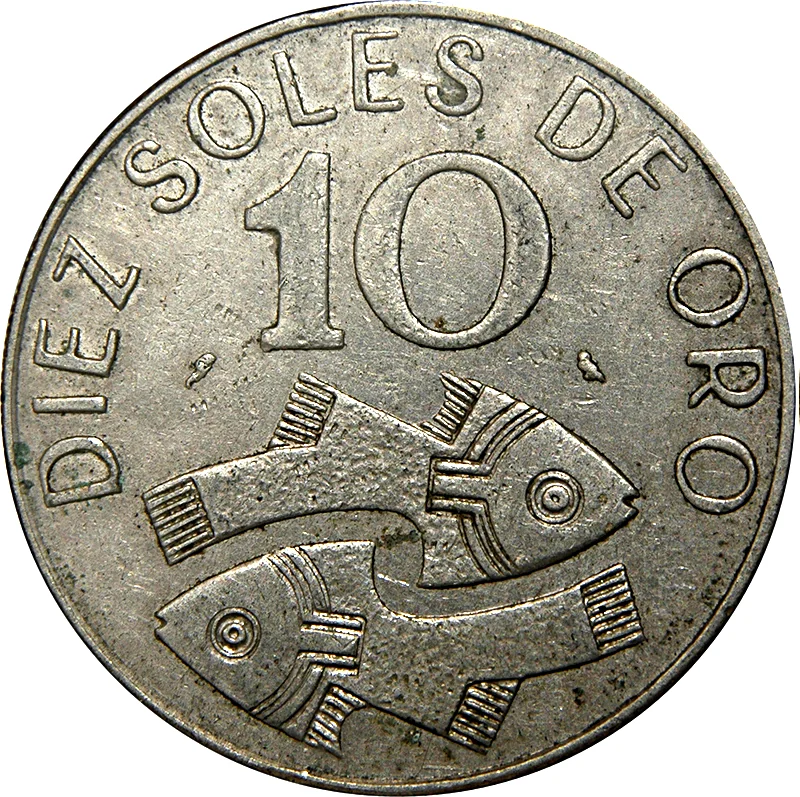
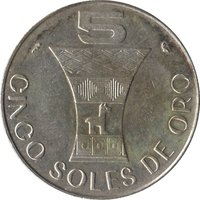
Reverse
Edge
Reeded
Mints
| Name | Mark |
|---|---|
| Monnaie de Paris | — |
Mintings
| Year | Mint Mark | Mintage | Quality | Collection |
|---|---|---|---|---|
| 1969 | — | 15,000,000 |
Historical background
In 1969, Peru's currency situation was characterized by a period of relative stability under a fixed exchange rate regime, but one that was fundamentally strained by the economic policies and political ambitions of the revolutionary military government of General Juan Velasco Alvarado. The official currency, the sol, was pegged to the U.S. dollar at a rate of S/. 38.70 per dollar, a parity established in 1967. This peg was maintained through strict capital controls and the management of foreign reserves by the Central Reserve Bank of Peru (BCRP). However, this stability was somewhat artificial, as it was supported by borrowing and did not fully reflect underlying economic pressures.
The government's sweeping agrarian reform and nationalization of key industries, including the expropriation of the International Petroleum Company in 1968, created an atmosphere of international investor uncertainty. While these actions aimed to foster economic sovereignty, they also led to a reduction in foreign direct investment and increased reliance on external debt to finance ambitious state-led development projects. Inflationary pressures were building due to expansionary fiscal policies and increased public spending, which the fixed exchange rate helped to mask temporarily. The cost of imports remained stable, but the country's balance of payments was under growing stress.
Consequently, the currency stability of 1969 proved to be a calm before the storm. The structural economic imbalances, coupled with the global oil price shocks of the early 1970s, would eventually become unsustainable. The pressures culminated in 1975 with a significant devaluation, marking the beginning of a prolonged period of currency instability, devaluations, and hyperinflation that would plague Peru for the next two decades, ultimately leading to the introduction of a new currency, the inti, in 1985.
The government's sweeping agrarian reform and nationalization of key industries, including the expropriation of the International Petroleum Company in 1968, created an atmosphere of international investor uncertainty. While these actions aimed to foster economic sovereignty, they also led to a reduction in foreign direct investment and increased reliance on external debt to finance ambitious state-led development projects. Inflationary pressures were building due to expansionary fiscal policies and increased public spending, which the fixed exchange rate helped to mask temporarily. The cost of imports remained stable, but the country's balance of payments was under growing stress.
Consequently, the currency stability of 1969 proved to be a calm before the storm. The structural economic imbalances, coupled with the global oil price shocks of the early 1970s, would eventually become unsustainable. The pressures culminated in 1975 with a significant devaluation, marking the beginning of a prolonged period of currency instability, devaluations, and hyperinflation that would plague Peru for the next two decades, ultimately leading to the introduction of a new currency, the inti, in 1985.
🌱 Very Common