

10 escudos (Independence) – Cape Verde
Add to wishlist
Non-circulating coins
Commemoration: 10th Anniversary of Independence
Cape Verde
Context
Year: 1985
Issuer: Cape Verde
Period:
(since 1975)
Currency:
(since 1914)
Demonetization: 1995
Total mintage: 50
Material
References
KM: #
Numista: #90958
Value
Exchange value: 10 CVE
Bullion value: $1037.00
Obverse
Description:
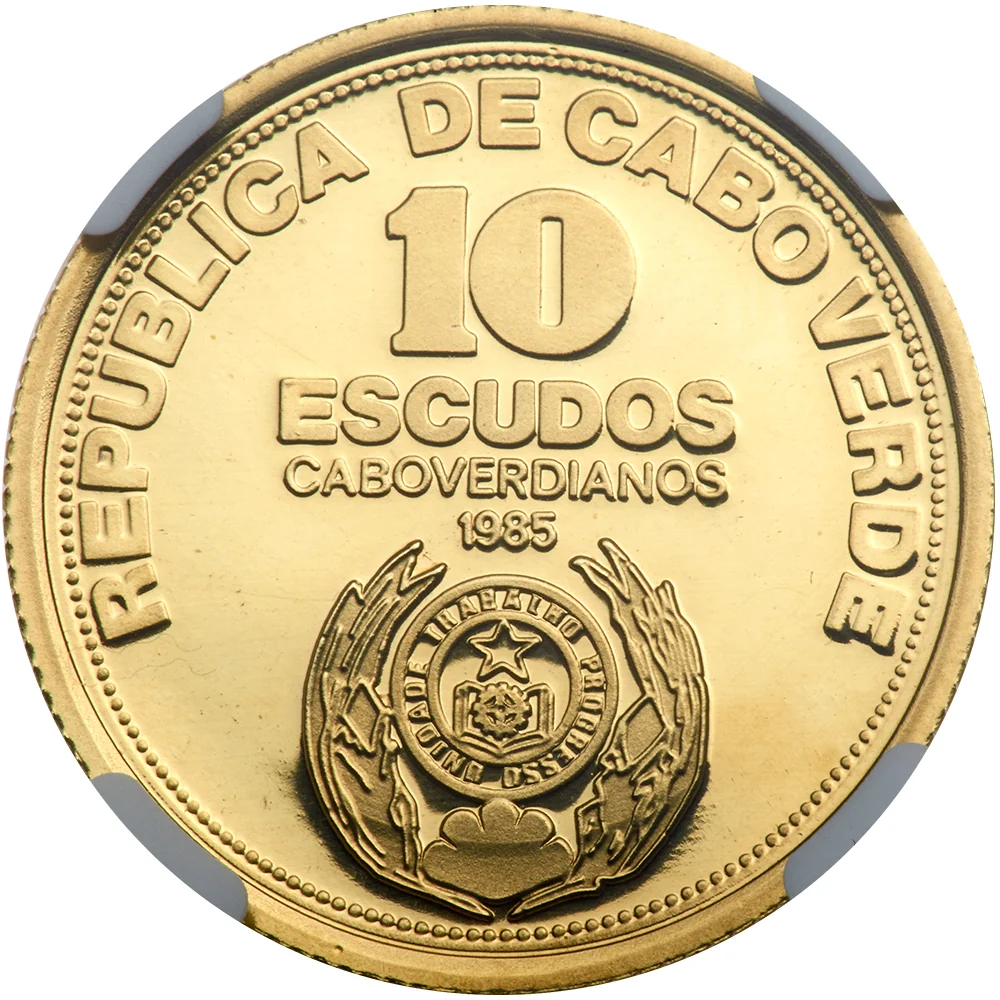
Denomination and date above wreath-encircled emblem.
Inscription:
REPUBLICA DE CABO VERDE
10
ESCUDOS
CABOVERDIANOS
1985
10
ESCUDOS
CABOVERDIANOS
1985
Translation:
REPUBLIC OF CAPE VERDE
10
ESCUDOS
CAPE VERDEAN
1985
10
ESCUDOS
CAPE VERDEAN
1985
Script: Latin
Language: Portuguese
Reverse
Description:
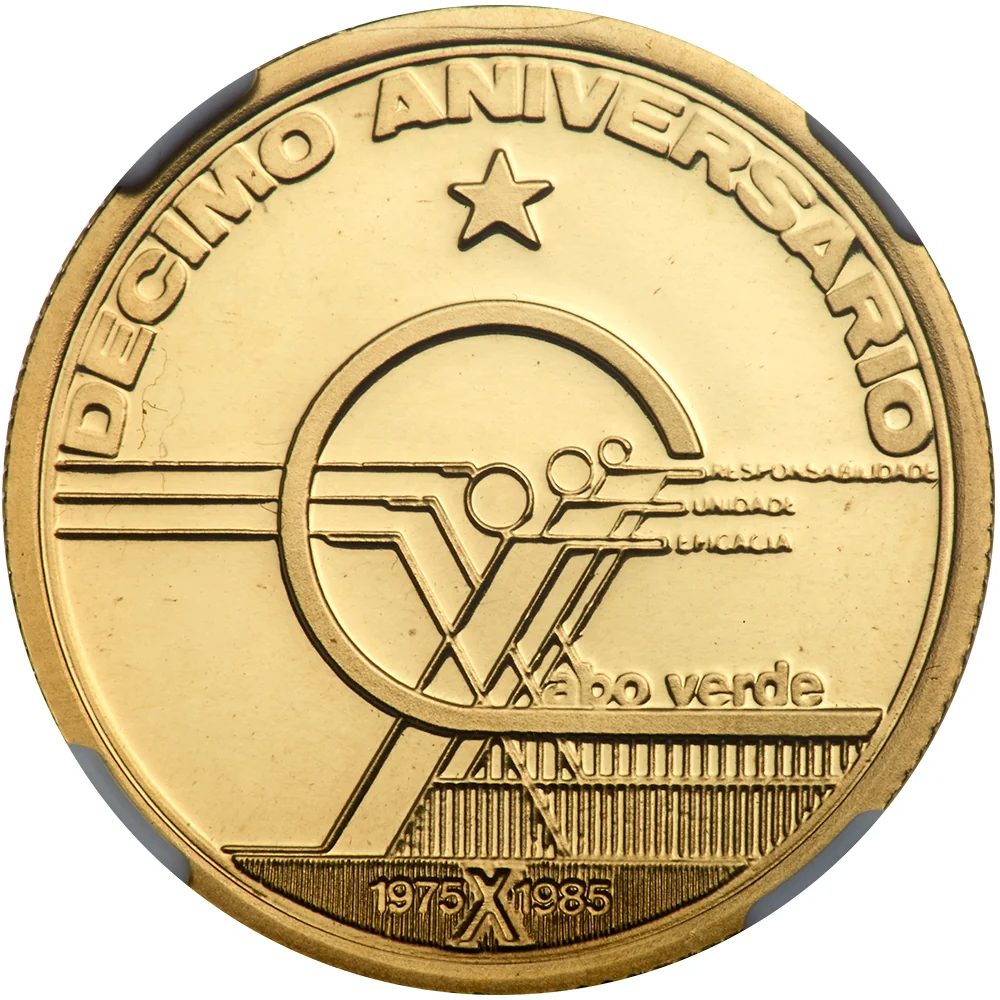
Center star over letter design.
Inscription:
DECIMO ANIVERSARIO
CABO VERDE
1975 X 1985
CABO VERDE
1975 X 1985
Script: Latin
Edge
Categories
| Event> Independence |
Mintings
| Year | Mint Mark | Mintage | Quality | Collection |
|---|---|---|---|---|
| 1985 | — | 50 | Proof |
Historical background
In 1985, the currency situation in Cape Verde was defined by the use of the Cape Verdean escudo (CVE), which was pegged to the Portuguese escudo. This fixed exchange rate was a legacy of the colonial period and was maintained after independence in 1975, reflecting the nation's continued close economic and administrative ties with Portugal. The peg provided a crucial element of monetary stability for the small, insular archipelago, which relied heavily on imports, remittances from its diaspora, and foreign aid. However, it also meant that Cape Verde's monetary policy was largely dictated by Portugal's economic conditions, limiting autonomous tools to manage its own economy.
The country's economy in the mid-1980s was fragile, characterized by chronic trade deficits, limited natural resources, and recurring droughts that devastated agricultural output. Consequently, foreign exchange reserves were under constant pressure. The government, led by the African Party for the Independence of Cape Verde (PAICV), operated a centrally planned economy and maintained strict controls on foreign currency transactions. Access to foreign exchange for imports was rationed and prioritized for essential goods like food and fuel, a necessity given the scarcity of hard currency.
This period represented a transitional phase before significant economic reforms. The fixed peg to the Portuguese escudo, while a stabilizer, underscored Cape Verde's external dependency. By 1985, discussions on liberalizing the economy were beginning, which would later lead to a shift toward a market-oriented system in the early 1990s. The currency regime itself remained stable on the surface, but it functioned within a constrained and controlled economic environment facing the fundamental challenges of underdevelopment and isolation.
The country's economy in the mid-1980s was fragile, characterized by chronic trade deficits, limited natural resources, and recurring droughts that devastated agricultural output. Consequently, foreign exchange reserves were under constant pressure. The government, led by the African Party for the Independence of Cape Verde (PAICV), operated a centrally planned economy and maintained strict controls on foreign currency transactions. Access to foreign exchange for imports was rationed and prioritized for essential goods like food and fuel, a necessity given the scarcity of hard currency.
This period represented a transitional phase before significant economic reforms. The fixed peg to the Portuguese escudo, while a stabilizer, underscored Cape Verde's external dependency. By 1985, discussions on liberalizing the economy were beginning, which would later lead to a shift toward a market-oriented system in the early 1990s. The currency regime itself remained stable on the surface, but it functioned within a constrained and controlled economic environment facing the fundamental challenges of underdevelopment and isolation.
✨ Legendary