

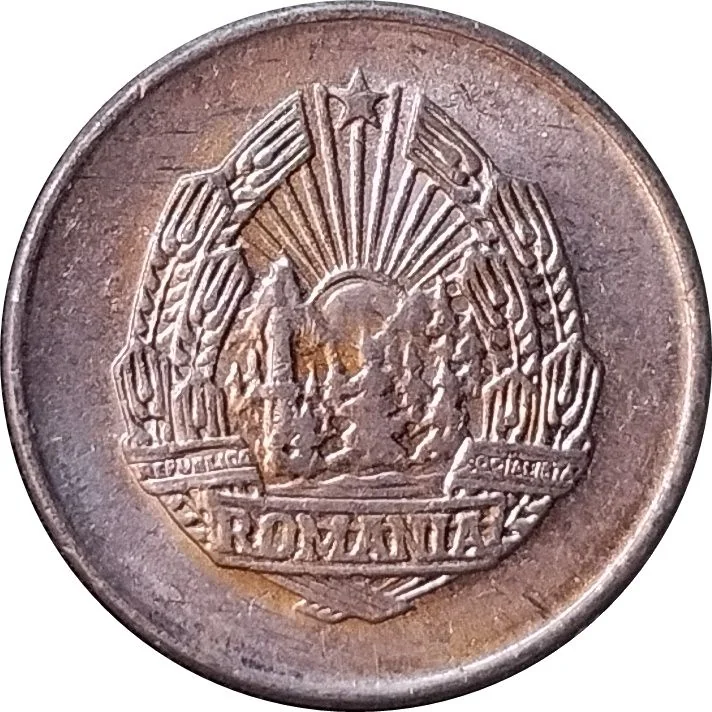
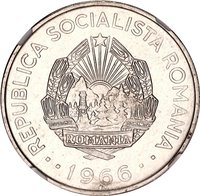
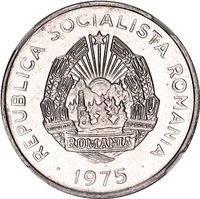
Obverse
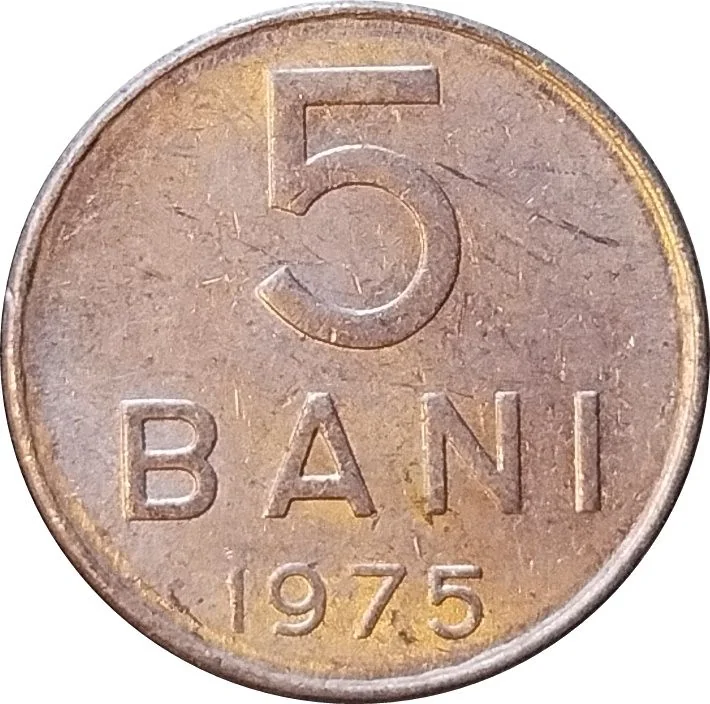
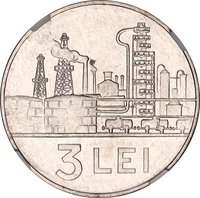
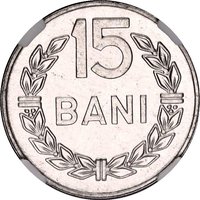
Reverse
Edge
Plain
Categories
| Symbols> Coat of Arms |
Mints
| Name | Mark |
|---|---|
| State Mint | — |
Mintings
| Year | Mint Mark | Mintage | Quality | Collection |
|---|---|---|---|---|
| 1975 | — | — |
Historical background
In 1975, Romania's currency situation was defined by the rigidities and distortions of its centrally planned economy under Nicolae Ceaușescu's regime. The national currency, the leu, was a non-convertible currency with an official exchange rate set arbitrarily by the state, bearing little relation to its actual market value or the health of the economy. Internally, this system facilitated state control over all economic activity, but it created a significant disconnect between prices, wages, and the availability of goods, leading to pervasive shortages and a growing black market where the leu traded at a fraction of its official value.
Externally, Romania was grappling with a severe foreign debt crisis, a direct result of Ceaușescu's ambitious industrialization drives of the late 1960s and early 1970s, which were financed heavily by Western loans. By the mid-1970s, the global oil shock and rising interest rates had dramatically increased the cost of servicing this debt. This pressure marked the beginning of a decisive shift in policy, as the regime started to prioritize debt repayment above all else, setting the stage for the extreme austerity of the 1980s.
Consequently, strict currency controls were paramount. The government monopolized all foreign exchange earnings from exports, and citizens were prohibited from holding or trading foreign currency. Access to hard currency for imports or travel was extremely limited and tightly controlled by the state, reserved almost exclusively for securing critical industrial inputs. This hermetic financial system isolated Romania from international capital flows but trapped its population in an economy of scarcity, where the official leu was increasingly meaningless for obtaining quality or imported goods.
Externally, Romania was grappling with a severe foreign debt crisis, a direct result of Ceaușescu's ambitious industrialization drives of the late 1960s and early 1970s, which were financed heavily by Western loans. By the mid-1970s, the global oil shock and rising interest rates had dramatically increased the cost of servicing this debt. This pressure marked the beginning of a decisive shift in policy, as the regime started to prioritize debt repayment above all else, setting the stage for the extreme austerity of the 1980s.
Consequently, strict currency controls were paramount. The government monopolized all foreign exchange earnings from exports, and citizens were prohibited from holding or trading foreign currency. Access to hard currency for imports or travel was extremely limited and tightly controlled by the state, reserved almost exclusively for securing critical industrial inputs. This hermetic financial system isolated Romania from international capital flows but trapped its population in an economy of scarcity, where the official leu was increasingly meaningless for obtaining quality or imported goods.
🌱 Very Common