

5 kopecks – Russian Empire
Add to wishlist
Russia
Context
Years: 1916–1917
Country: Russia
Issuer: Russian Empire
Ruler: Nicholas II
Currency:
(1700—1917)
Demonetized: Yes
Total mintage: 8,000,000
Material
References
Y: #
Numista: #90427
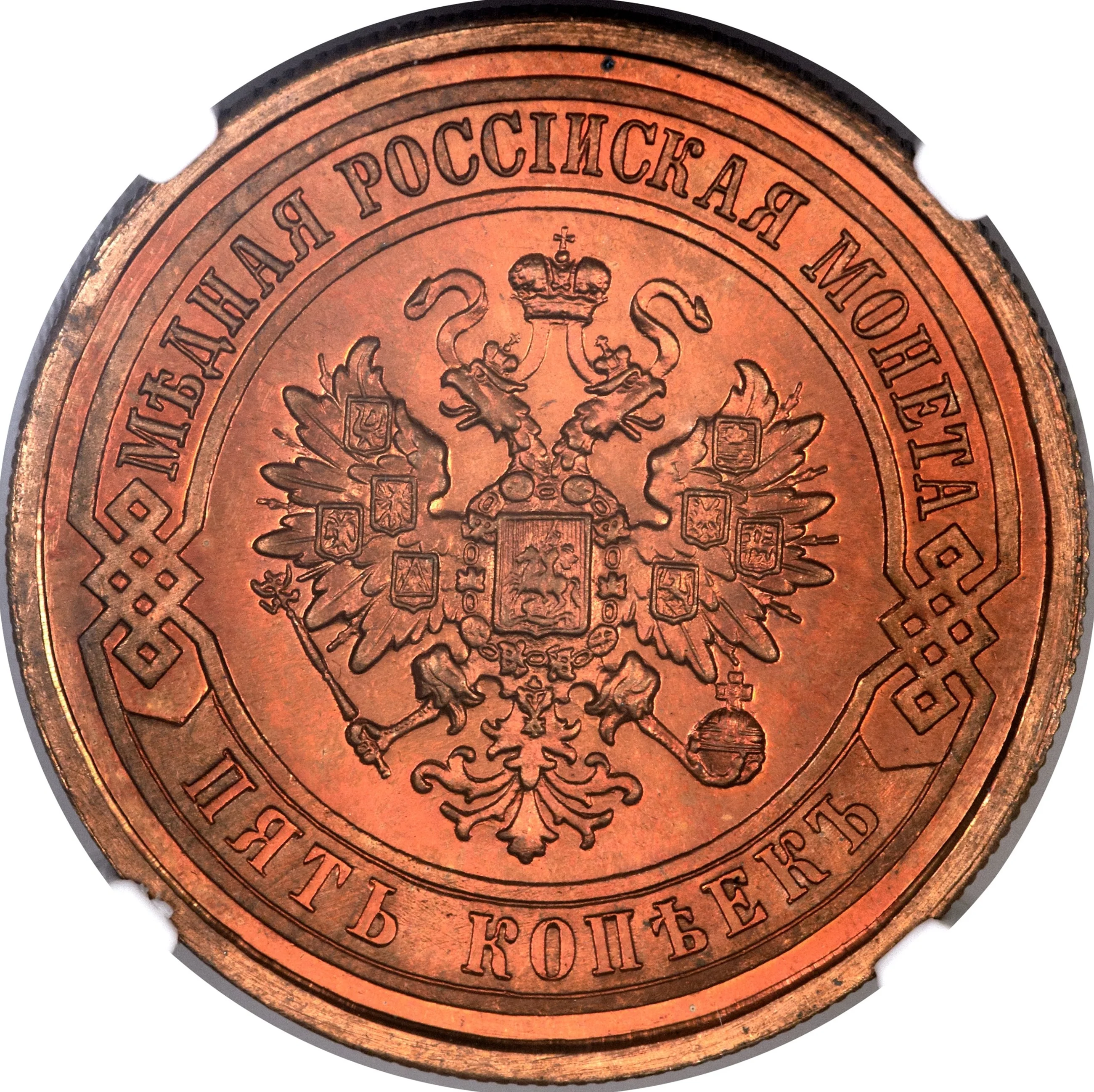
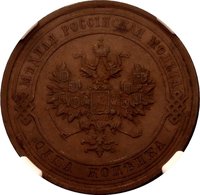
Obverse
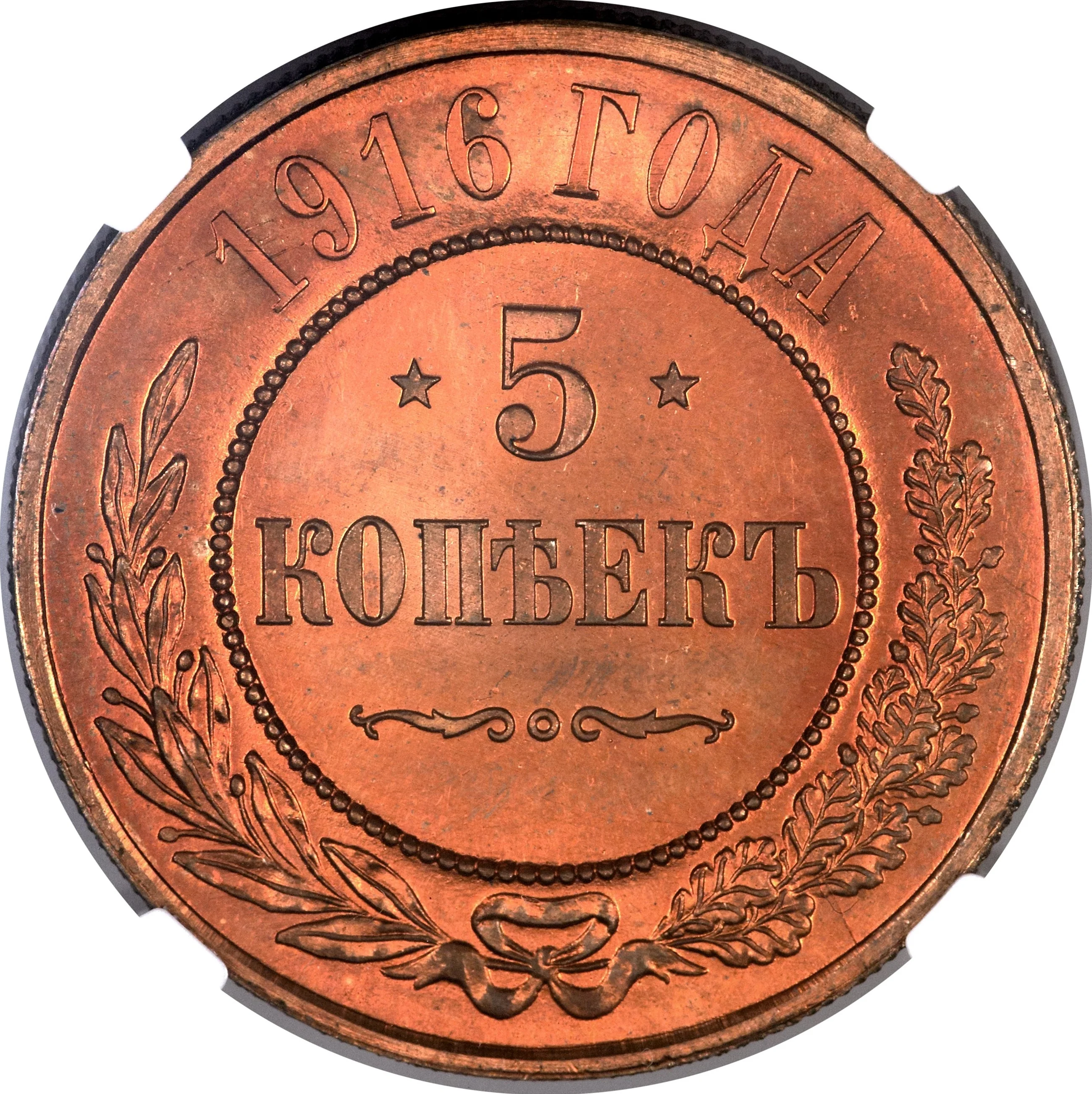
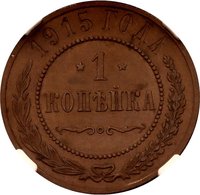
Reverse
Edge
Reeded
Categories
| Symbols> Coat of Arms |
Mints
| Name | Mark |
|---|---|
| Saint Petersburg | — |
Mintings
| Year | Mint Mark | Mintage | Quality | Collection |
|---|---|---|---|---|
| 1916 | — | 8,000,000 | ||
| 1917 | — | — |
Historical background
By 1916, the currency system of the Russian Empire was in a state of severe and accelerating crisis, a direct consequence of the colossal financial strain of World War I. The government, led by the Tsarist regime, had abandoned the gold standard at the war's outset to fund its military expenditures. With taxation and domestic loans insufficient, it turned overwhelmingly to the printing press, authorizing the State Bank to issue massive amounts of paper ruble notes, known as kerenki. This led to a rapid expansion of the money supply without corresponding economic output, planting the seeds of hyperinflation.
The economic reality on the ground was one of scarcity and soaring prices. Military procurement monopolized industrial production, while the mobilization of millions of men and the disruption of transportation crippled agriculture and consumer goods manufacturing. This severe shortage of goods, combined with the flood of paper currency, triggered a classic inflationary spiral. The real value of the ruble plummeted, prices for basic necessities skyrocketed, and a large black market emerged. Wages failed to keep pace, leading to plummeting living standards, severe urban food shortages, and growing popular discontent.
This monetary collapse was both a symptom and a catalyst of the Empire's broader disintegration. The erosion of the ruble's value devastated savings, undermined any remaining public confidence in the Tsarist government's economic management, and fueled social unrest. The financial breakdown directly contributed to the wave of strikes and bread riots in early 1917. Thus, the currency situation of 1916 was not merely a fiscal issue; it was a critical factor in eroding the very foundations of the state, setting the immediate economic stage for the revolutions of 1917.
The economic reality on the ground was one of scarcity and soaring prices. Military procurement monopolized industrial production, while the mobilization of millions of men and the disruption of transportation crippled agriculture and consumer goods manufacturing. This severe shortage of goods, combined with the flood of paper currency, triggered a classic inflationary spiral. The real value of the ruble plummeted, prices for basic necessities skyrocketed, and a large black market emerged. Wages failed to keep pace, leading to plummeting living standards, severe urban food shortages, and growing popular discontent.
This monetary collapse was both a symptom and a catalyst of the Empire's broader disintegration. The erosion of the ruble's value devastated savings, undermined any remaining public confidence in the Tsarist government's economic management, and fueled social unrest. The financial breakdown directly contributed to the wave of strikes and bread riots in early 1917. Thus, the currency situation of 1916 was not merely a fiscal issue; it was a critical factor in eroding the very foundations of the state, setting the immediate economic stage for the revolutions of 1917.
💎 Extremely Rare