

25 Dollars – Australia
Australia
Context

Material
Diameter: 21.7 mm
Weight: 7.78 g
Gold weight: 7.78 g
Thickness: 1.8 mm
Shape: Round
Composition: 99.99% Gold
Standard: Silver quarter ounce
Magnetic: No
Technique: Milled
Alignment: Medal alignment
flip
References
KM: #Click to copy to clipboard3772
Numista: #90102
Value
Exchange value: 25 AUD = $17.80
Bullion value: $1299.66
Inflation-adjusted value: 32.29 AUD
Obverse
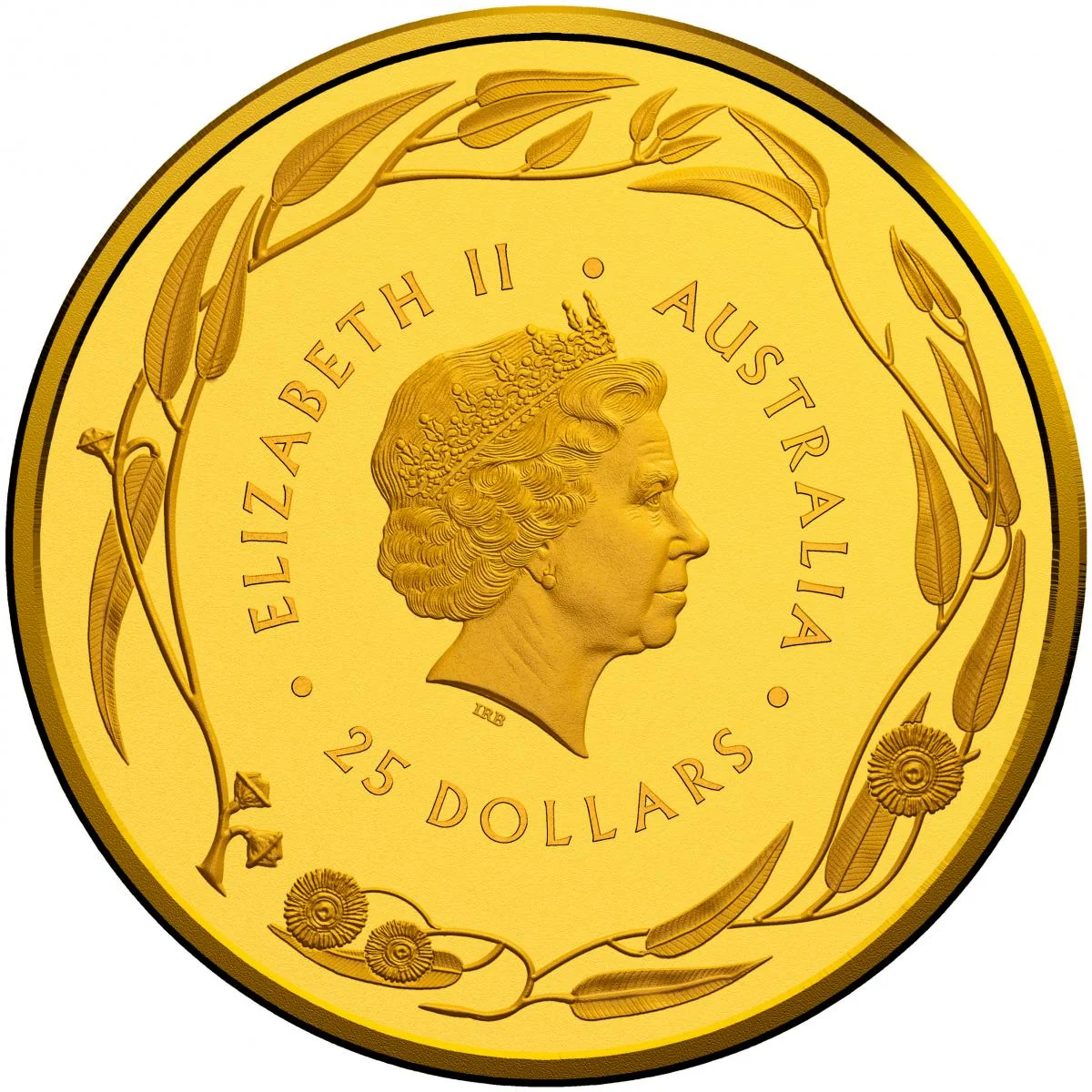
Description:
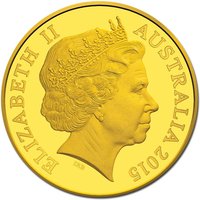
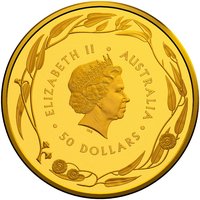
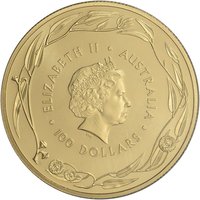
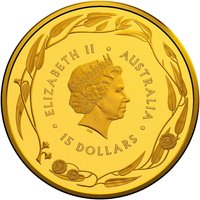
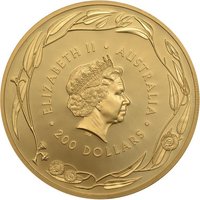
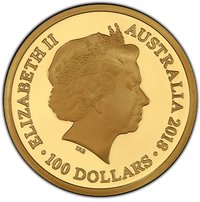
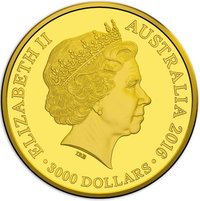
Queen Elizabeth IV, facing right, wearing the Girls of Great Britain and Ireland Tiara.
Inscription:
ELIZABETH II
AUSTRALIA
25 DOLLARS
IRB
AUSTRALIA
25 DOLLARS
IRB
Script: Latin
Designer: Ian Rank-Broadley
Reverse
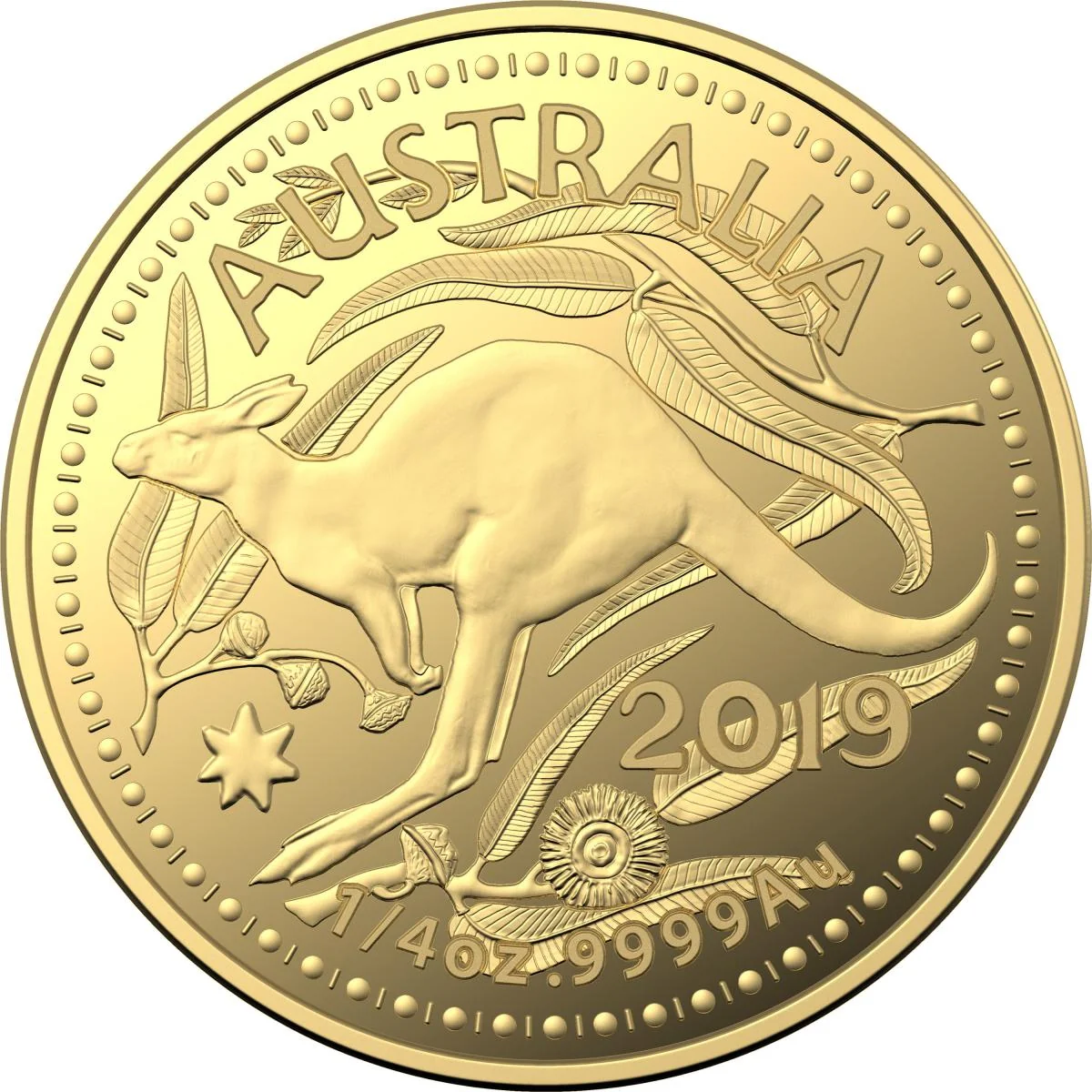
Description:
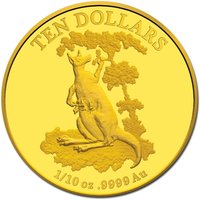
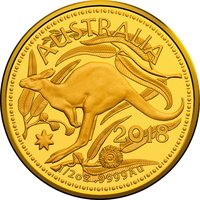
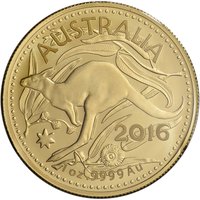
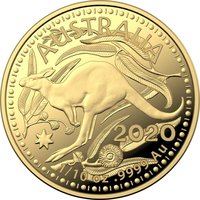
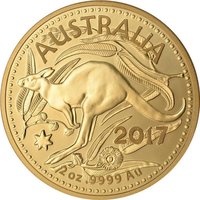
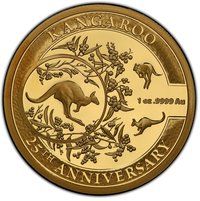
Australian penny design featuring a bounding kangaroo, Commonwealth Star, and Tasmanian Blue Gum leaves, nuts, and flowers.
Inscription:
AUSTRALIA
2016
1/4 OZ .9999 Au
2016
1/4 OZ .9999 Au
Script: Latin
Edge
Reeded
Mints
| Name | Mark |
|---|---|
| Royal Australian Mint | — |
Mintings
| Year | Mint Mark | Mintage | Quality | Collection |
|---|---|---|---|---|
| 2016 | — | — | BU | |
| 2017 | — | — | BU | |
| 2018 | — | — | BU | |
| 2019 | — | — | BU | |
| 2020 | — | — | BU | |
| 2021 | — | — | BU |
Historical background
In 2016, the Australian dollar (AUD) was characterised by a period of relative stability at historically low levels, following a significant multi-year decline from its post-float highs. The currency traded within a narrow band, mostly between US$0.71 and US$0.78, a stark contrast to the parity it enjoyed with the US dollar earlier in the decade. This subdued level was largely engineered by the Reserve Bank of Australia (RBA), which maintained a record-low cash rate of 1.5% after two cuts in May and August. The RBA's dovish stance was a deliberate strategy to support economic transition, as it openly expressed a preference for a lower exchange rate to boost non-mining sector competitiveness following the end of the mining investment boom.
The primary drivers of the AUD's weakness were divergent monetary policy paths between Australia and the United States, and volatile commodity prices. While the US Federal Reserve began a tightening cycle in late 2015, Australia continued its easing, reducing the interest rate differential and diminishing the AUD's yield appeal. Furthermore, although key export prices for iron ore and coal rebounded unexpectedly during the year, providing some support, this was offset by persistent concerns over slowing growth in China, Australia's largest trading partner. This created a tension between improving terms of trade and underlying global risk sentiment, which kept the currency in check.
Domestically, the lower AUD was welcomed as it aided rebalancing efforts, providing a boost to tourism, education exports, and local manufacturing. However, it also reflected ongoing economic challenges, including subdued wage growth and low inflation, which lingered below the RBA's target band. Overall, the 2016 currency situation represented a managed adjustment—a "lower-for-longer" equilibrium that supported economic transition while policymakers navigated the lingering uncertainties of the post-mining boom era and a fragile global environment.
The primary drivers of the AUD's weakness were divergent monetary policy paths between Australia and the United States, and volatile commodity prices. While the US Federal Reserve began a tightening cycle in late 2015, Australia continued its easing, reducing the interest rate differential and diminishing the AUD's yield appeal. Furthermore, although key export prices for iron ore and coal rebounded unexpectedly during the year, providing some support, this was offset by persistent concerns over slowing growth in China, Australia's largest trading partner. This created a tension between improving terms of trade and underlying global risk sentiment, which kept the currency in check.
Domestically, the lower AUD was welcomed as it aided rebalancing efforts, providing a boost to tourism, education exports, and local manufacturing. However, it also reflected ongoing economic challenges, including subdued wage growth and low inflation, which lingered below the RBA's target band. Overall, the 2016 currency situation represented a managed adjustment—a "lower-for-longer" equilibrium that supported economic transition while policymakers navigated the lingering uncertainties of the post-mining boom era and a fragile global environment.
Series: Gold Kangaroo
✨ Legendary