

5 Cents – Eastern Caribbean States
Context
Years: 1955–1965
Issuer: Eastern Caribbean States
Ruler: Elizabeth II
Currency:
(1935—1965)
Demonetized: Yes
Total mintage: 16,852,000
Material
References
KM: #Click to copy to clipboard4
Numista: #899
Value
Exchange value: 0.05 BWI$
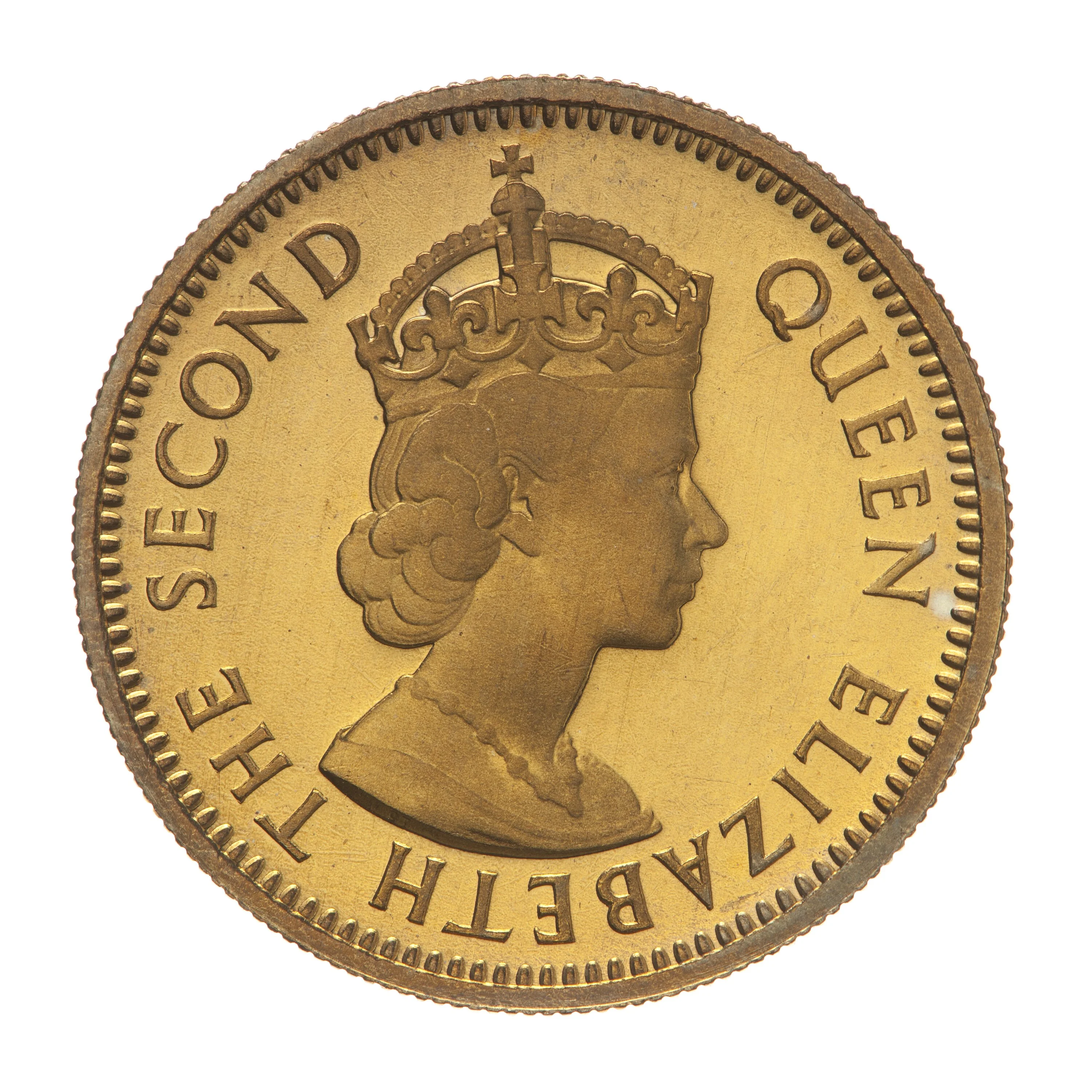
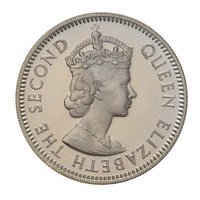
Obverse
Description:
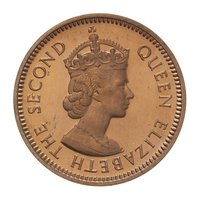
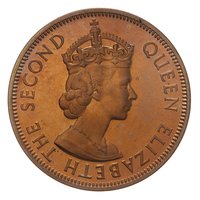
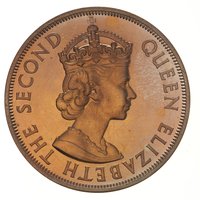
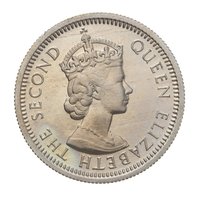
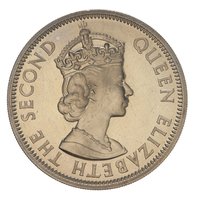
Portrait of Queen Elizabeth II facing right.
Inscription:
QUEEN ELIZABETH THE SECOND
CT
CT
Script: Latin
Engraver: Cecil Thomas
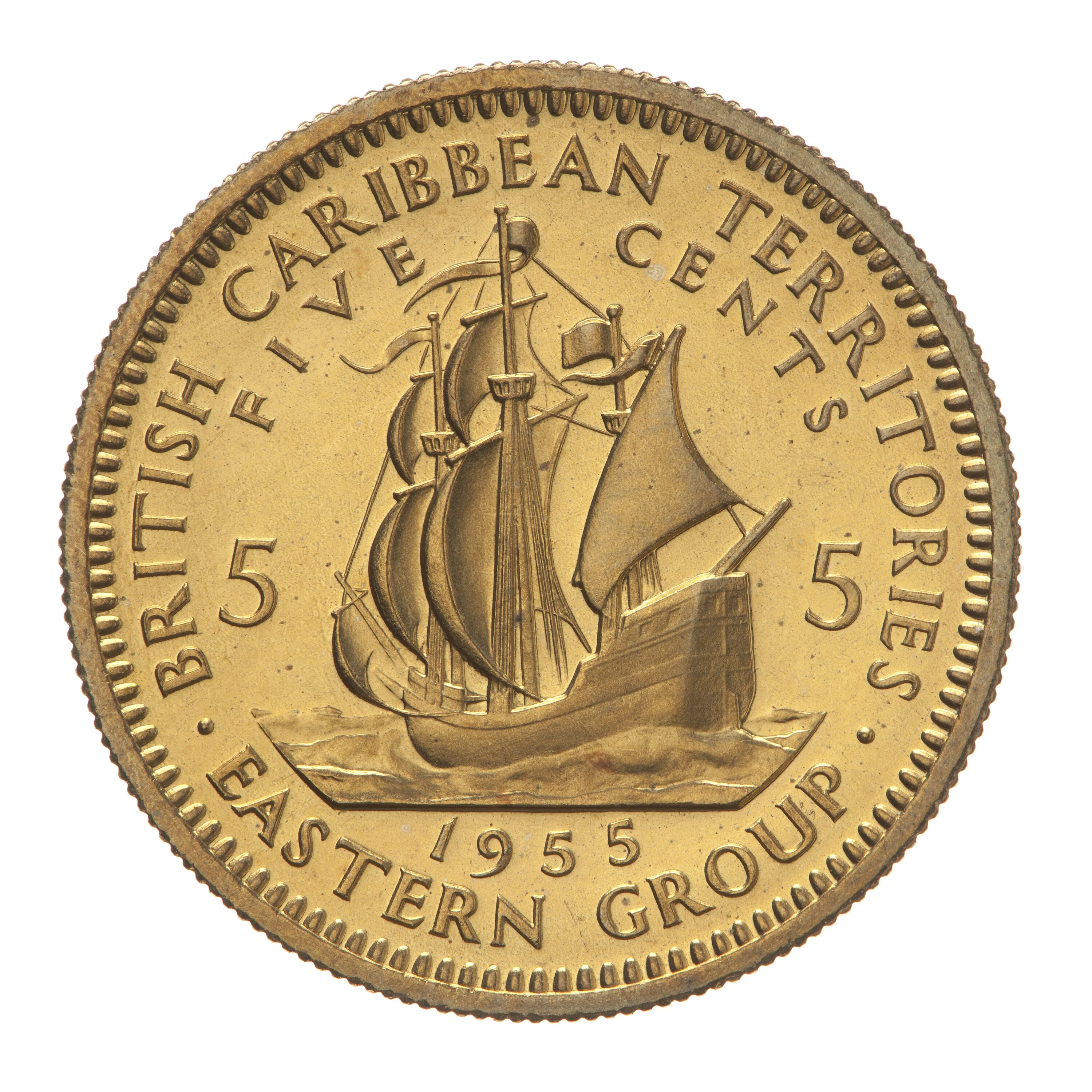
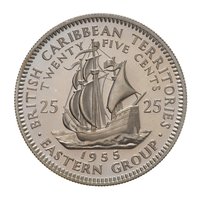
Reverse
Description:
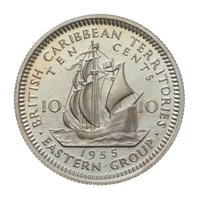
Sir Francis Drake's ship, the "Golden Hind."
Inscription:
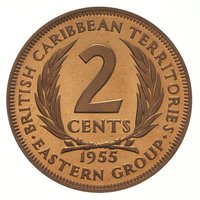
BRITISH CARIBBEAN TERRITORIES
FIVE CENTS
5 5
1965
· EASTERN GROUP ·
FIVE CENTS
5 5
1965
· EASTERN GROUP ·
Script: Latin
Engraver: Thomas Humphrey Paget
Edge
Reeded
Categories
| Transportation> Watercraft |
Mints
| Name | Mark |
|---|---|
| Royal Mint (Tower Hill) | — |
Mintings
| Year | Mint Mark | Mintage | Quality | Collection |
|---|---|---|---|---|
| 1955 | — | 8,600,000 | ||
| 1955 | — | 2,000 | Proof | |
| 1956 | — | 2,000,000 | ||
| 1956 | — | — | Proof | |
| 1960 | — | 1,000,000 | ||
| 1960 | — | — | Proof | |
| 1962 | — | — | Proof | |
| 1962 | — | 1,300,000 | ||
| 1963 | — | 200,000 | ||
| 1963 | — | — | Proof | |
| 1964 | — | 1,350,000 | ||
| 1964 | — | — | Proof | |
| 1965 | — | 2,400,000 | ||
| 1965 | — | — | Prooflike | |
| 1965 | — | — | Proof |
Historical background
In 1955, the currency situation in the Eastern Caribbean was defined by its colonial framework under British administration. The region operated on a sterling exchange standard, with the British West Indies dollar (BWI$) serving as the common currency. Issued by the British Caribbean Currency Board (BCCB), established in 1950, this currency was fully backed by sterling reserves held in London, ensuring a fixed and immutable peg to the pound sterling. This system prioritized stability and convertibility over independent monetary policy, meaning the money supply was directly tied to the region's export earnings and foreign reserves, leaving little room for managing local economic fluctuations.
Economically, the period was one of transition and underlying strain. The 1950s saw the decline of the traditional sugar plantation economy and the early stages of a shift towards bananas and light tourism. The rigid currency board system, while ensuring low inflation and fiscal discipline, was often criticized for being too conservative, potentially restricting credit for local development. Furthermore, the political landscape was evolving; the failed West Indies Federation (established 1958) was on the horizon, prompting discussions about the need for a financial institution better attuned to regional development needs than the distant Currency Board.
Thus, the currency situation in 1955 was outwardly stable but existed at a crossroads. It represented a classic colonial monetary model—secure, externally managed, and designed for the convenience of trade with the United Kingdom. However, it operated within a region beginning to contemplate political and economic self-determination. The debates of this era would ultimately lead, two decades later, to the dissolution of the BCCB and its replacement by the Eastern Caribbean Currency Authority (1965) and eventually the Eastern Caribbean Central Bank (1983), marking a move towards a more regionally controlled monetary system.
Economically, the period was one of transition and underlying strain. The 1950s saw the decline of the traditional sugar plantation economy and the early stages of a shift towards bananas and light tourism. The rigid currency board system, while ensuring low inflation and fiscal discipline, was often criticized for being too conservative, potentially restricting credit for local development. Furthermore, the political landscape was evolving; the failed West Indies Federation (established 1958) was on the horizon, prompting discussions about the need for a financial institution better attuned to regional development needs than the distant Currency Board.
Thus, the currency situation in 1955 was outwardly stable but existed at a crossroads. It represented a classic colonial monetary model—secure, externally managed, and designed for the convenience of trade with the United Kingdom. However, it operated within a region beginning to contemplate political and economic self-determination. The debates of this era would ultimately lead, two decades later, to the dissolution of the BCCB and its replacement by the Eastern Caribbean Currency Authority (1965) and eventually the Eastern Caribbean Central Bank (1983), marking a move towards a more regionally controlled monetary system.
🌱 Very Common