

2 pesos – Argentina
Add to wishlist
Circulating commemorative coins
Commemoration: Bicentennial of the Declaration of Independence Argentina
Argentina
Context
Material
References
KM: #
Numista: #89870
Value
Exchange value: 2 ARS
Obverse
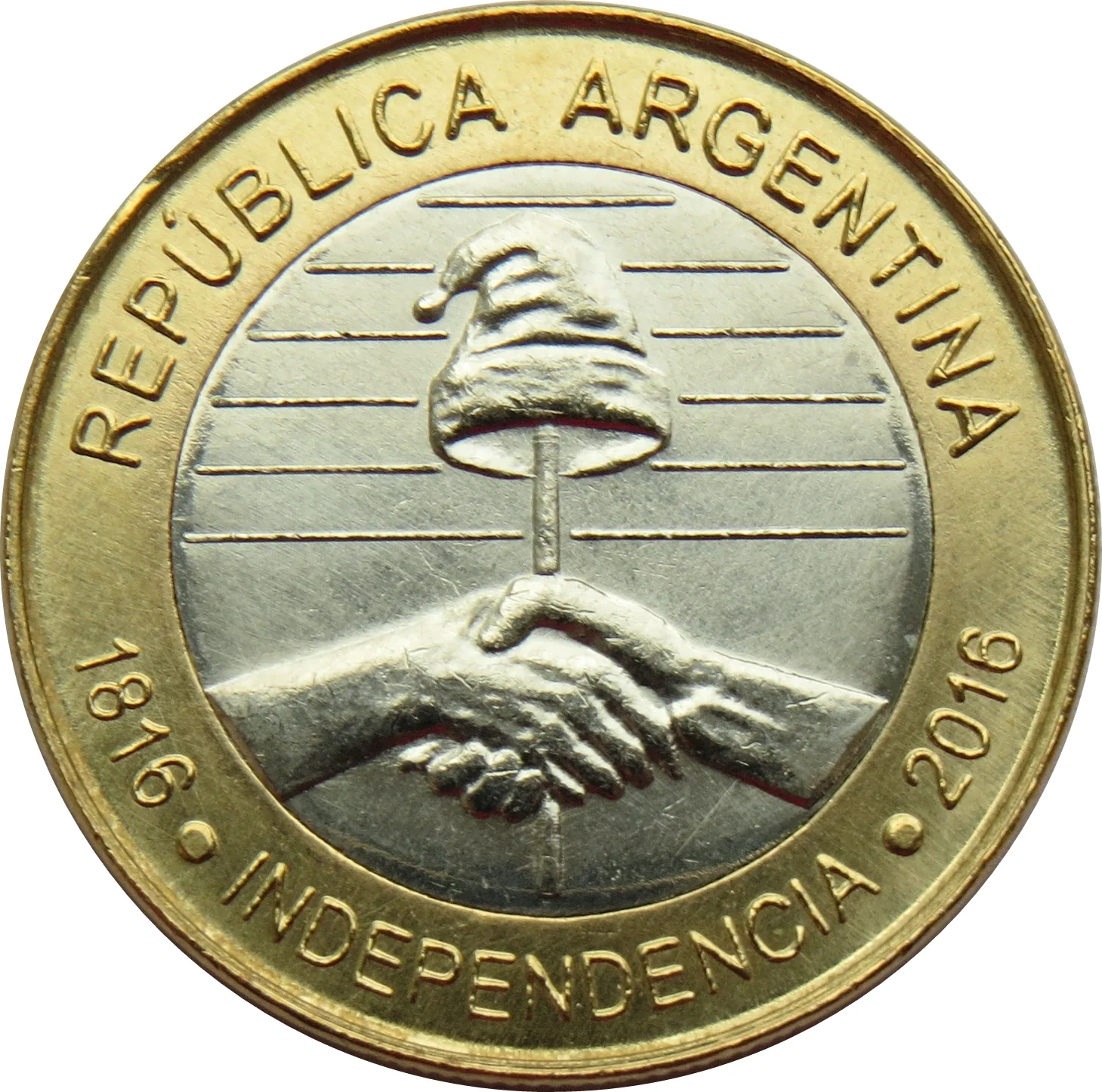
Description:
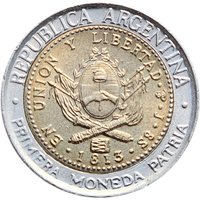
Argentine coat of arms on the center. The ring is inscribed "ARGENTINA REPUBLIC" above and "INDEPENDENCE * 1816 * 2016" below, marking the Bicentennial.
Inscription:
REPÚBLICA ARGENTINA
1816 ° INDEPENDENCIA ° 2016
1816 ° INDEPENDENCIA ° 2016
Translation:
REPUBLIC OF ARGENTINA
1816 ° INDEPENDENCE ° 2016
1816 ° INDEPENDENCE ° 2016
Script: Latin
Language: Spanish
Reverse
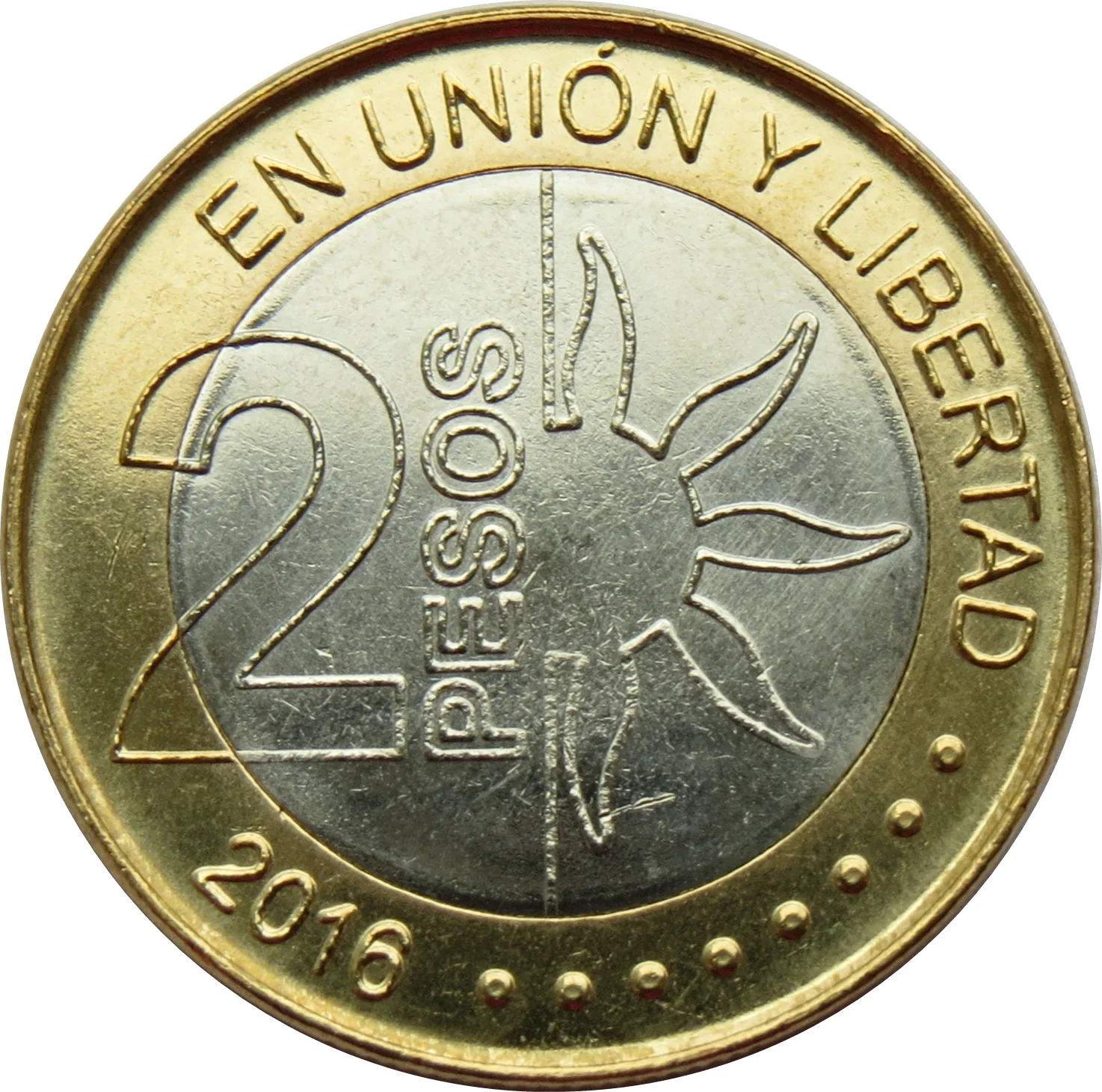
Description:
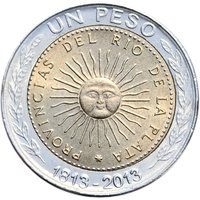
The left side of the coin's core shows the face value and the vertical word "PESOS." The design is completed by a stylized sun from General José de San Martín's military epaulet. The upper ring bears the motto "IN UNION AND FREEDOM," used since the first patriotic coins of 1813. The lower ring shows the mintage year "2016" and, to the right, an 8-point milled edge.
Inscription:
EN UNION Y LIBERTAD
2 PESOS
2016
2 PESOS
2016
Translation:
In Union and Liberty
2 Pesos
2016
2 Pesos
2016
Script: Latin
Language: Spanish
Edge
Segmented reeding
Categories
| Symbol> Sun |
| Event> Independence |
| Symbol> Hand |
| Symbols> Coat of Arms |
| Symbol> Phrygian cap |
Mints
| Name | Mark |
|---|---|
| Buenos Aires | — |
Mintings
| Year | Mint Mark | Mintage | Quality | Collection |
|---|---|---|---|---|
| 2016 | — | 200,000,000 |
Historical background
In 2016, Argentina was emerging from over a decade of economic policies under the Kirchner administrations, which had left a complex and distorted currency situation. The official exchange rate was tightly controlled by the Central Bank, creating a significant gap with the thriving black market "blue dollar." This multi-tiered system, with different rates for tourism, imports, and financial transactions, led to widespread distortions, capital flight, and a severe scarcity of foreign reserves. The economy was also grappling with high inflation, estimated at over 40% annually, which further eroded confidence in the Argentine peso.
The newly elected government of President Mauricio Macri, which took office in December 2015, moved swiftly to address these imbalances. Its most significant monetary policy action came in December 2016, when it lifted currency controls in a "currency normalization" process. This allowed the peso to float freely, leading to an immediate and sharp devaluation—the official rate fell from approximately 9.8 to nearly 16 pesos per US dollar, effectively unifying the exchange rate by closing the gap with the parallel market. The move was a decisive break from the previous model, aimed at eliminating distortions, rebuilding reserves, and regaining access to international credit markets.
The immediate aftermath was economically painful, fueling inflation and reducing purchasing power, but it achieved its primary goal of normalizing the foreign exchange market. The unification ended the costly subsidy on the dollar for imports and allowed the Central Bank to begin accumulating reserves. This policy shift was a foundational step in Macri's broader liberalization agenda, intended to reintegrate Argentina into the global financial system after years of default and isolation, setting the stage for a large-scale return to international borrowing.
The newly elected government of President Mauricio Macri, which took office in December 2015, moved swiftly to address these imbalances. Its most significant monetary policy action came in December 2016, when it lifted currency controls in a "currency normalization" process. This allowed the peso to float freely, leading to an immediate and sharp devaluation—the official rate fell from approximately 9.8 to nearly 16 pesos per US dollar, effectively unifying the exchange rate by closing the gap with the parallel market. The move was a decisive break from the previous model, aimed at eliminating distortions, rebuilding reserves, and regaining access to international credit markets.
The immediate aftermath was economically painful, fueling inflation and reducing purchasing power, but it achieved its primary goal of normalizing the foreign exchange market. The unification ended the costly subsidy on the dollar for imports and allowed the Central Bank to begin accumulating reserves. This policy shift was a foundational step in Macri's broader liberalization agenda, intended to reintegrate Argentina into the global financial system after years of default and isolation, setting the stage for a large-scale return to international borrowing.
🌱 Very Common