

1 peso – Argentina
Add to wishlist
Circulating commemorative coins
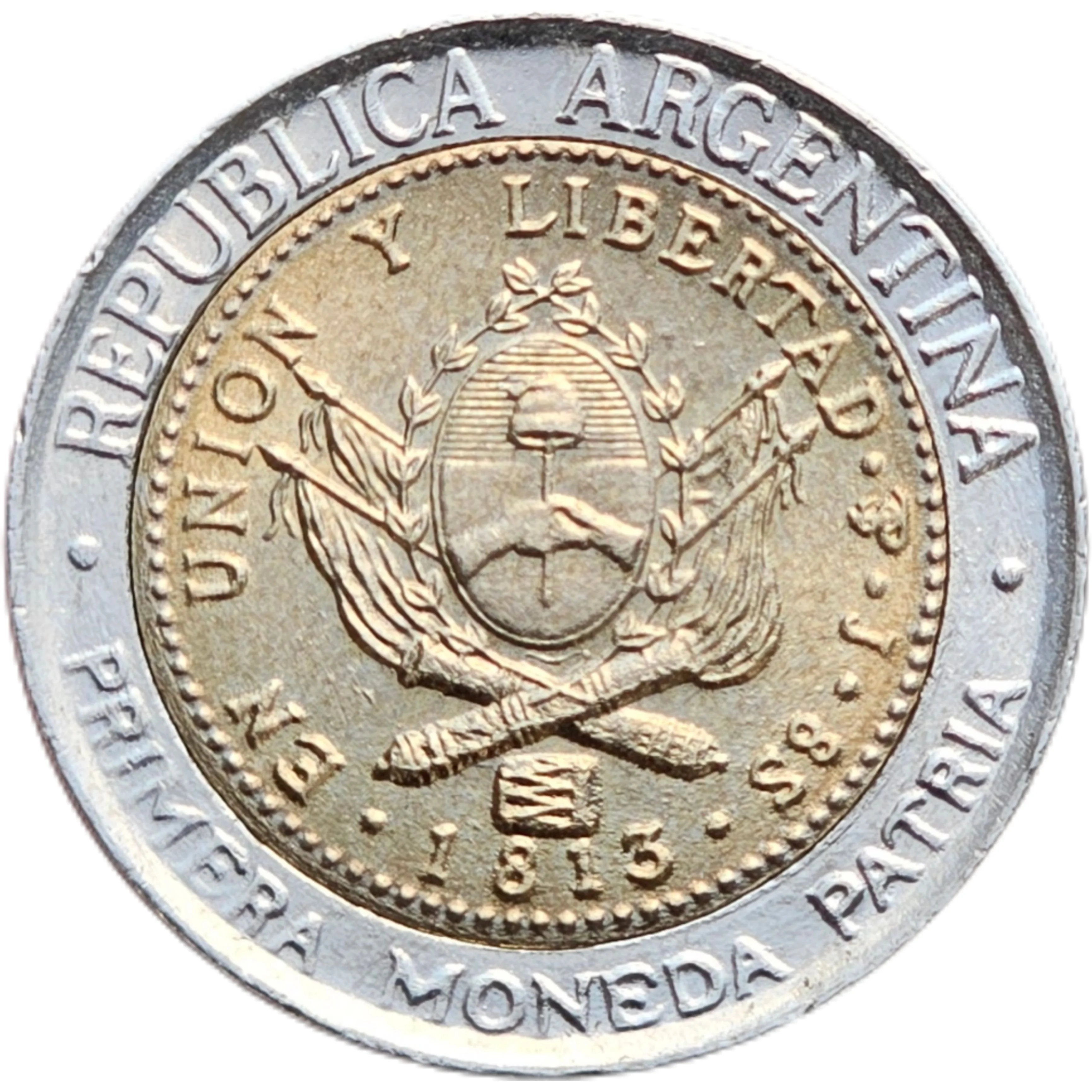
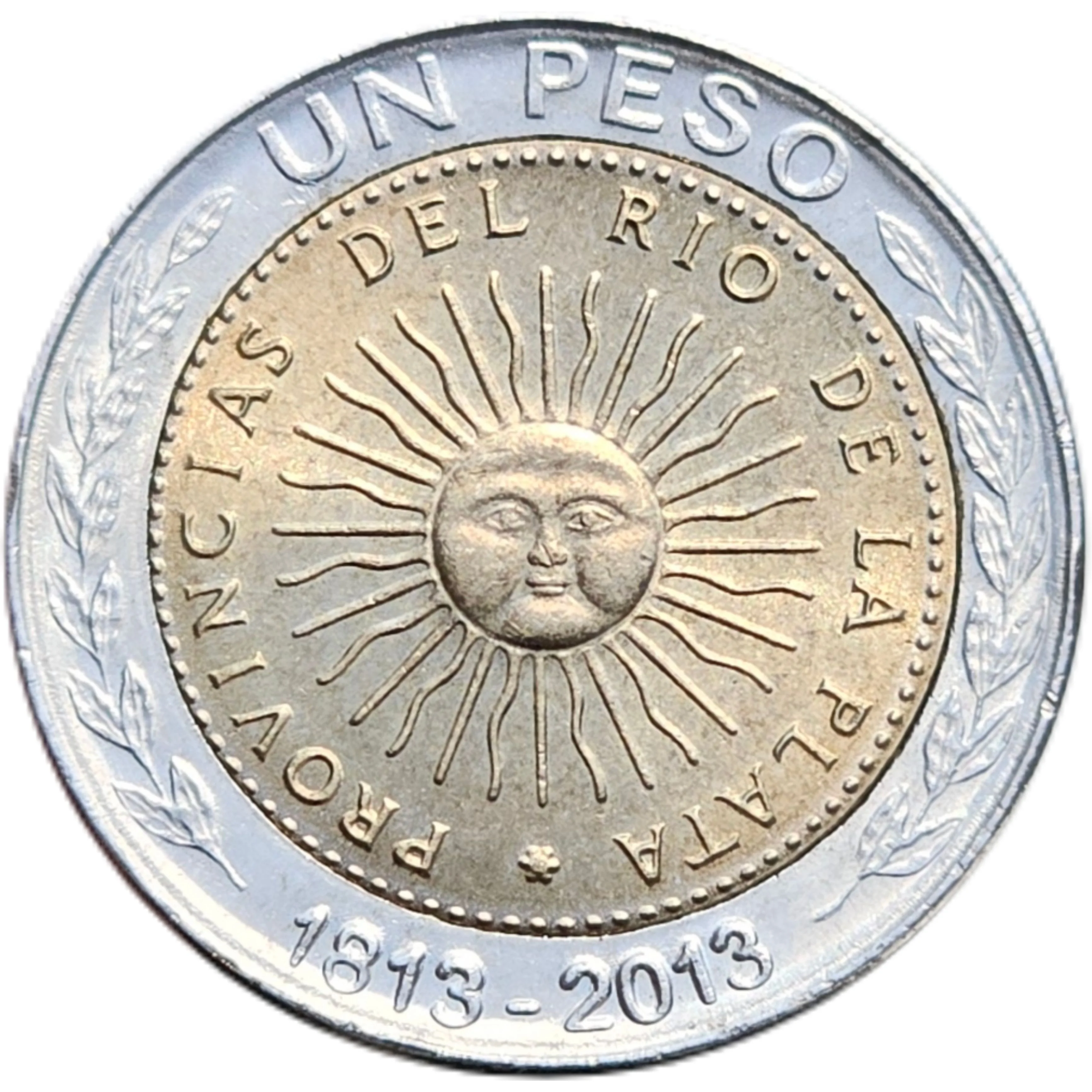
Commemoration: Bicentennial of the First Patriotic Coin
Argentina
Context
Material
References
KM: #
Numista: #46419
Value
Exchange value: 1 ARS
Obverse
Reverse
Edge
Plain
Categories
| Currency> Coin depiction |
| Symbols> Coat of Arms |
| Symbol> Phrygian cap |
| Symbol> Sun |
Mints
| Name | Mark |
|---|---|
| Buenos Aires | — |
Mintings
| Year | Mint Mark | Mintage | Quality | Collection |
|---|---|---|---|---|
| 2013 | — | 224,000,000 |
Historical background
In 2013, Argentina was grappling with the severe and escalating consequences of a prolonged currency crisis rooted in a decade of economic mismanagement. The government of President Cristina Fernández de Kirchner maintained a system of strict capital controls and an official, overvalued exchange rate for the peso, established after the 2001-2002 collapse. This policy aimed to curb capital flight and suppress inflation, but it created a vast and growing gap with the parallel "blue dollar" market. By the end of 2013, the official rate was held at approximately 6.5 pesos per US dollar, while the illegal blue dollar rate had surged past 10 pesos, exposing a loss of confidence in the currency and a thriving black market.
The situation was fueled by rampant inflation, unofficially estimated by private economists at over 25% annually, which the government attempted to mask through manipulated official statistics. This high inflation, combined with negative real interest rates, incentivized Argentines to seek refuge in US dollars as a store of value, leading to persistent capital flight. The government's response—printing pesos to finance deficits and imposing ever-stricter controls on foreign currency purchases for businesses and individuals—only deepened distortions, creating import bottlenecks, harming investment, and fostering a complex web of financial restrictions that crippled the formal economy.
Ultimately, 2013 represented a critical juncture where the underlying imbalances became unsustainable. The widening exchange gap, dwindling Central Bank reserves used to defend the peso, and the proliferation of multiple implicit exchange rates for different transactions signaled a system on the brink. The crisis of confidence set the stage for the more acute economic turmoil that would follow, culminating in a major devaluation and the eventual lifting of capital controls in 2015.
The situation was fueled by rampant inflation, unofficially estimated by private economists at over 25% annually, which the government attempted to mask through manipulated official statistics. This high inflation, combined with negative real interest rates, incentivized Argentines to seek refuge in US dollars as a store of value, leading to persistent capital flight. The government's response—printing pesos to finance deficits and imposing ever-stricter controls on foreign currency purchases for businesses and individuals—only deepened distortions, creating import bottlenecks, harming investment, and fostering a complex web of financial restrictions that crippled the formal economy.
Ultimately, 2013 represented a critical juncture where the underlying imbalances became unsustainable. The widening exchange gap, dwindling Central Bank reserves used to defend the peso, and the proliferation of multiple implicit exchange rates for different transactions signaled a system on the brink. The crisis of confidence set the stage for the more acute economic turmoil that would follow, culminating in a major devaluation and the eventual lifting of capital controls in 2015.

🌱 Very Common