

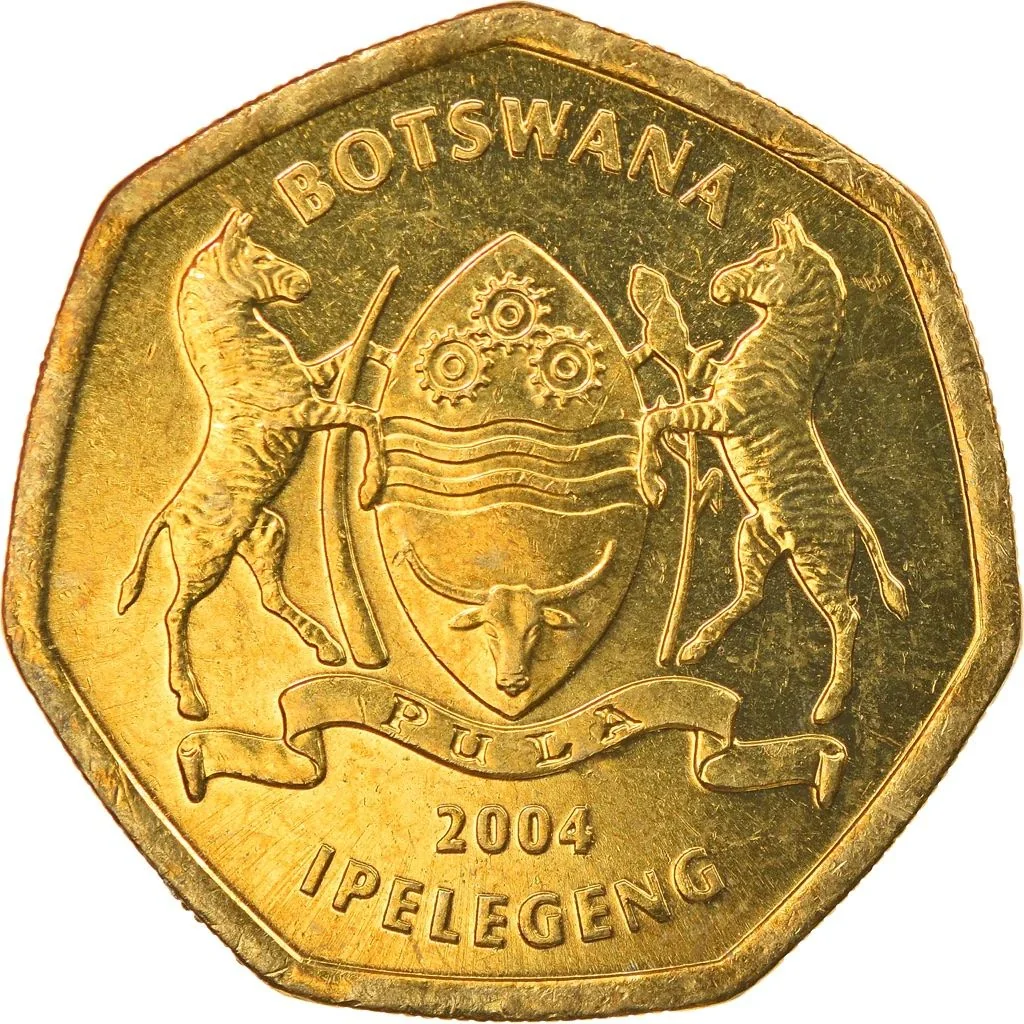
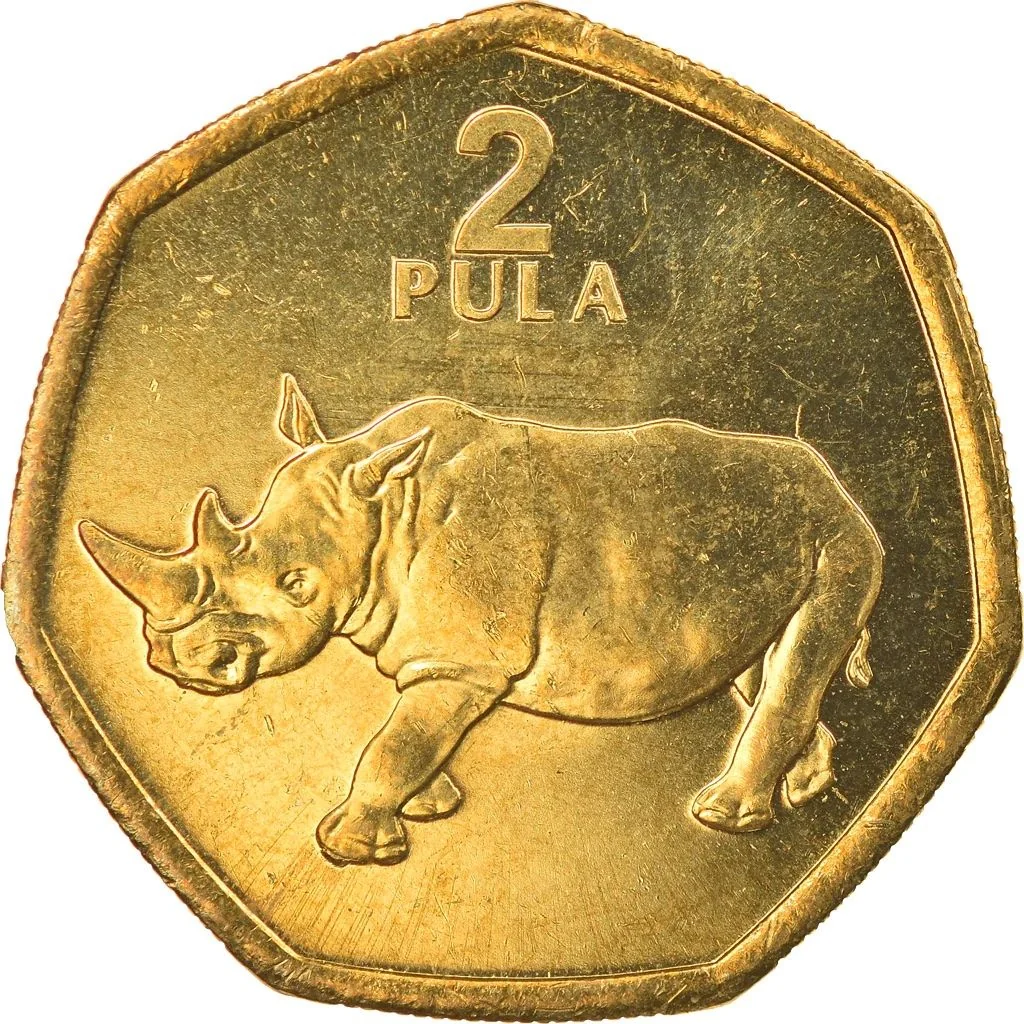
2 pula – Botswana
Add to wishlist
Botswana
Context
Material
Diameter: 24.6 mm
Weight: 6.02 g
Thickness: 2 mm
Shape: Heptagonal
Technique: Milled
Alignment: Medal alignment
flip
References
KM: #
Numista: #8962
Value
Exchange value: 2 BWP
Obverse
Reverse
Description:
White rhinoceros (Ceratotherium simum), the largest rhino species, also known as the square-lipped rhinoceros.
Inscription:
2
PULA
PULA
Script: Latin
Edge
7 sequences of 19 incuse mills each between smooth corners.
Categories
| Animal> Horse |
| Symbols> Coat of Arms |
Mints
| Name | Mark |
|---|---|
| South African Mint | — |
Mintings
| Year | Mint Mark | Mintage | Quality | Collection |
|---|---|---|---|---|
| 2004 | — | — |
Historical background
In 2004, Botswana's currency situation was characterized by stability and prudent management, underpinned by the country's strong economic fundamentals. The national currency, the Pula (BWP), operated under a crawling peg exchange rate system, managed against a basket of currencies heavily weighted toward the South African Rand and the International Monetary Fund's Special Drawing Rights (SDRs). This system, administered by the Bank of Botswana, provided a predictable and stable exchange rate environment, crucial for a trade-dependent economy. The Pula's value was adjusted periodically through controlled devaluations to maintain export competitiveness, particularly for the dominant diamond sector, while guarding against imported inflation.
This stability was a direct result of Botswana's sustained fiscal discipline and substantial foreign exchange reserves, accumulated from decades of diamond revenue managed through the Pula Fund. By 2004, these reserves provided import cover of well over two years, a figure that far exceeded international benchmarks and insulated the economy from external shocks. The government's consistent budget surpluses and low public debt further bolstered investor confidence in the Pula. Consequently, inflation was relatively low and manageable, typically in the mid-single digits, allowing the central bank to maintain a supportive monetary policy.
The primary challenge within this robust framework was the economy's heavy dependence on diamonds and its close economic linkage to South Africa. Fluctuations in the Rand and the performance of the South African economy had direct and significant spillover effects on Botswana. Therefore, the 2004 currency policy continued to focus on diversification and building resilience. The overall picture was one of a successfully managed currency, serving as a cornerstone for one of Africa's most stable and creditworthy economies, with the Pula reflecting the nation's broader macroeconomic health.
This stability was a direct result of Botswana's sustained fiscal discipline and substantial foreign exchange reserves, accumulated from decades of diamond revenue managed through the Pula Fund. By 2004, these reserves provided import cover of well over two years, a figure that far exceeded international benchmarks and insulated the economy from external shocks. The government's consistent budget surpluses and low public debt further bolstered investor confidence in the Pula. Consequently, inflation was relatively low and manageable, typically in the mid-single digits, allowing the central bank to maintain a supportive monetary policy.
The primary challenge within this robust framework was the economy's heavy dependence on diamonds and its close economic linkage to South Africa. Fluctuations in the Rand and the performance of the South African economy had direct and significant spillover effects on Botswana. Therefore, the 2004 currency policy continued to focus on diversification and building resilience. The overall picture was one of a successfully managed currency, serving as a cornerstone for one of Africa's most stable and creditworthy economies, with the Pula reflecting the nation's broader macroeconomic health.
🌱 Common