

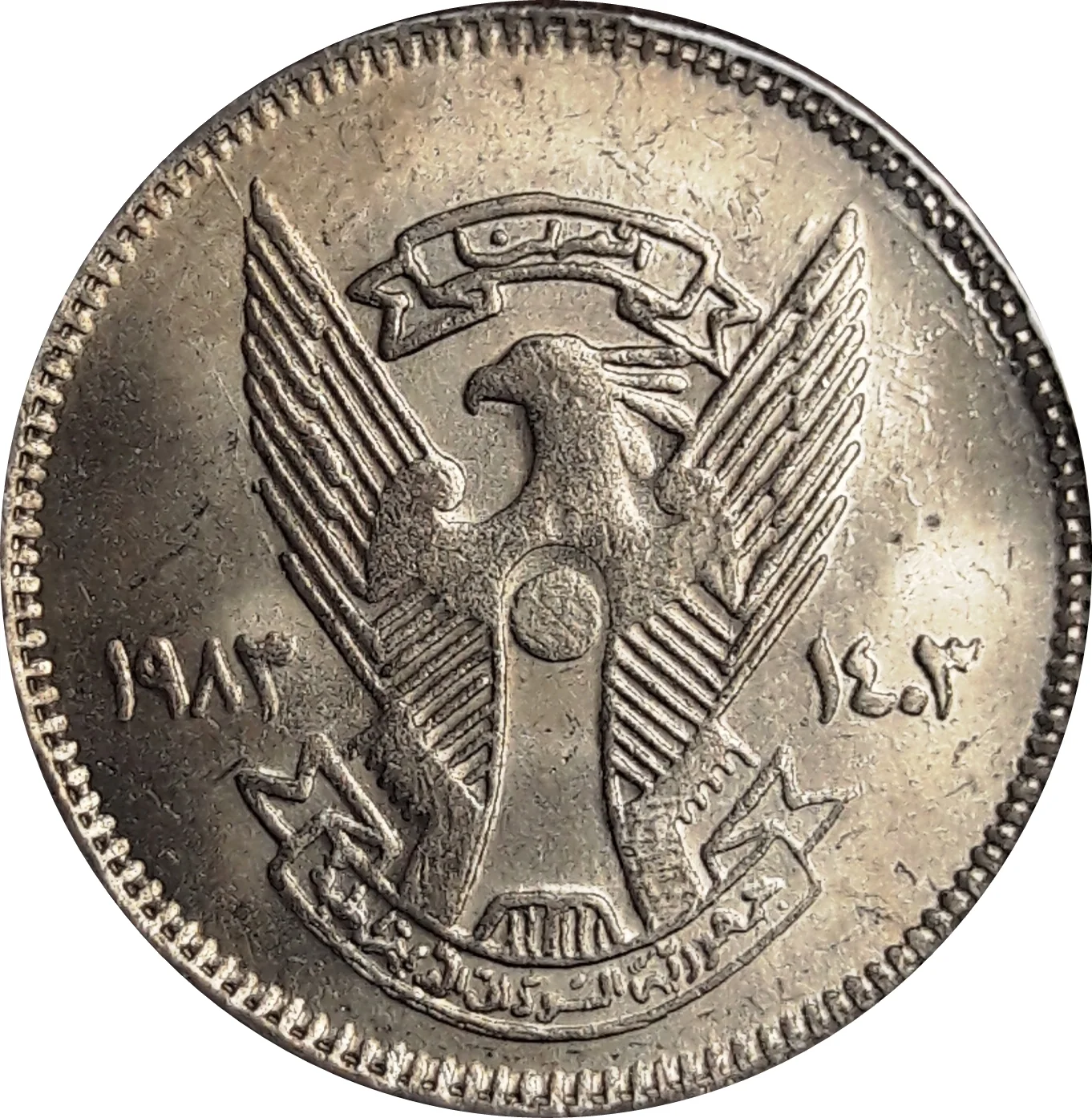
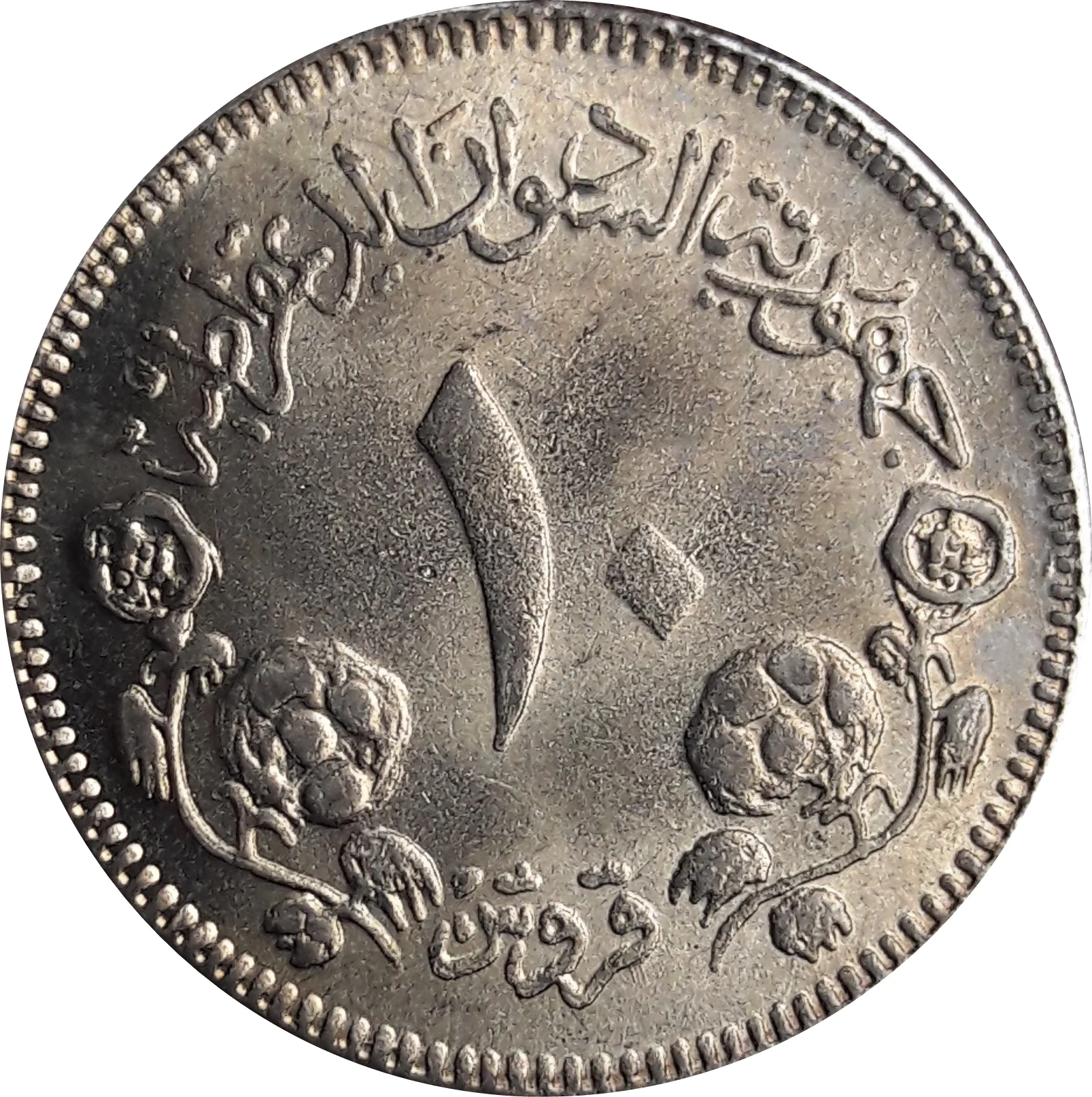
10 piastres – Sudan
Add to wishlist
Sudan
Context
Year: 1983
Islamic (Hijri) Year:: 1403
Issuer: Sudan
Period:
(1969—1985)
Currency:
(1956—1992)
Demonetization: 8 June 1992
Material
Diameter: 25 mm
Weight: 6 g
Shape: Round
Composition: Copper-nickel
Technique: Milled
Alignment: Medal alignment
flip
References
KM: #
Numista: #114858
Value
Exchange value: 0.10 SDP
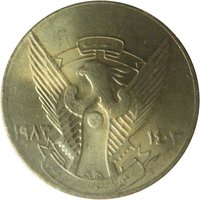
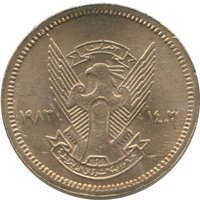
Obverse
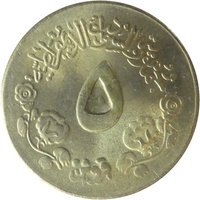
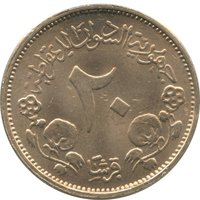
Reverse
Edge
Slightly reeded
Mintings
| Year | Mint Mark | Mintage | Quality | Collection |
|---|---|---|---|---|
| 1983 | — | — |
Historical background
In 1983, Sudan's currency situation was deeply intertwined with the nation's escalating political and economic crisis. The year was marked by President Gaafar Nimeiry's controversial decision to implement the "September Laws," which imposed Sharia law nationwide. This move exacerbated the long-running civil war with the non-Muslim south, destroying any remaining national economic cohesion. The government, burdened by massive external debt and a bloated public sector, increasingly financed itself through monetary expansion—simply printing more money—which became a primary driver of rampant inflation.
This monetary instability was compounded by a critical policy failure: the attempted redenomination of the Sudanese pound. In an effort to simplify accounting and signal strength, the government introduced a new Sudanese pound in 1983, theoretically equal to two of the old pounds. However, without fiscal discipline or public confidence, this was merely a cosmetic change. The currency reform failed to address underlying weaknesses, and the parallel black market for foreign exchange flourished. The official exchange rate became increasingly divorced from reality, creating severe distortions for importers and exporters alike.
Consequently, by the end of 1983, Sudan's currency was on a path of irreversible decline. Inflation was eroding savings and wages, while the expanding civil war diverted resources and shattered infrastructure, particularly in the agriculturally vital south. The economic foundation was crumbling, setting the stage for the hyperinflation and multiple currency collapses that would define the coming decades. The currency situation of 1983 thus stands as a key indicator of the profound governance and economic policy failures that pushed the country toward state failure.
This monetary instability was compounded by a critical policy failure: the attempted redenomination of the Sudanese pound. In an effort to simplify accounting and signal strength, the government introduced a new Sudanese pound in 1983, theoretically equal to two of the old pounds. However, without fiscal discipline or public confidence, this was merely a cosmetic change. The currency reform failed to address underlying weaknesses, and the parallel black market for foreign exchange flourished. The official exchange rate became increasingly divorced from reality, creating severe distortions for importers and exporters alike.
Consequently, by the end of 1983, Sudan's currency was on a path of irreversible decline. Inflation was eroding savings and wages, while the expanding civil war diverted resources and shattered infrastructure, particularly in the agriculturally vital south. The economic foundation was crumbling, setting the stage for the hyperinflation and multiple currency collapses that would define the coming decades. The currency situation of 1983 thus stands as a key indicator of the profound governance and economic policy failures that pushed the country toward state failure.
Series: 1983 Sudan circulation coins

🌟 Uncommon