

1 paisa – Bengal Presidency
Add to wishlist
India
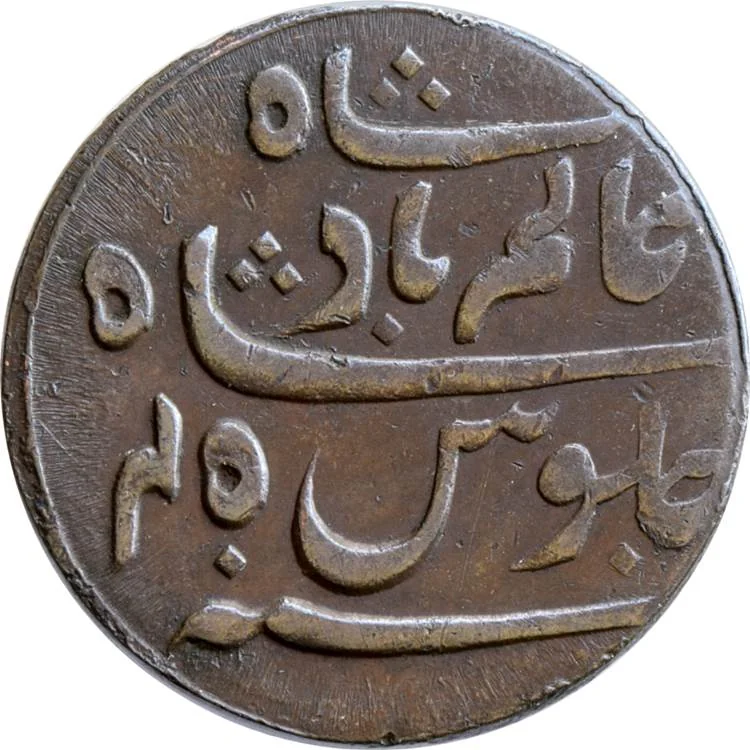
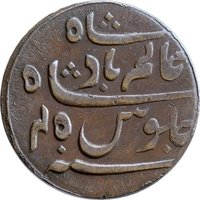
Obverse
Description:
Shah Alam, Year 45 of reign.
Inscription:
ســـنہ جلوس۴٥ شـــاه عالم باد شـــاه
Translation:
Year of Reign 45, Shah Alam, May the King Live Forever
Language: Persian
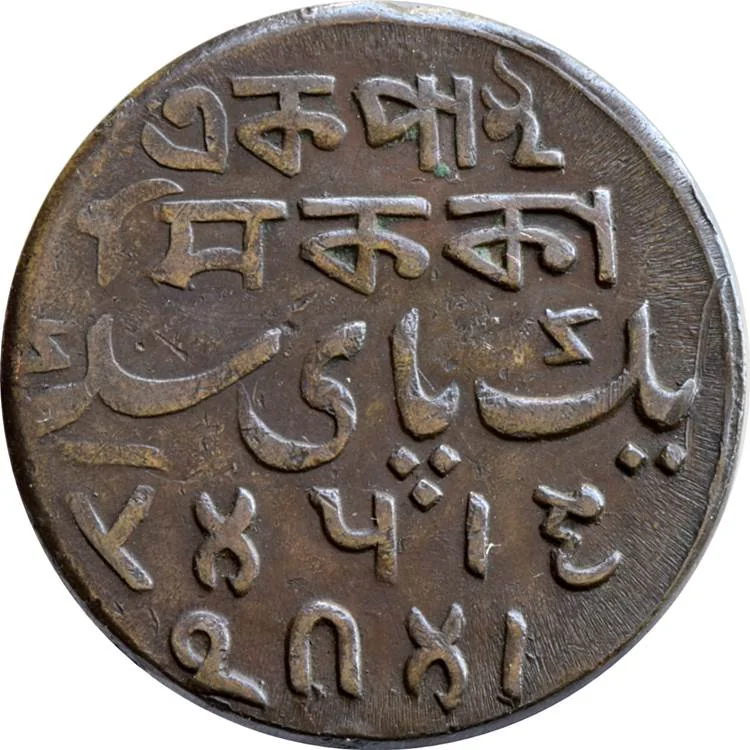
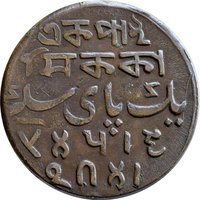
Reverse
Edge
Plain
Mintings
| Year | Mint Mark | Mintage | Quality | Collection |
|---|---|---|---|---|
| 1816 | — | — |
Historical background
In 1816, the Bengal Presidency's currency situation was defined by a complex and often chaotic bimetallic system, struggling under the weight of a severe silver shortage. The official standard was the silver rupee, primarily the "Sicca" rupee minted in Calcutta, but its value and circulation were undermined by the widespread use of older, lighter rupees and a proliferation of private and regional coinages. The critical problem was a persistent drain of silver bullion from Bengal to China to pay for tea and other goods, which was not offset by equivalent imports. This scarcity drove up the value of silver relative to gold and to the Company's own fixed exchange rates, creating significant economic friction.
The East India Company administration attempted to manage this through the "Currency Act" of 1793 and subsequent regulations, which fixed the exchange rates between the gold mohur and the silver rupee. However, by 1816, this fixed ratio had become divorced from the market reality, where silver's higher intrinsic value made it profitable to melt down or export silver coins rather than use them locally. This led to a scarcity of credible, full-weight rupees in everyday commerce. In response, a vibrant and unregulated network of shroffs (money-changers) and private bankers filled the vacuum, discounting and assaying countless varieties of coins, but their activities added transaction costs and uncertainty.
Consequently, the monetary landscape in 1816 was one of transition and strain. The Company's authority over currency was established but not yet effective in creating a uniform, trusted medium of exchange. The system was caught between a theoretical bimetallic standard and a practical scarcity of its primary metal, relying on a patchwork of old coins, limited new minting, and extensive private credit. This unstable environment would eventually compel the Company to move towards a unified silver standard, culminating in the great recoinage of 1835, which finally introduced a single, uniform rupee for all of British India.
The East India Company administration attempted to manage this through the "Currency Act" of 1793 and subsequent regulations, which fixed the exchange rates between the gold mohur and the silver rupee. However, by 1816, this fixed ratio had become divorced from the market reality, where silver's higher intrinsic value made it profitable to melt down or export silver coins rather than use them locally. This led to a scarcity of credible, full-weight rupees in everyday commerce. In response, a vibrant and unregulated network of shroffs (money-changers) and private bankers filled the vacuum, discounting and assaying countless varieties of coins, but their activities added transaction costs and uncertainty.
Consequently, the monetary landscape in 1816 was one of transition and strain. The Company's authority over currency was established but not yet effective in creating a uniform, trusted medium of exchange. The system was caught between a theoretical bimetallic standard and a practical scarcity of its primary metal, relying on a patchwork of old coins, limited new minting, and extensive private credit. This unstable environment would eventually compel the Company to move towards a unified silver standard, culminating in the great recoinage of 1835, which finally introduced a single, uniform rupee for all of British India.
💎 Very Rare