

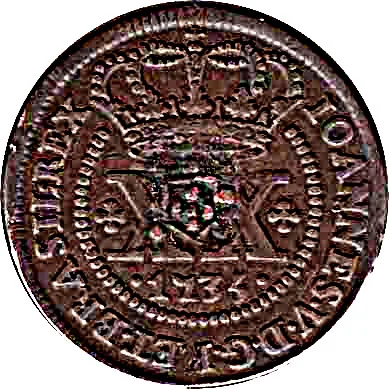
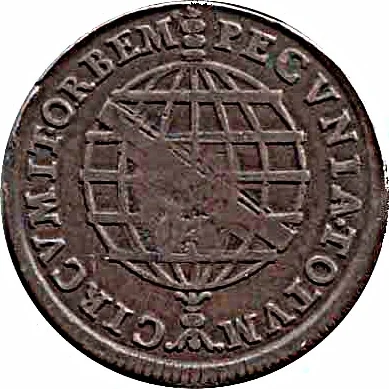
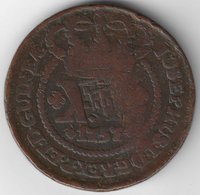
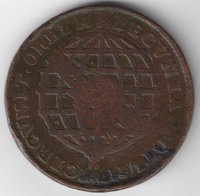
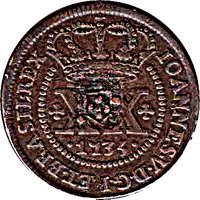
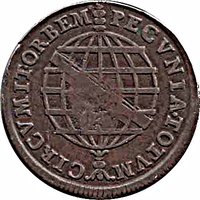
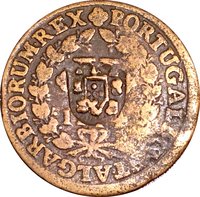
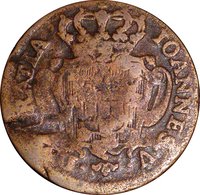
40 réis – Angola
Add to wishlist
Angola
Mintings
| Year | Mint Mark | Mintage | Quality | Collection |
|---|---|---|---|---|
| 1809 | — | — |
Historical background
In 1809, Angola existed as a Portuguese colony, and its currency situation was entirely dictated by and subordinate to the economic needs of Lisbon and the transatlantic slave trade. The official currency was the Portuguese real, but in practice, the Angolan economy suffered from a severe and chronic shortage of specie (coined money). This scarcity was a deliberate colonial policy; Portugal restricted the flow of currency to the colony to control trade and ensure that Angola’s primary "export"—enslaved people—was paid for in goods or bills of exchange that benefited Portuguese merchants, rather than fostering an independent local economy.
The daily commercial life, therefore, relied heavily on a system of commodity monies and alternative currencies. The most widespread and standardized unit was the libra (plural: libras), which was not a coin but a measure of value equivalent to one pound weight of prime-quality, uncut ivory. Smaller transactions used bundles of fazuelos (shells, specifically Olivancillaria nana), rolls of tobacco, lengths of cloth (particularly libongos, or imported linen), and barrels of rum or gerebita (a type of brandy). These commodities were not just barter items; they functioned as accepted currencies with relatively stable exchange rates against the ivory libra, facilitating the purchase of food, local goods, and, most significantly, the procurement of enslaved people for the Atlantic trade.
This monetary landscape reflected Angola’s entrenched role in the slave trade. The value of all commodities, including human beings, was often expressed in libras of ivory. A healthy enslaved man, for instance, might be priced at 12-15 libras. This system tied Angola's entire concept of value to extractive exports, first ivory and then overwhelmingly human captives, while stifling internal development. The currency situation in 1809 thus encapsulates a colonial economy designed for extraction, operating with a makeshift monetary system that was functional for the slave trade but left the colony materially impoverished and financially dependent.
The daily commercial life, therefore, relied heavily on a system of commodity monies and alternative currencies. The most widespread and standardized unit was the libra (plural: libras), which was not a coin but a measure of value equivalent to one pound weight of prime-quality, uncut ivory. Smaller transactions used bundles of fazuelos (shells, specifically Olivancillaria nana), rolls of tobacco, lengths of cloth (particularly libongos, or imported linen), and barrels of rum or gerebita (a type of brandy). These commodities were not just barter items; they functioned as accepted currencies with relatively stable exchange rates against the ivory libra, facilitating the purchase of food, local goods, and, most significantly, the procurement of enslaved people for the Atlantic trade.
This monetary landscape reflected Angola’s entrenched role in the slave trade. The value of all commodities, including human beings, was often expressed in libras of ivory. A healthy enslaved man, for instance, might be priced at 12-15 libras. This system tied Angola's entire concept of value to extractive exports, first ivory and then overwhelmingly human captives, while stifling internal development. The currency situation in 1809 thus encapsulates a colonial economy designed for extraction, operating with a makeshift monetary system that was functional for the slave trade but left the colony materially impoverished and financially dependent.
Series: 1809 Angola circulation coins

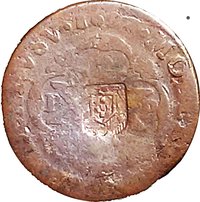
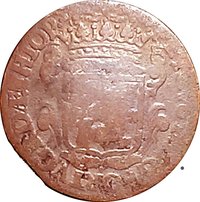
💎 Extremely Rare