

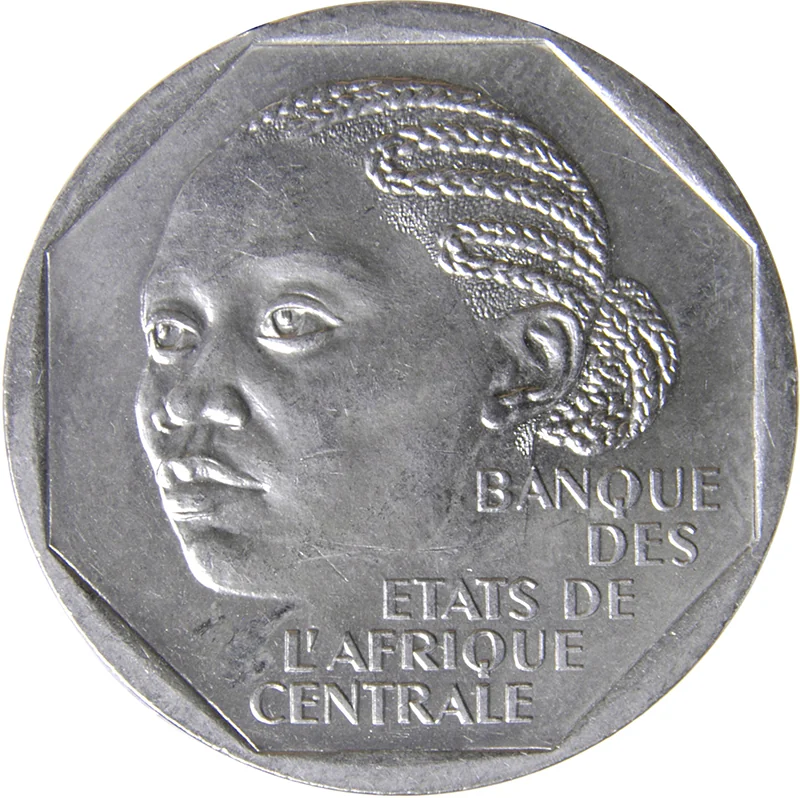
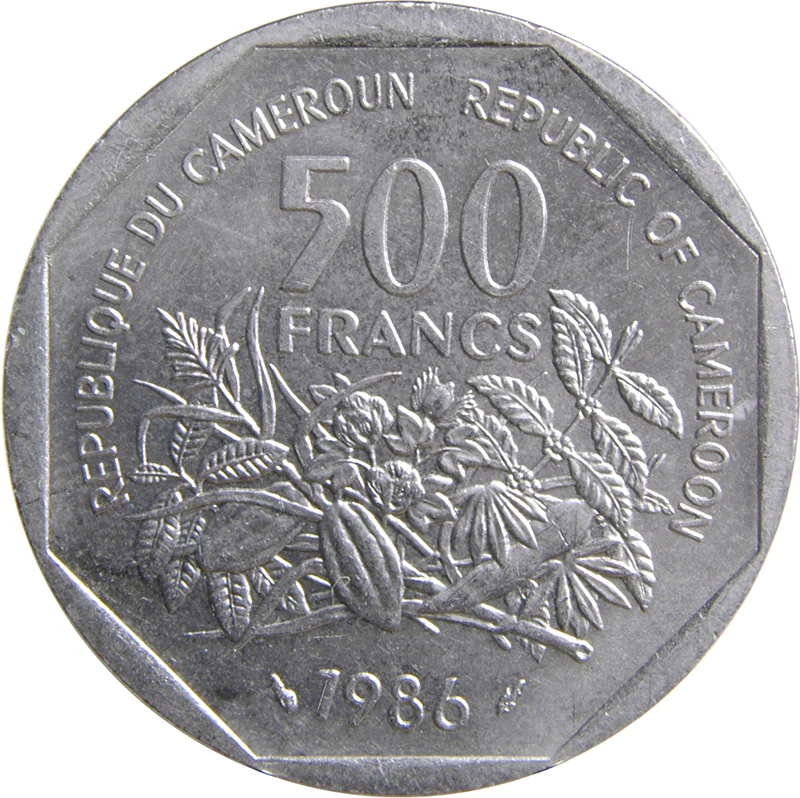
500 francs cfa – Cameroon
Add to wishlist
Cameroon
Context
Years: 1985–1988
Issuer: Cameroon
Issuing organization: Bank of Central African States
Period:
(since 1960)
Currency:
(since 1973)
Total mintage: 2,800,000
Material
Diameter: 30.04 mm
Weight: 10.89 g
Thickness: 2 mm
Shape: Round
Composition: Copper-nickel
Technique: Milled
Alignment: Coin alignment
flip
References
KM: #
Numista: #8882
Value
Exchange value: 500 XAF
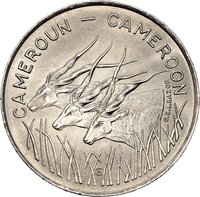
Obverse
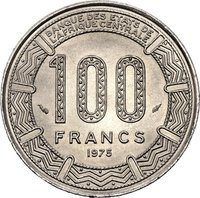
Reverse
Edge
Plain
Mints
| Name | Mark |
|---|---|
| Monnaie de Paris | — |
Mintings
| Year | Mint Mark | Mintage | Quality | Collection |
|---|---|---|---|---|
| 1985 | — | 200,000 | ||
| 1986 | — | 2,000,000 | ||
| 1988 | — | 600,000 |
Historical background
In 1985, Cameroon's currency situation was characterized by its participation in the CFA franc zone, a colonial-era monetary union with significant French backing. The country used the Central African CFA franc (XAF), which was (and remains) pegged to the French franc at a fixed exchange rate of 50 CFA francs = 1 French franc. This arrangement, managed by the Banque des États de l'Afrique Centrale (BEAC), provided notable monetary stability and low inflation compared to many neighboring non-CFA countries. It facilitated predictable trade and investment, particularly with France, but also meant Cameroon ceded control over its monetary policy, interest rates, and currency valuation to the regional central bank.
Economically, the mid-1980s marked the beginning of a severe crisis for Cameroon, which would profoundly impact the currency's context. Following over a decade of robust growth fueled by oil exports, the global collapse of oil and commodity prices in the mid-1980s triggered a sharp recession. This exposed the fragility of the fixed exchange rate regime under external shock. While the CFA franc itself remained stable, Cameroon's real effective exchange rate became significantly overvalued, making its non-oil exports like coffee, cocoa, and timber less competitive on world markets and contributing to a growing trade deficit.
Consequently, the core currency issue in 1985 was the mounting pressure beneath the surface stability. The fixed peg, while a bulwark against hyperinflation, was increasingly seen as rigid, preventing necessary adjustment to the terms-of-trade shock. The government, under President Paul Biya, initially responded with austerity measures and import restrictions rather than currency devaluation—a politically monumental decision requiring consensus across the entire CFA zone. Thus, 1985 represented the calm before the storm; the currency's stability was intact, but the economic fundamentals that sustained it were eroding, setting the stage for the profound debt crisis and eventual, controversial 50% devaluation of the CFA franc in 1994.
Economically, the mid-1980s marked the beginning of a severe crisis for Cameroon, which would profoundly impact the currency's context. Following over a decade of robust growth fueled by oil exports, the global collapse of oil and commodity prices in the mid-1980s triggered a sharp recession. This exposed the fragility of the fixed exchange rate regime under external shock. While the CFA franc itself remained stable, Cameroon's real effective exchange rate became significantly overvalued, making its non-oil exports like coffee, cocoa, and timber less competitive on world markets and contributing to a growing trade deficit.
Consequently, the core currency issue in 1985 was the mounting pressure beneath the surface stability. The fixed peg, while a bulwark against hyperinflation, was increasingly seen as rigid, preventing necessary adjustment to the terms-of-trade shock. The government, under President Paul Biya, initially responded with austerity measures and import restrictions rather than currency devaluation—a politically monumental decision requiring consensus across the entire CFA zone. Thus, 1985 represented the calm before the storm; the currency's stability was intact, but the economic fundamentals that sustained it were eroding, setting the stage for the profound debt crisis and eventual, controversial 50% devaluation of the CFA franc in 1994.
🌱 Fairly Common