

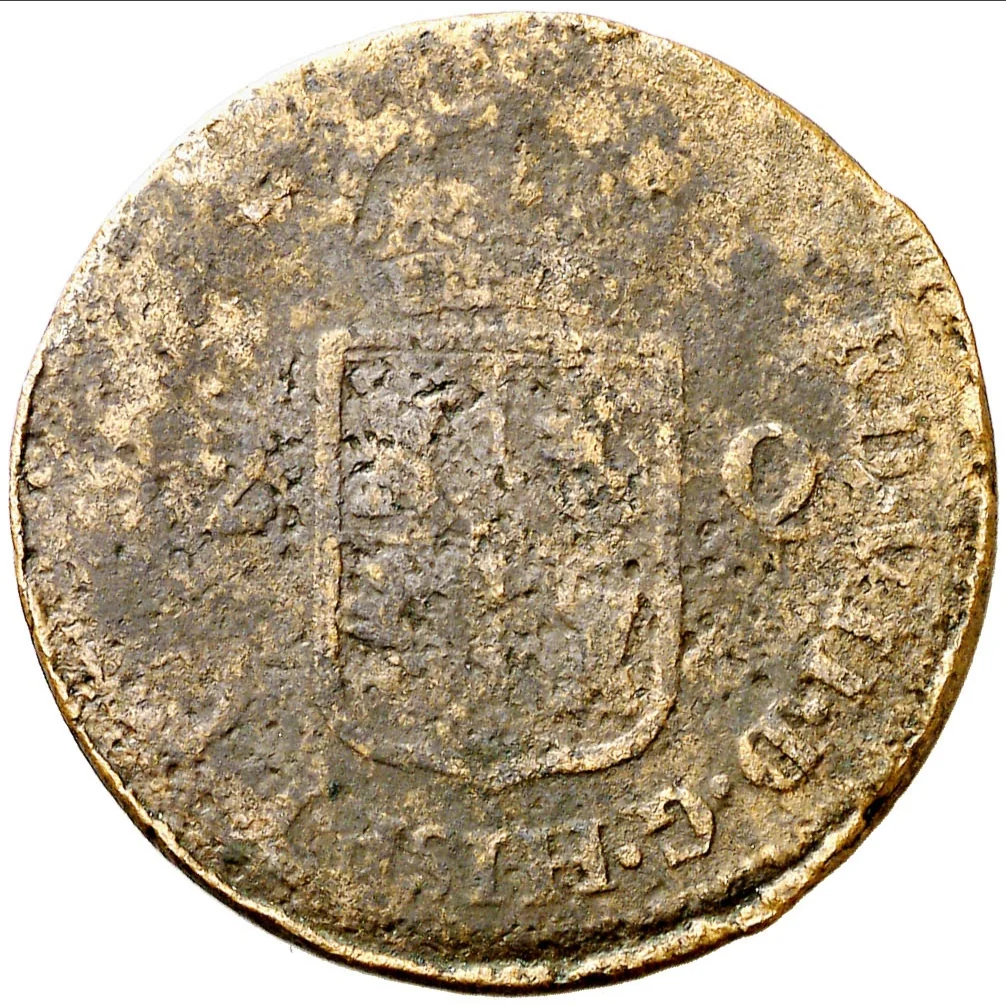
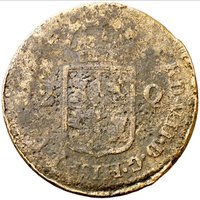
Obverse
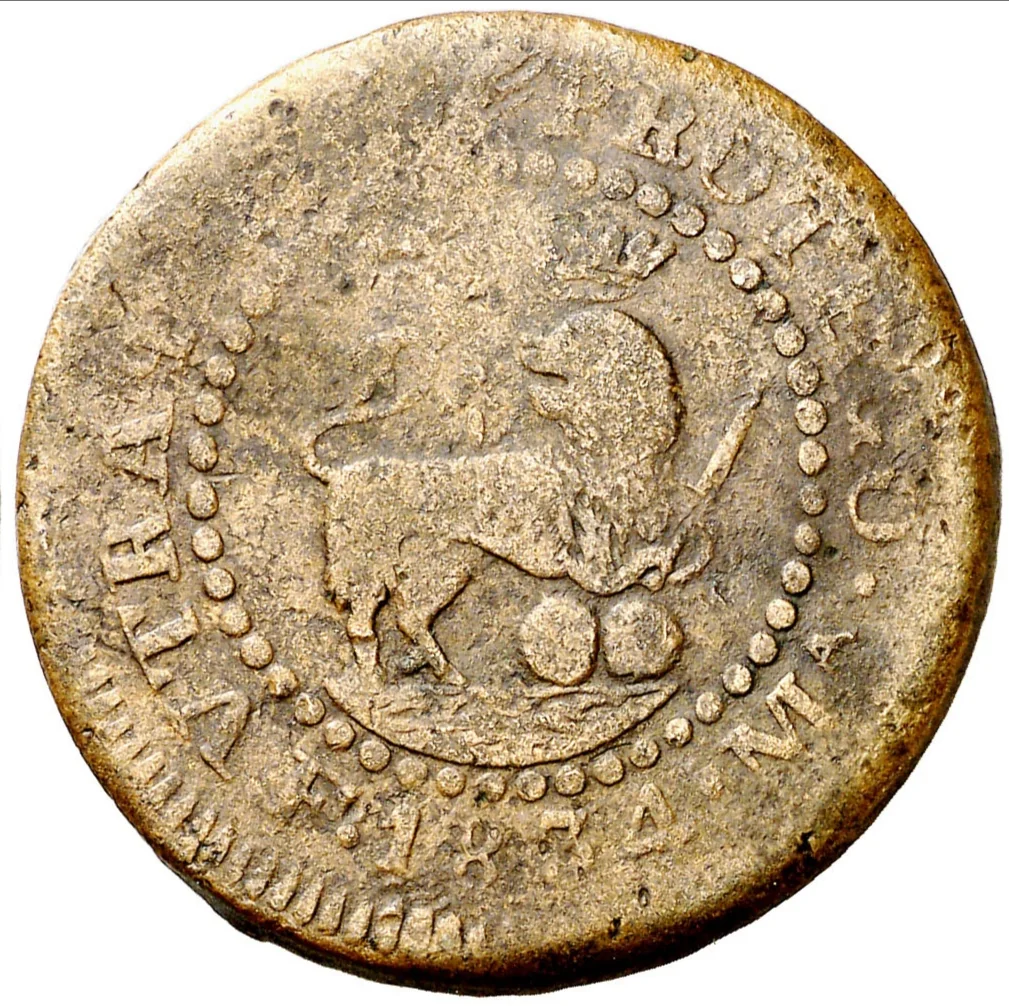
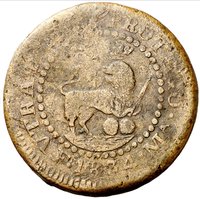
Reverse
Edge
Categories
| Animal> Feline |
| Symbols> Coat of Arms |
Mints
| Name | Mark |
|---|---|
| Manila | MA |
Mintings
| Year | Mint Mark | Mintage | Quality | Collection |
|---|---|---|---|---|
| 1834 | MA | — |
Historical background
In 1834, the currency situation in the Philippines was defined by a significant transition and chronic scarcity of circulating coinage. The Spanish colonial government operated on a bimetallic system based on the peso, theoretically valued against both gold and silver. However, the reality was a chaotic mix of diverse coins. Spanish-American silver pesos (like Mexican "columnarios" and later "carolus" pesos), fractional Spanish coins, and even worn-out or clipped currency circulated alongside a limited number of gold coins. The persistent shortage of official small change led to the widespread use of pesos fuertes (strong pesos) for large transactions and the cutting of larger silver coins into pieces, creating crude "cut currency" or monedas de necesidad for everyday use.
This year was pivotal because it marked the formal end of the Manila Galleon trade (officially concluded in 1815) and the full opening of the Port of Manila to international trade in 1834. The influx of foreign merchants, particularly British and American, intensified the demand for reliable and uniform currency. They brought in their own silver dollars, most notably the Spanish Carolus peso and the new Mexican Republican peso, which became the preferred trade coins. This further complicated the monetary landscape, as these foreign coins competed with the official Spanish currency, exposing the inadequacy of the colonial mint's output and creating exchange rate complexities.
Consequently, the monetary system in 1834 was fragmented and inefficient, struggling to support a growing commercial economy. The scarcity of small denomination coins severely hampered retail trade and daily wages, while the government faced constant challenges in collecting taxes in a uniform medium. This unstable environment highlighted the urgent need for reform, which would eventually lead to the establishment of the first Philippine bank (El Banco Español Filipino de Isabel II) in 1851 and attempts at more systematic coinage, but in 1834, the currency situation remained a tangled and pressing economic problem.
This year was pivotal because it marked the formal end of the Manila Galleon trade (officially concluded in 1815) and the full opening of the Port of Manila to international trade in 1834. The influx of foreign merchants, particularly British and American, intensified the demand for reliable and uniform currency. They brought in their own silver dollars, most notably the Spanish Carolus peso and the new Mexican Republican peso, which became the preferred trade coins. This further complicated the monetary landscape, as these foreign coins competed with the official Spanish currency, exposing the inadequacy of the colonial mint's output and creating exchange rate complexities.
Consequently, the monetary system in 1834 was fragmented and inefficient, struggling to support a growing commercial economy. The scarcity of small denomination coins severely hampered retail trade and daily wages, while the government faced constant challenges in collecting taxes in a uniform medium. This unstable environment highlighted the urgent need for reform, which would eventually lead to the establishment of the first Philippine bank (El Banco Español Filipino de Isabel II) in 1851 and attempts at more systematic coinage, but in 1834, the currency situation remained a tangled and pressing economic problem.

✨ Legendary