

100 zlotys – Poland
Add to wishlist
Non-circulating coins
Commemoration: Władysław III Warneńczyk (1434-1444)
Series: Polish Kings and Princes
Poland
Obverse
Description:
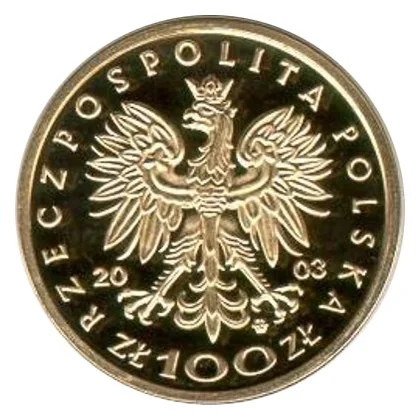
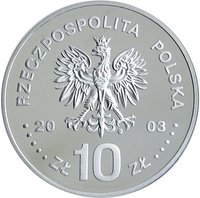
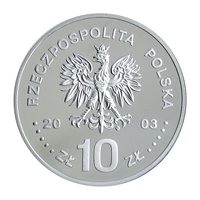
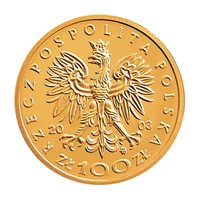
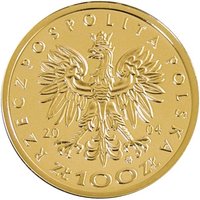
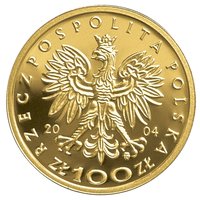
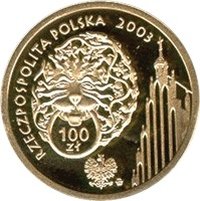
Crowned eagle flanking date, encircled by legend.
Inscription:
RZECZPOSPOLITA POLSKA
2003
mw
ZŁ 100 ZŁ
2003
mw
ZŁ 100 ZŁ
Translation:
REPUBLIC OF POLAND
2003
mw
100 ZŁ ZŁ
2003
mw
100 ZŁ ZŁ
Script: Latin
Language: Polish
Designer: Ewa Tyc-Karpińska
Reverse
Description:
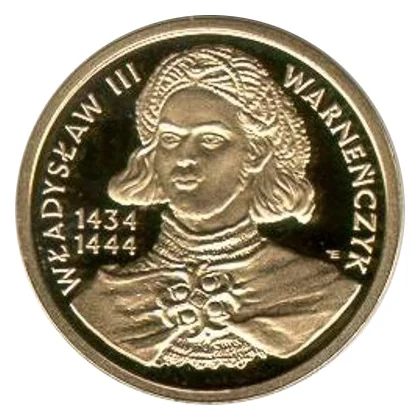
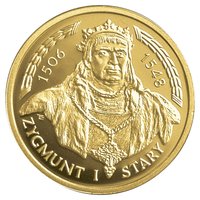
Bust of Władysław III Warneńczyk in uniform, legend above.
Inscription:
WŁADYSŁAW III WARNEŃCZYK
1434
1444
1434
1444
Translation:
Władysław III of Varna
1434
1444
1434
1444
Script: Latin
Language: Polish
Designer: Ewa Tyc-Karpińska
Edge
Plain
Mints
| Name | Mark |
|---|---|
| Mint of Poland | (MW) |
Mintings
| Year | Mint Mark | Mintage | Quality | Collection |
|---|---|---|---|---|
| 2003 | MW | 2,000 | Proof |
Historical background
In 2003, Poland was in a period of significant economic transition, actively preparing for its accession to the European Union in May 2004. The central monetary policy issue was the management of the Polish złoty (PLN) and the strategic path toward adopting the euro. The country operated under a floating exchange rate regime, introduced in 2000, which allowed the złoty's value to be determined by market forces, though the National Bank of Poland (NBP) maintained the option to intervene to prevent excessive volatility. This flexibility was crucial for absorbing external shocks and maintaining competitiveness.
The year was marked by a strong appreciation of the złoty against major currencies, particularly the euro and the US dollar. This strength was driven by robust economic growth, significant inflows of foreign direct investment in anticipation of EU membership, and positive investor sentiment. While a strong currency helped curb inflation by making imports cheaper, it also raised concerns among exporters about eroding their price competitiveness in key European markets. The NBP, under President Leszek Balcerowicz, faced the delicate task of balancing inflation control with supporting economic growth, occasionally intervening in foreign exchange markets to smooth what it considered excessive speculative movements.
Ultimately, 2003 was a year of strategic positioning. The government had officially declared its intention to join the European Exchange Rate Mechanism (ERM II), the mandatory "waiting room" for euro adoption, but was cautious about setting a definitive timetable. Policymakers prioritized meeting the EU's Maastricht convergence criteria—particularly regarding inflation, budget deficits, and public debt—over a rushed entry. The currency situation was therefore one of managed stability, with the strong złoty reflecting confidence in Poland's future, while authorities carefully navigated the final steps of integration into the European economic and monetary framework.
The year was marked by a strong appreciation of the złoty against major currencies, particularly the euro and the US dollar. This strength was driven by robust economic growth, significant inflows of foreign direct investment in anticipation of EU membership, and positive investor sentiment. While a strong currency helped curb inflation by making imports cheaper, it also raised concerns among exporters about eroding their price competitiveness in key European markets. The NBP, under President Leszek Balcerowicz, faced the delicate task of balancing inflation control with supporting economic growth, occasionally intervening in foreign exchange markets to smooth what it considered excessive speculative movements.
Ultimately, 2003 was a year of strategic positioning. The government had officially declared its intention to join the European Exchange Rate Mechanism (ERM II), the mandatory "waiting room" for euro adoption, but was cautious about setting a definitive timetable. Policymakers prioritized meeting the EU's Maastricht convergence criteria—particularly regarding inflation, budget deficits, and public debt—over a rushed entry. The currency situation was therefore one of managed stability, with the strong złoty reflecting confidence in Poland's future, while authorities carefully navigated the final steps of integration into the European economic and monetary framework.
Series: Polish Kings and Princes
✨ Legendary