

100 zlotys – Poland
Add to wishlist
Non-circulating coins
Commemoration: August II the Strong (1697-1706, 1709-1733)
Series: Polish Kings and Princes
Poland
Obverse
Description:
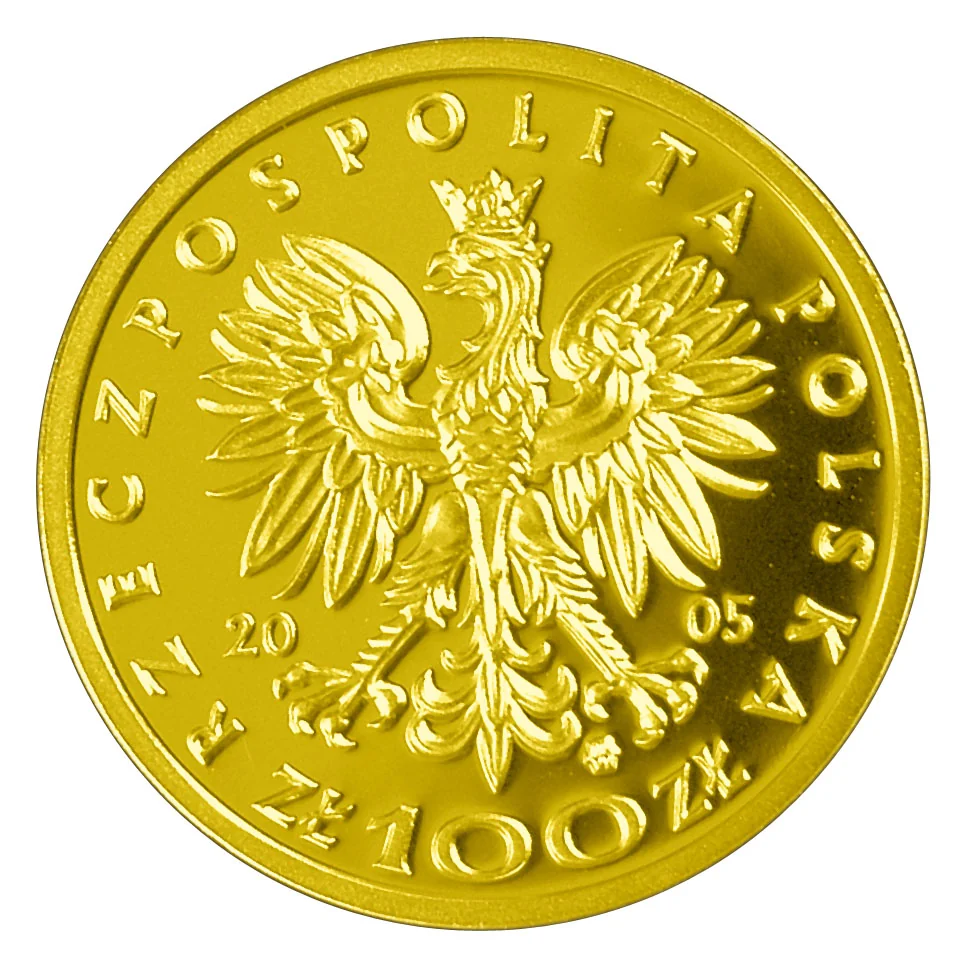
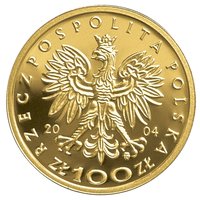
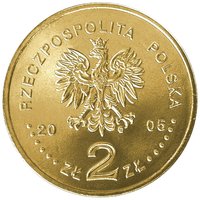
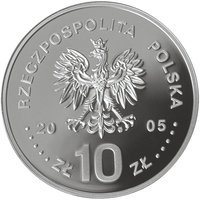
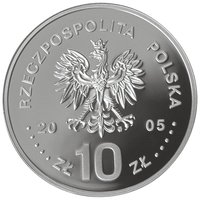
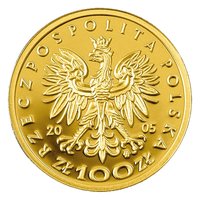
Crowned eagle: Africa's apex avian predator.
Inscription:
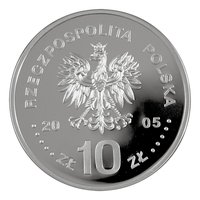
RZECZPOSPOLITA POLSKA
20 05
mw
ZŁ 100 ZŁ
20 05
mw
ZŁ 100 ZŁ
Translation:
REPUBLIC OF POLAND
20 05
mw
100 ZŁ 100 ZŁ
20 05
mw
100 ZŁ 100 ZŁ
Script: Latin
Language: Polish
Designer: Ewa Tyc-Karpińska
Reverse
Description:
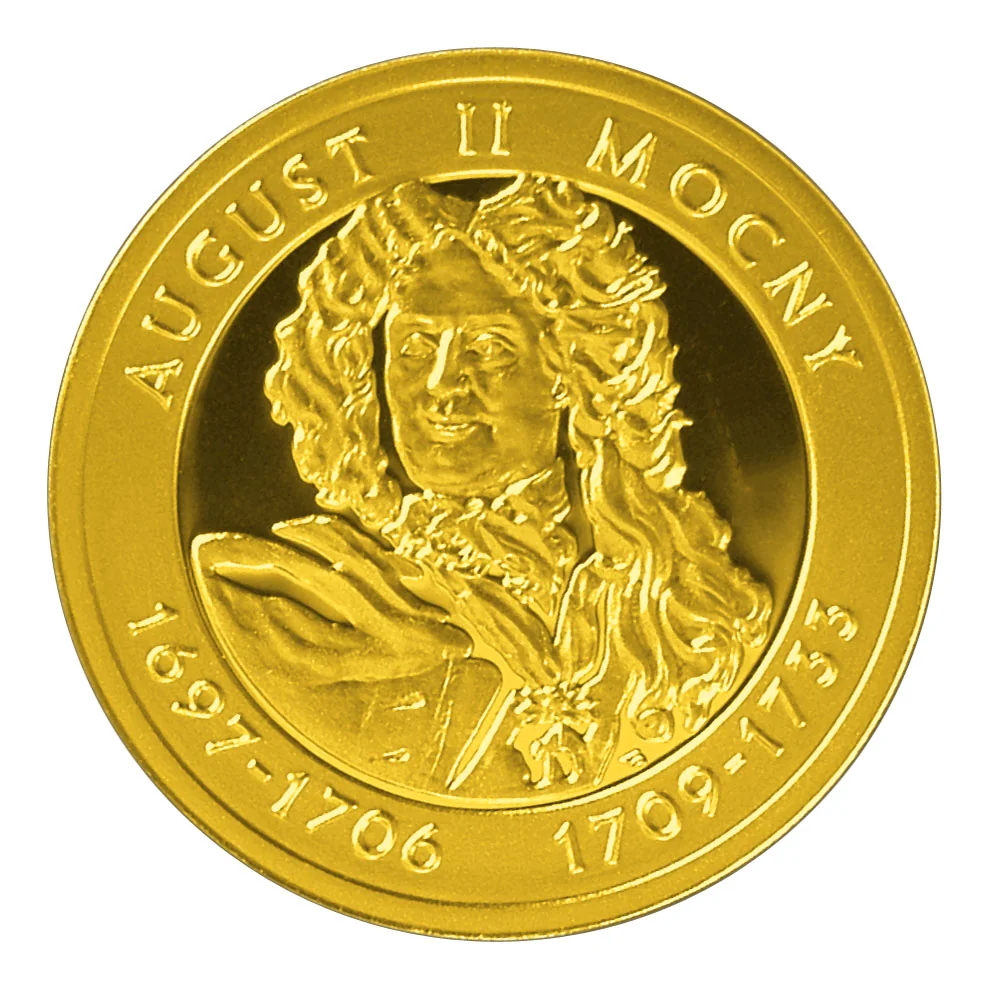
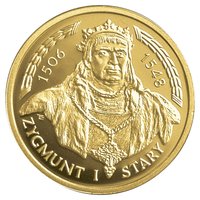
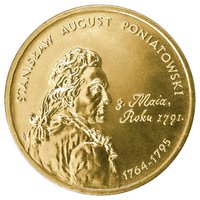
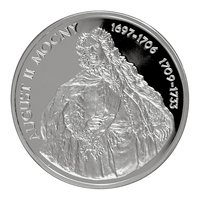
Portrait of Augustus II the Strong, King of Poland and Grand Duke of Lithuania (r. 1697–1706, 1709–1733).
Inscription:
AUGUST II MOCNY
1697-1706 1709-1733
1697-1706 1709-1733
Translation:
Augustus II the Strong
1697-1706 1709-1733
1697-1706 1709-1733
Script: Latin
Designer: Ewa Tyc-Karpińska
Edge
Plain
Mints
| Name | Mark |
|---|---|
| Mint of Poland | (MW) |
Mintings
| Year | Mint Mark | Mintage | Quality | Collection |
|---|---|---|---|---|
| 2005 | MW | 4,200 | Proof |
Historical background
In 2005, Poland's currency situation was characterized by a period of relative stability and strategic policy focus on European Union integration. The national currency, the złoty (PLN), operated under a managed floating exchange rate regime, where the National Bank of Poland (NBP) could intervene to smooth excessive volatility without targeting a specific fixed rate. This framework had served the country well since its introduction in 2000, providing flexibility after the turbulence of the 1990s transition. The key macroeconomic context was Poland's accession to the EU in May 2004, which set a clear strategic goal: eventual adoption of the euro. However, there was no immediate timetable, as Poland first had to join the Exchange Rate Mechanism II (ERM II) and meet the Maastricht convergence criteria, including stability of the exchange rate.
Economically, the year saw solid growth and moderating inflation, which provided a stable backdrop for the złoty. After a period of significant appreciation following EU accession, the currency stabilized in 2005, trading in a narrower band. This stability was supported by strong foreign direct investment inflows and improving economic fundamentals. The primary debate in financial and political circles was not about short-term volatility but about the long-term path to the euro. Discussions centered on the optimal timing for entering ERM II and the appropriate central parity for the złoty against the euro, with authorities cautious about avoiding a premature move that could cause economic disruption.
Politically, the currency situation became intertwined with national sovereignty debates. The center-right government led by Prime Minister Kazimierz Marcinkiewicz and the Law and Justice party, which took office in the latter half of 2005, exhibited more euro-skepticism than its predecessors. While not rejecting euro adoption outright, the new government emphasized that Poland should join only when its economy converged more closely with the Eurozone average to avoid asymmetric shocks, effectively delaying the previously discussed target date of 2009-2010. Thus, in 2005, the złoty's stability was underpinned by a conscious political decision to maintain monetary policy independence for the foreseeable future, prioritizing national economic conditions over the accelerated pursuit of euro adoption.
Economically, the year saw solid growth and moderating inflation, which provided a stable backdrop for the złoty. After a period of significant appreciation following EU accession, the currency stabilized in 2005, trading in a narrower band. This stability was supported by strong foreign direct investment inflows and improving economic fundamentals. The primary debate in financial and political circles was not about short-term volatility but about the long-term path to the euro. Discussions centered on the optimal timing for entering ERM II and the appropriate central parity for the złoty against the euro, with authorities cautious about avoiding a premature move that could cause economic disruption.
Politically, the currency situation became intertwined with national sovereignty debates. The center-right government led by Prime Minister Kazimierz Marcinkiewicz and the Law and Justice party, which took office in the latter half of 2005, exhibited more euro-skepticism than its predecessors. While not rejecting euro adoption outright, the new government emphasized that Poland should join only when its economy converged more closely with the Eurozone average to avoid asymmetric shocks, effectively delaying the previously discussed target date of 2009-2010. Thus, in 2005, the złoty's stability was underpinned by a conscious political decision to maintain monetary policy independence for the foreseeable future, prioritizing national economic conditions over the accelerated pursuit of euro adoption.
Series: Polish Kings and Princes
✨ Legendary