

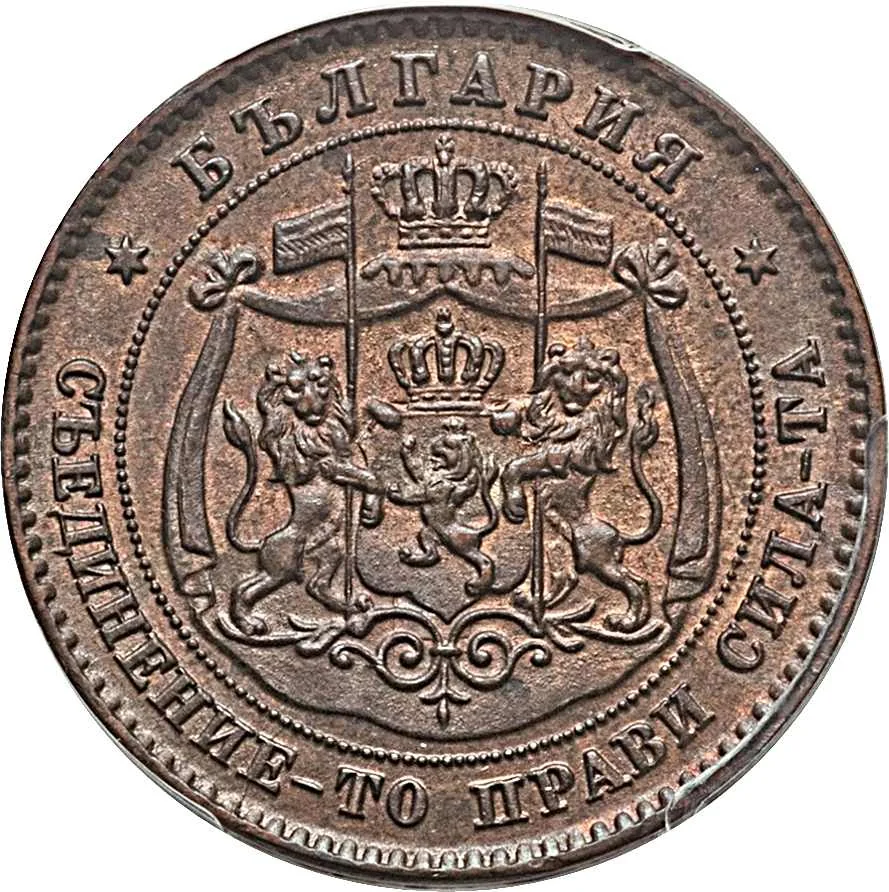
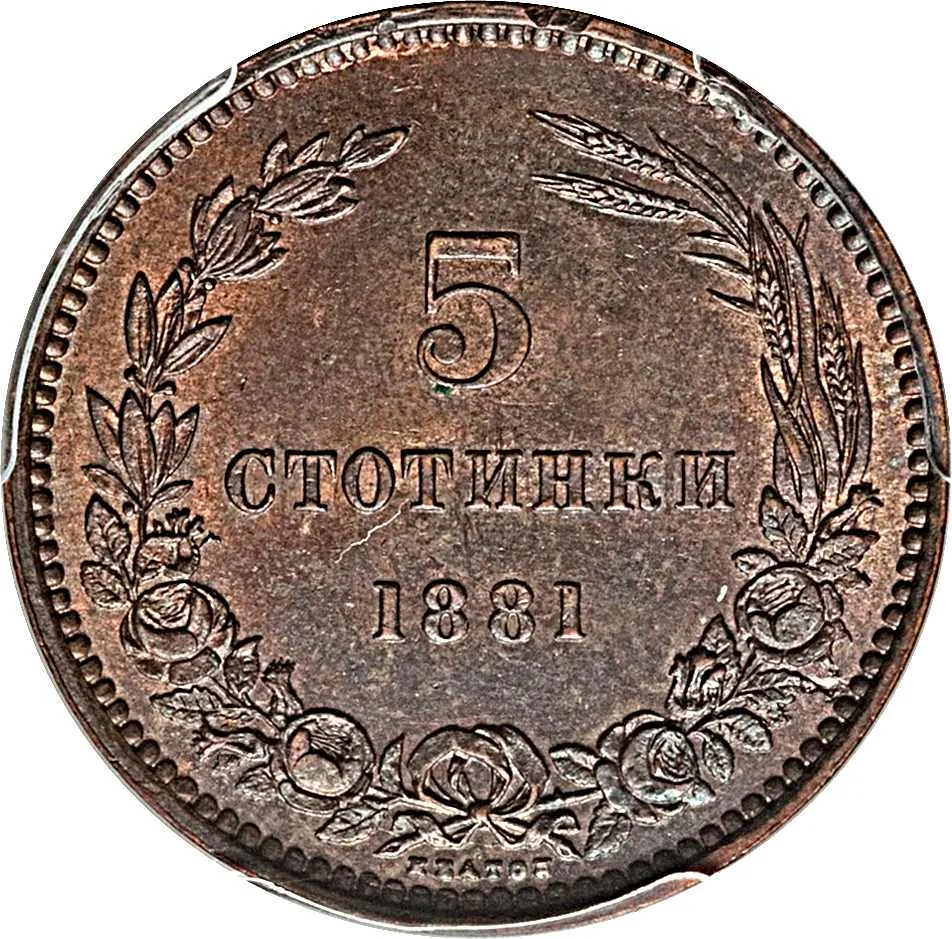
5 stotinki – Bulgaria
Add to wishlist
Bulgaria
Context
Year: 1881
Issuer: Bulgaria
Ruler: Alexander I
Currency:
(1881—1952)
Demonetized: Yes
Total mintage: 10,003,250
Material
References
KM: #
Numista: #8869
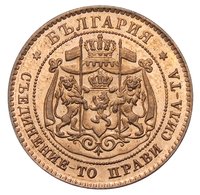
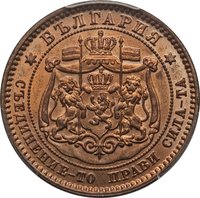
Obverse
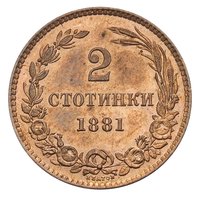
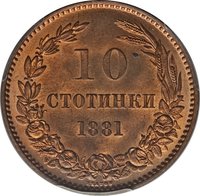
Reverse
Edge
Plain
Categories
| Symbols> Coat of Arms |
| Symbol> Wreath |
Mints
| Name | Mark |
|---|---|
| Heaton and Sons / The Mint Birmingham | — |
Mintings
| Year | Mint Mark | Mintage | Quality | Collection |
|---|---|---|---|---|
| 1881 | — | 10,000,000 | ||
| 1881 | — | 3,250 | Proof |
Historical background
In 1881, Bulgaria’s currency situation was complex and transitional, reflecting its new and fragile statehood. Having gained autonomy from the Ottoman Empire in 1878, the country operated under a dual monetary system. The Ottoman lira (gold) and kuruş (silver) still circulated widely, but they were increasingly competing with and being supplemented by a multitude of foreign coins, particularly the French gold napoleondor and the Russian silver ruble. This created a chaotic environment for commerce, with exchange rates fluctuating and no unified national currency to facilitate economic stability or sovereignty.
The legal framework for a national currency was established with the Law on the Right to Mint Coins passed in 1880. This law placed Bulgaria on a bimetallic standard, pegging the new Bulgarian lev to both gold and silver at a fixed ratio, and declared it the sole legal tender. However, in 1881, this system existed largely on paper. The state treasury, managed by the Bulgarian National Bank (founded in 1879), was still accumulating the precious metal reserves necessary for minting. Consequently, while the lev was the official unit of account for government finance and contracts, physical Bulgarian coins had not yet entered circulation.
Thus, 1881 was a year of anticipation and preparation. The government, under Prince Alexander Battenberg, was laying the administrative and financial groundwork to replace the heterogeneous mix of Ottoman and European money. The immediate challenge was securing enough bullion to issue the first coins, a process that would culminate in 1882 with the introduction of the first bronze denominations. The currency situation of 1881, therefore, was defined by the tension between the lingering monetary legacy of the Ottoman past and the impending launch of a national currency designed to solidify Bulgaria’s economic independence.
The legal framework for a national currency was established with the Law on the Right to Mint Coins passed in 1880. This law placed Bulgaria on a bimetallic standard, pegging the new Bulgarian lev to both gold and silver at a fixed ratio, and declared it the sole legal tender. However, in 1881, this system existed largely on paper. The state treasury, managed by the Bulgarian National Bank (founded in 1879), was still accumulating the precious metal reserves necessary for minting. Consequently, while the lev was the official unit of account for government finance and contracts, physical Bulgarian coins had not yet entered circulation.
Thus, 1881 was a year of anticipation and preparation. The government, under Prince Alexander Battenberg, was laying the administrative and financial groundwork to replace the heterogeneous mix of Ottoman and European money. The immediate challenge was securing enough bullion to issue the first coins, a process that would culminate in 1882 with the introduction of the first bronze denominations. The currency situation of 1881, therefore, was defined by the tension between the lingering monetary legacy of the Ottoman past and the impending launch of a national currency designed to solidify Bulgaria’s economic independence.
🌱 Common