

10 francs – Republic of the Congo
Add to wishlist
Context
Year: 1965
Issuer: Republic of the Congo
Issuing organization: National Bank of the Congo
Period:
(1964—1971)
Currency:
(1960—1967)
Demonetization: 30 September 1967
Total mintage: 100,100,000
Material
References
KM: #
Numista: #8868
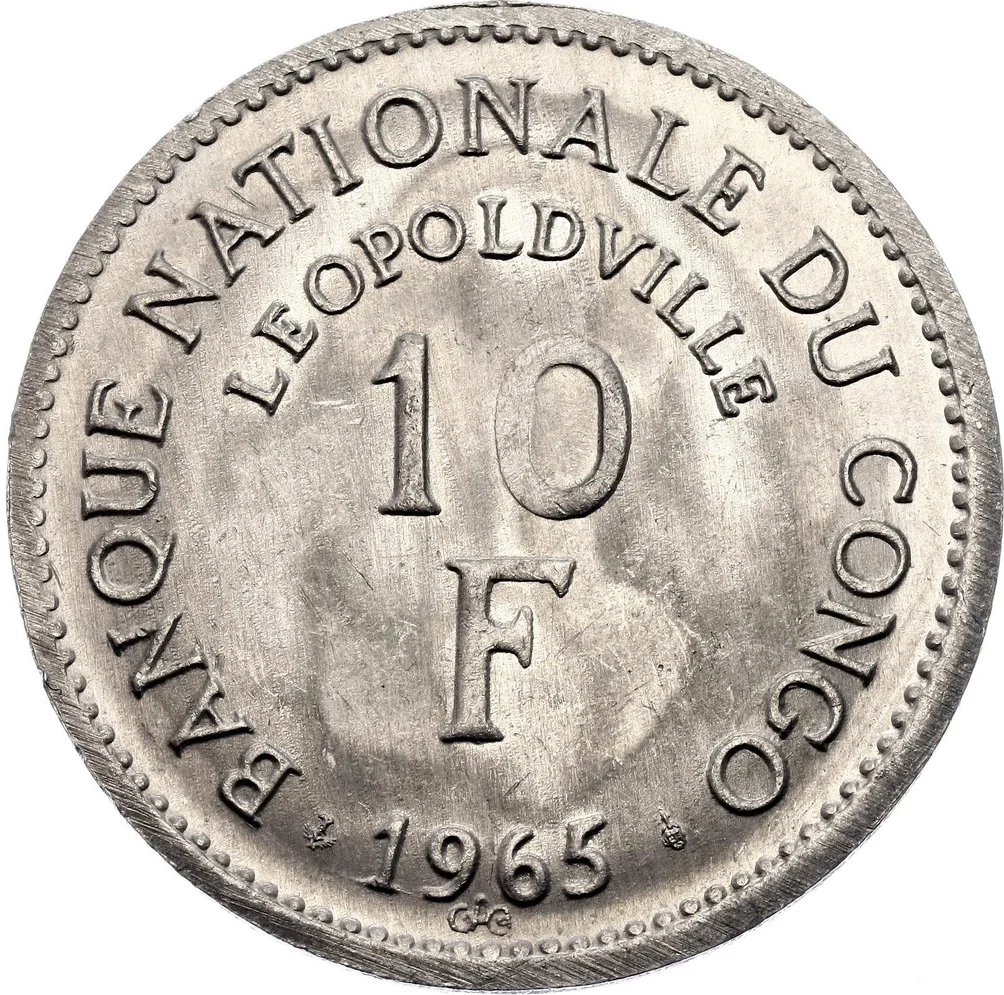
Obverse
Description:
Denomination
Inscription:
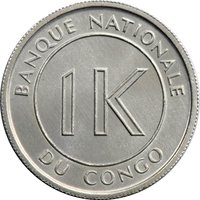
BANQUE NATIONALE DU CONGO
LEOPOLDVILLE
10
F
1965
GAB
LEOPOLDVILLE
10
F
1965
GAB
Translation:
National Bank of the Congo
Leopoldville
10
F
1965
Gab
Leopoldville
10
F
1965
Gab
Script: Latin
Language: French
Engraver: Georges André Brunet
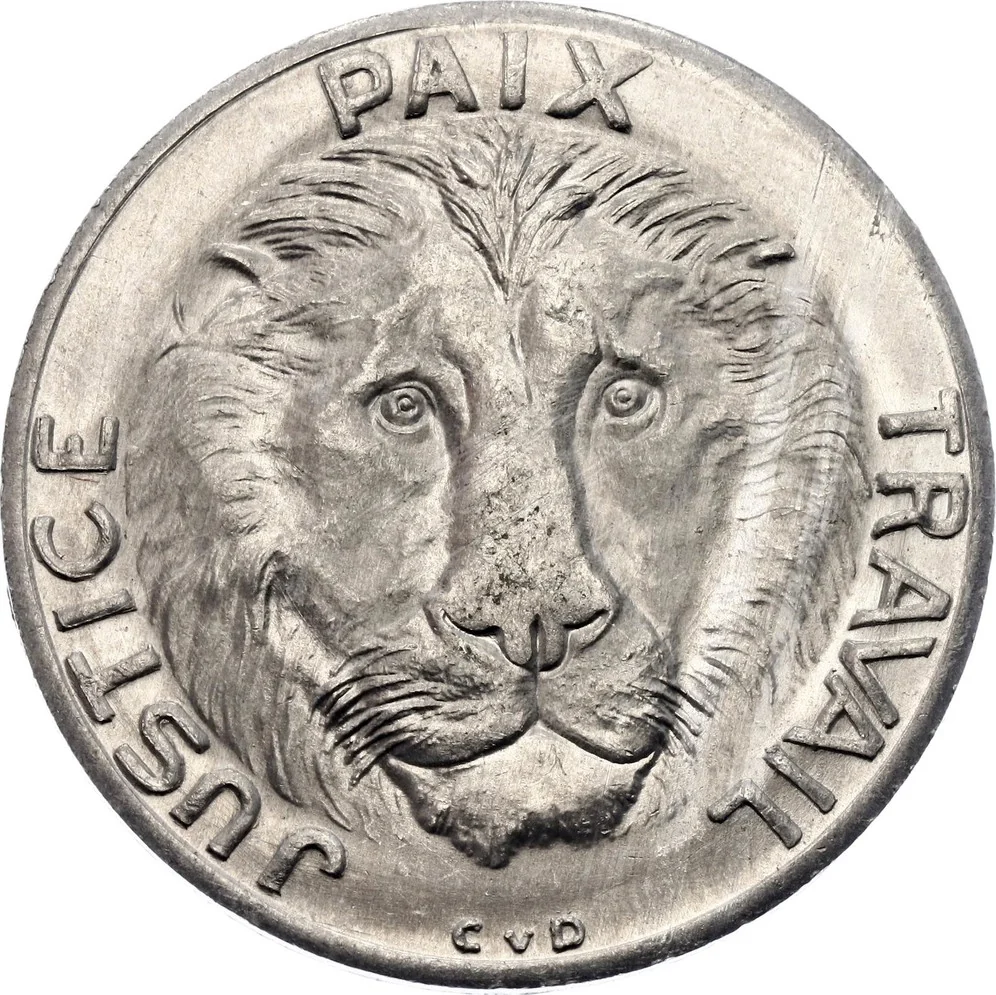
Reverse
Description:
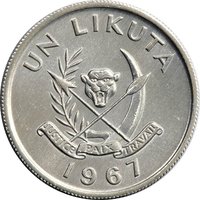
Lion's head design
Inscription:
JUSTICE PAIX TRAVAIL
CvD
CvD
Translation:
Justice Peace Work
Script: Latin
Language: French
Engraver: Carlos Van Dionant
Edge
Plain
Mints
| Name | Mark |
|---|---|
| Royal Mint of Belgium | Head of archangel Mi |
Mintings
| Year | Mint Mark | Mintage | Quality | Collection |
|---|---|---|---|---|
| 1965 | — | 100,100,000 |
Historical background
In 1965, the Republic of the Congo (often called Congo-Brazzaville to distinguish it from its larger neighbor, the Democratic Republic of the Congo) was part of the Communauté Financière Africaine (CFA) franc zone. This currency framework, established under French colonial rule, remained firmly in place after the country's independence in 1960. The CFA franc was (and remains) a shared currency guaranteed by the French Treasury, with a fixed and convertible peg to the French franc. For the Congolese government in 1965, this meant it did not have independent monetary policy; its currency's value, money supply, and foreign exchange reserves were managed collectively by the Central Bank of the West African States (BCEAO) for the member states of the West African Monetary Union.
Politically, 1965 was a year of significant transition, which had indirect but important implications for economic and currency management. President Alphonse Massamba-Débat, who had come to power in 1963, was consolidating a socialist-oriented, single-party state. His government was increasingly looking towards the Eastern Bloc for political alignment, even as the country's currency remained firmly anchored to France. This created a paradoxical economic landscape: a declared Marxist-Leninist path coexisted with a monetary system that was a cornerstone of continued financial integration with the former colonial power and the wider capitalist Franc Zone.
Economically, the fixed and stable CFA franc provided advantages like low inflation and ease of trade with France, but it also limited the state's ability to use devaluation as a tool to boost competitiveness. The Congolese economy in the mid-1960s was not yet a major oil producer (significant offshore discoveries would come later in the decade), relying instead on forestry and agriculture. Therefore, the currency's stability was crucial for importing essential goods and servicing debt, but it did little to spur industrial diversification. The currency situation thus reflected the broader tensions of the era—a newly independent nation seeking political autonomy and a radical ideological direction while remaining embedded in a neocolonial financial structure that provided stability but constrained sovereign economic control.
Politically, 1965 was a year of significant transition, which had indirect but important implications for economic and currency management. President Alphonse Massamba-Débat, who had come to power in 1963, was consolidating a socialist-oriented, single-party state. His government was increasingly looking towards the Eastern Bloc for political alignment, even as the country's currency remained firmly anchored to France. This created a paradoxical economic landscape: a declared Marxist-Leninist path coexisted with a monetary system that was a cornerstone of continued financial integration with the former colonial power and the wider capitalist Franc Zone.
Economically, the fixed and stable CFA franc provided advantages like low inflation and ease of trade with France, but it also limited the state's ability to use devaluation as a tool to boost competitiveness. The Congolese economy in the mid-1960s was not yet a major oil producer (significant offshore discoveries would come later in the decade), relying instead on forestry and agriculture. Therefore, the currency's stability was crucial for importing essential goods and servicing debt, but it did little to spur industrial diversification. The currency situation thus reflected the broader tensions of the era—a newly independent nation seeking political autonomy and a radical ideological direction while remaining embedded in a neocolonial financial structure that provided stability but constrained sovereign economic control.
🌱 Common