

1 krona – Sweden
Add to wishlist
Sweden
Context
Material
References
KM: #
Numista: #88649
Value
Exchange value: 1 SEK
Inflation-adjusted value: 1.34 SEK
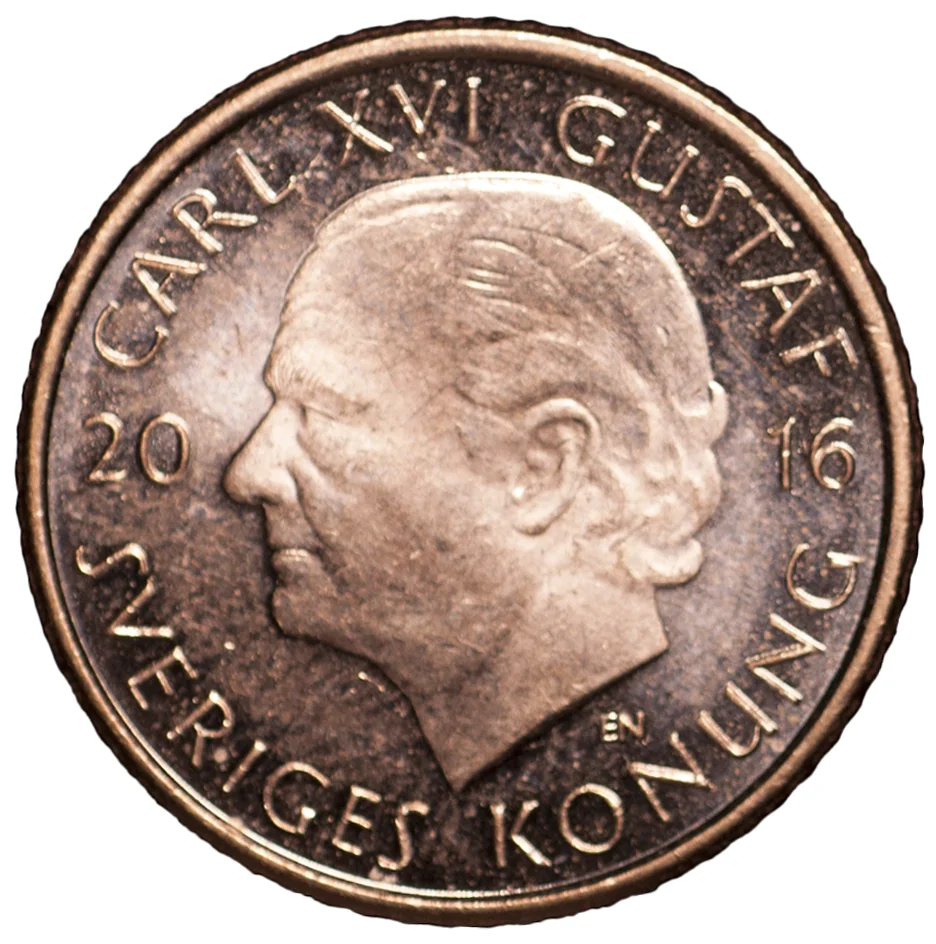
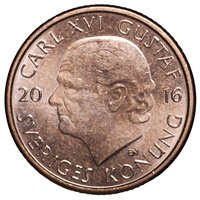
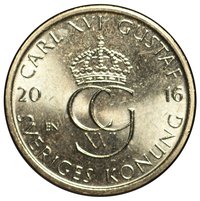
Obverse
Description:
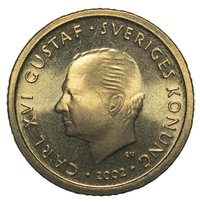
King Carl XVI Gustaf left profile beside date.
Inscription:
CARL XVI GUSTAF
20 16
EN
SVERIGES KONUNG
20 16
EN
SVERIGES KONUNG
Translation:
CARL XVI GUSTAF
20 16
OF
THE KING OF SWEDEN
20 16
OF
THE KING OF SWEDEN
Script: Latin
Engraver: Ernst Nordin
Reverse
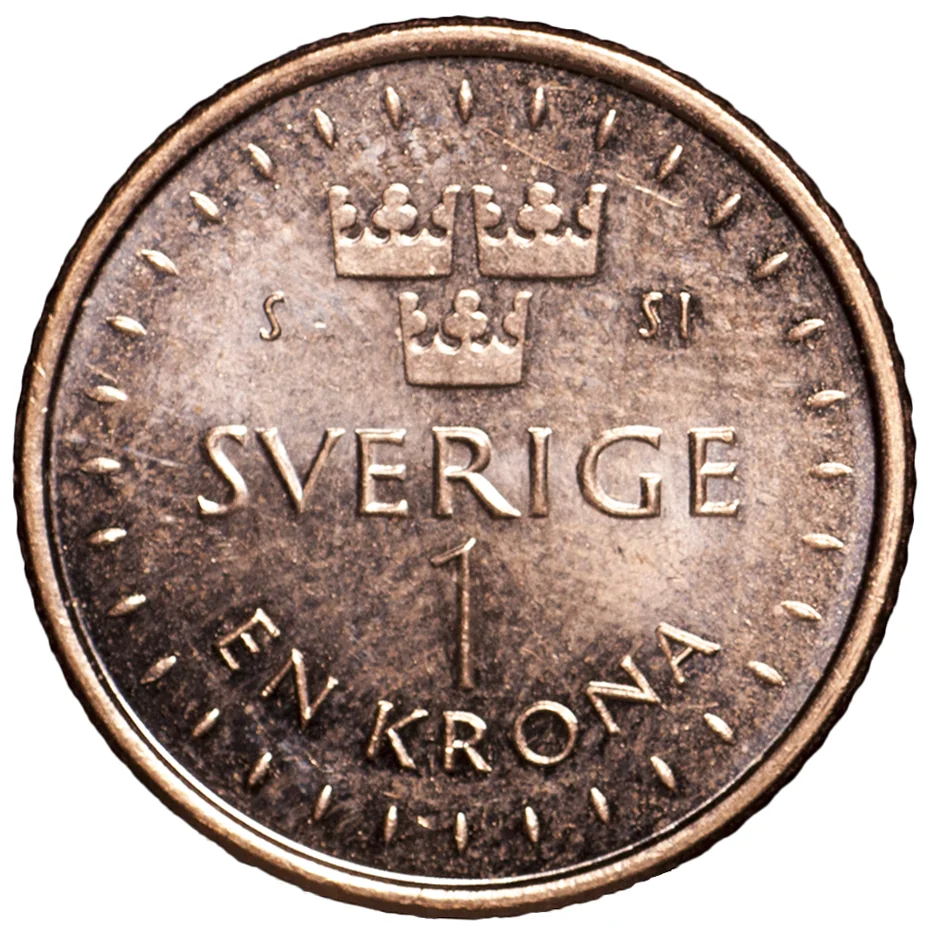
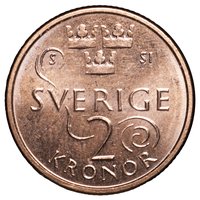
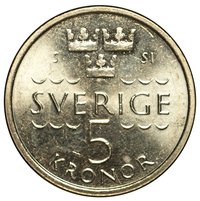
Description:
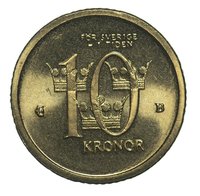
Stylized solar corona with three crowns above and initials on the sides.
Inscription:
S SI
SVERIGE
1
EN KRONA
SVERIGE
1
EN KRONA
Translation:
Sweden
1
One Krona
1
One Krona
Script: Latin
Language: Swedish
Engraver: Ernst Nordin
Edge
Milled
Mints
| Name | Mark |
|---|---|
| Mint of Finland | S |
| Royal Dutch Mint | S |
Mintings
| Year | Mint Mark | Mintage | Quality | Collection |
|---|---|---|---|---|
| 2016 | S | 279,000,000 |
Historical background
In 2016, Sweden's currency situation was dominated by the Riksbank's highly accommodative and unconventional monetary policy, aimed at combating persistently low inflation. Despite strong economic growth and a booming housing market, consumer price inflation had remained stubbornly below the 2% target for years. In response, the Riksbank pushed its main policy rate further into negative territory, reaching -0.50% in February, and expanded its government bond purchase program (quantitative easing). The primary goal was to weaken the Swedish krona (SEK) to raise import prices and, thereby, lift inflation expectations.
This aggressive stance created significant tension and debate. Critics, including some within the Riksbank's own executive board, argued that the ultra-low rates were fueling financial stability risks, particularly in the form of rapidly rising household debt and housing prices. Furthermore, the policy divergence with the U.S. Federal Reserve, which had begun raising rates, put downward pressure on the krona. While a weaker currency was the Riksbank's intended outcome, it contributed to imported inflationary pressures by the year's end, albeit from a very low base.
By late 2016, the currency and inflation dynamics showed tentative signs of shifting. The krona had indeed depreciated, and inflation measures began to approach the target, with CPIF (CPI with fixed interest rate) inflation reaching 1.8% in December. This set the stage for a gradual policy recalibration in the coming years, as the Riksbank cautiously signaled that the extreme stimulus measures might have run their course, though it remained committed to a very patient approach to tightening.
This aggressive stance created significant tension and debate. Critics, including some within the Riksbank's own executive board, argued that the ultra-low rates were fueling financial stability risks, particularly in the form of rapidly rising household debt and housing prices. Furthermore, the policy divergence with the U.S. Federal Reserve, which had begun raising rates, put downward pressure on the krona. While a weaker currency was the Riksbank's intended outcome, it contributed to imported inflationary pressures by the year's end, albeit from a very low base.
By late 2016, the currency and inflation dynamics showed tentative signs of shifting. The krona had indeed depreciated, and inflation measures began to approach the target, with CPIF (CPI with fixed interest rate) inflation reaching 1.8% in December. This set the stage for a gradual policy recalibration in the coming years, as the Riksbank cautiously signaled that the extreme stimulus measures might have run their course, though it remained committed to a very patient approach to tightening.
🌱 Very Common