

10 Zlotys – Poland
Poland
Context

Material
Weight: 14.14 g
Silver weight: 13.08 g
Shape: Square with rounded corners
Composition: 92.5% Silver
Magnetic: No
Technique: Milled
Alignment: Medal alignment
flip
References
Y: #Click to copy to clipboard729
Numista: #88512
Value
Exchange value: 10 PLN = $2.80
Bullion value: $36.82
Inflation-adjusted value: 17.26 PLN
Obverse
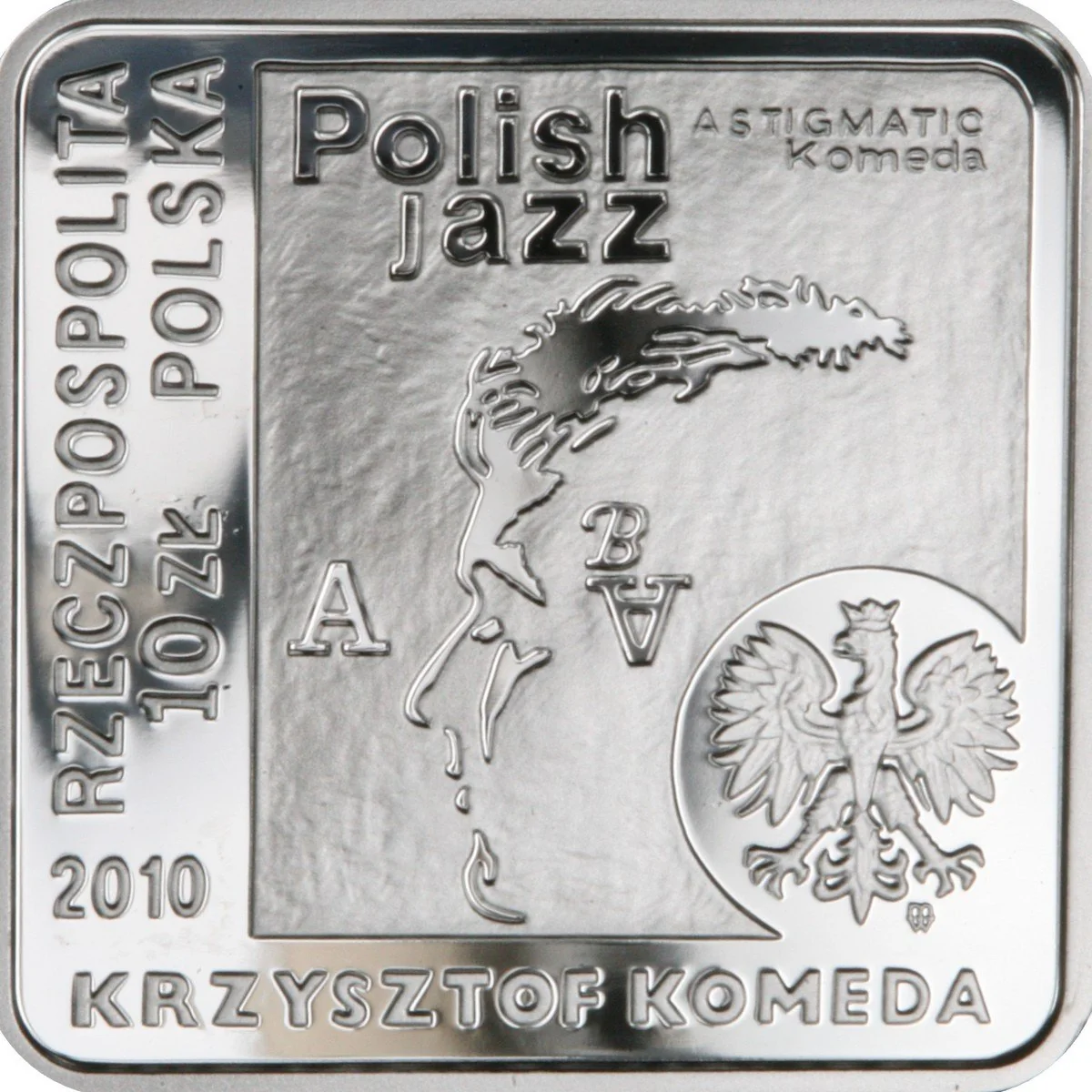
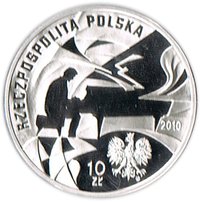
Inscription:
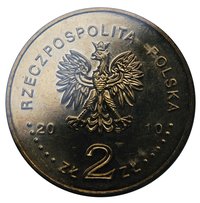
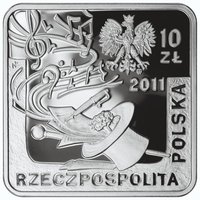
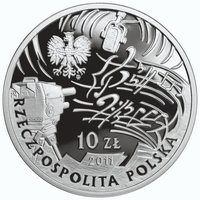
RZECZPOSPOLITA
10 ZŁ
POLSKA
2010
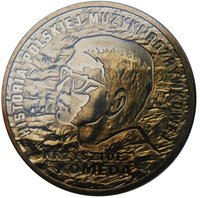
Polish
jazz
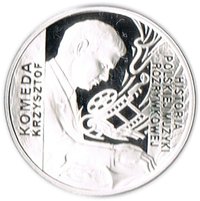
ASTIGMATIC
Komeda
mw
KRZYSZTOF KOMEDA
10 ZŁ
POLSKA
2010
Polish
jazz
ASTIGMATIC
Komeda
mw
KRZYSZTOF KOMEDA
Translation:
REPUBLIC OF POLAND
10 ZŁ
POLAND
2010
Polish
jazz
ASTIGMATIC
Komeda
mw
KRZYSZTOF KOMEDA
10 ZŁ
POLAND
2010
Polish
jazz
ASTIGMATIC
Komeda
mw
KRZYSZTOF KOMEDA
Script: Latin
Designer: Roussanka Nowakowska
Reverse
Edge
Plain
Mints
| Name | Mark |
|---|---|
| Mint of Poland | (MW) |
Mintings
| Year | Mint Mark | Mintage | Quality | Collection |
|---|---|---|---|---|
| 2010 | MW | 60,000 | Proof |
Historical background
In 2010, Poland’s currency situation was defined by the relative strength and stability of the Polish złoty (PLN) amidst the lingering turbulence of the global financial crisis. Unlike many of its regional peers, Poland had avoided a formal recession in 2009, the only EU country to do so, which bolstered investor confidence. The złoty, which had sharply depreciated in late 2008 and early 2009, staged a strong recovery through 2010, supported by significant capital inflows, a growing economy, and the prospect of eventual Eurozone accession. This period saw the złoty trading in a managed float regime, with the National Bank of Poland (NBP) occasionally intervening to curb excessive volatility.
A key theme of the year was the debate over Poland's adoption of the euro. While formal entry into the Eurozone remained a long-term strategic goal, the 2010 timeline was effectively suspended in the wake of the European debt crisis. The instability of the euro, particularly concerning Greece and other southern EU members, led Polish policymakers and the public to view the złoty as a welcome shield, allowing for independent monetary policy. Under NBP President Marek Belka, interest rates were kept low to support growth, a flexibility that would not have been possible within the single currency.
Overall, 2010 was a year of consolidation for the złoty. It benefited from Poland's economic resilience, which earned it upgrades to its credit rating, and from a global "risk-on" environment that favored emerging market assets. However, the currency's value remained sensitive to external sentiment swings related to the Eurozone's sovereign debt troubles. Consequently, while the złoty ended the year as one of Central Europe's better-performing currencies, its trajectory was a balancing act between domestic economic fundamentals and the unresolved fragility of the wider European economy.
A key theme of the year was the debate over Poland's adoption of the euro. While formal entry into the Eurozone remained a long-term strategic goal, the 2010 timeline was effectively suspended in the wake of the European debt crisis. The instability of the euro, particularly concerning Greece and other southern EU members, led Polish policymakers and the public to view the złoty as a welcome shield, allowing for independent monetary policy. Under NBP President Marek Belka, interest rates were kept low to support growth, a flexibility that would not have been possible within the single currency.
Overall, 2010 was a year of consolidation for the złoty. It benefited from Poland's economic resilience, which earned it upgrades to its credit rating, and from a global "risk-on" environment that favored emerging market assets. However, the currency's value remained sensitive to external sentiment swings related to the Eurozone's sovereign debt troubles. Consequently, while the złoty ended the year as one of Central Europe's better-performing currencies, its trajectory was a balancing act between domestic economic fundamentals and the unresolved fragility of the wider European economy.
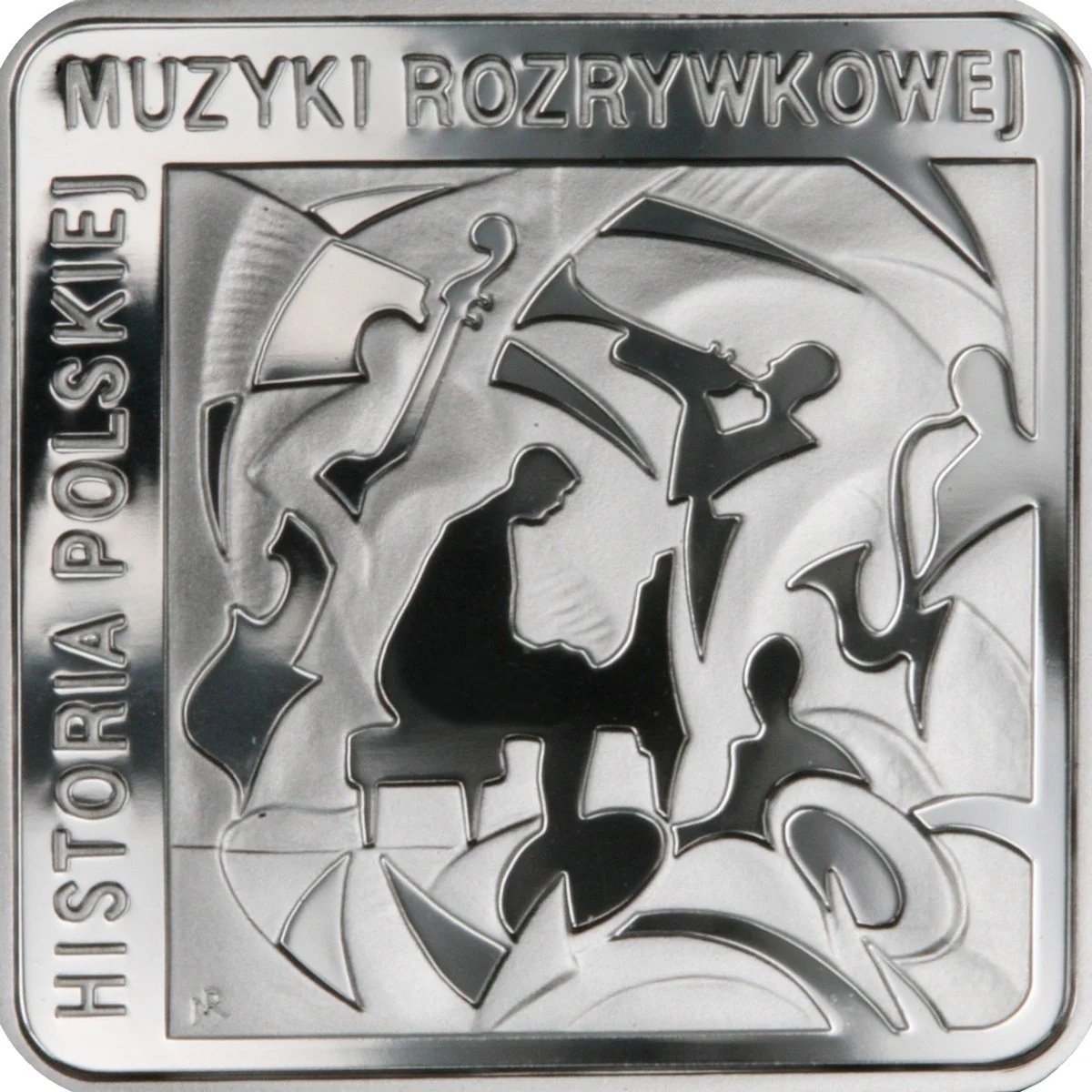
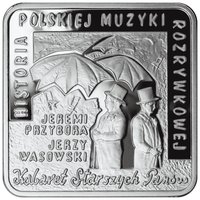
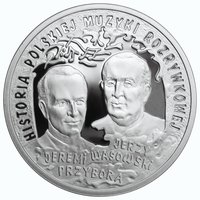
Series: History of Polish Popular Music
💎 Very Rare