

1 anna – India - British
Add to wishlist
India
Context
Years: 1938–1940
Country: India
Issuer: India - British
Ruler: George VI
Currency:
(1770—1947)
Demonetized: Yes
Total mintage: 125,548,000
Material
Diameter: 20 mm
Weight: 3.7 g
Thickness: 1.4 mm
Shape: Scalloped
Composition: Copper-nickel
Technique: Milled
Alignment: Medal alignment
flip
References
KM: #
Numista: #8849
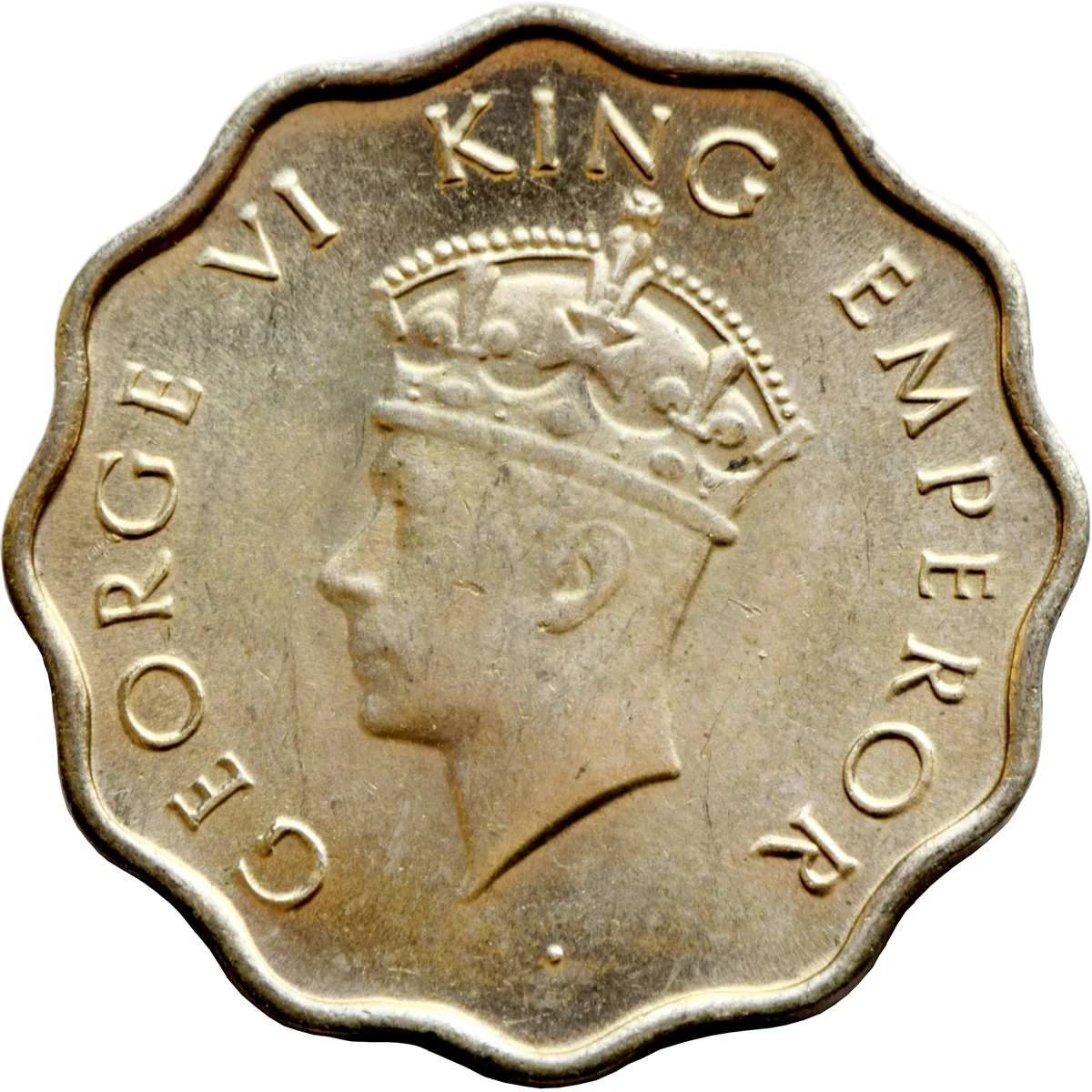
Obverse
Description:
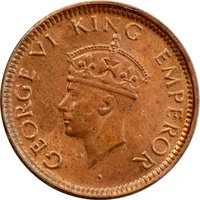
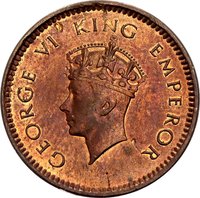
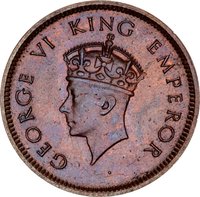
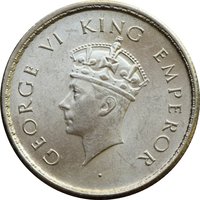
King George VI, left. English legend surrounds.
Inscription:
GEORGE VI KING EMPEROR
Translation:
GEORGE VI KING EMPEROR
Script: Latin
Language: English
Engraver: Percy Metcalfe
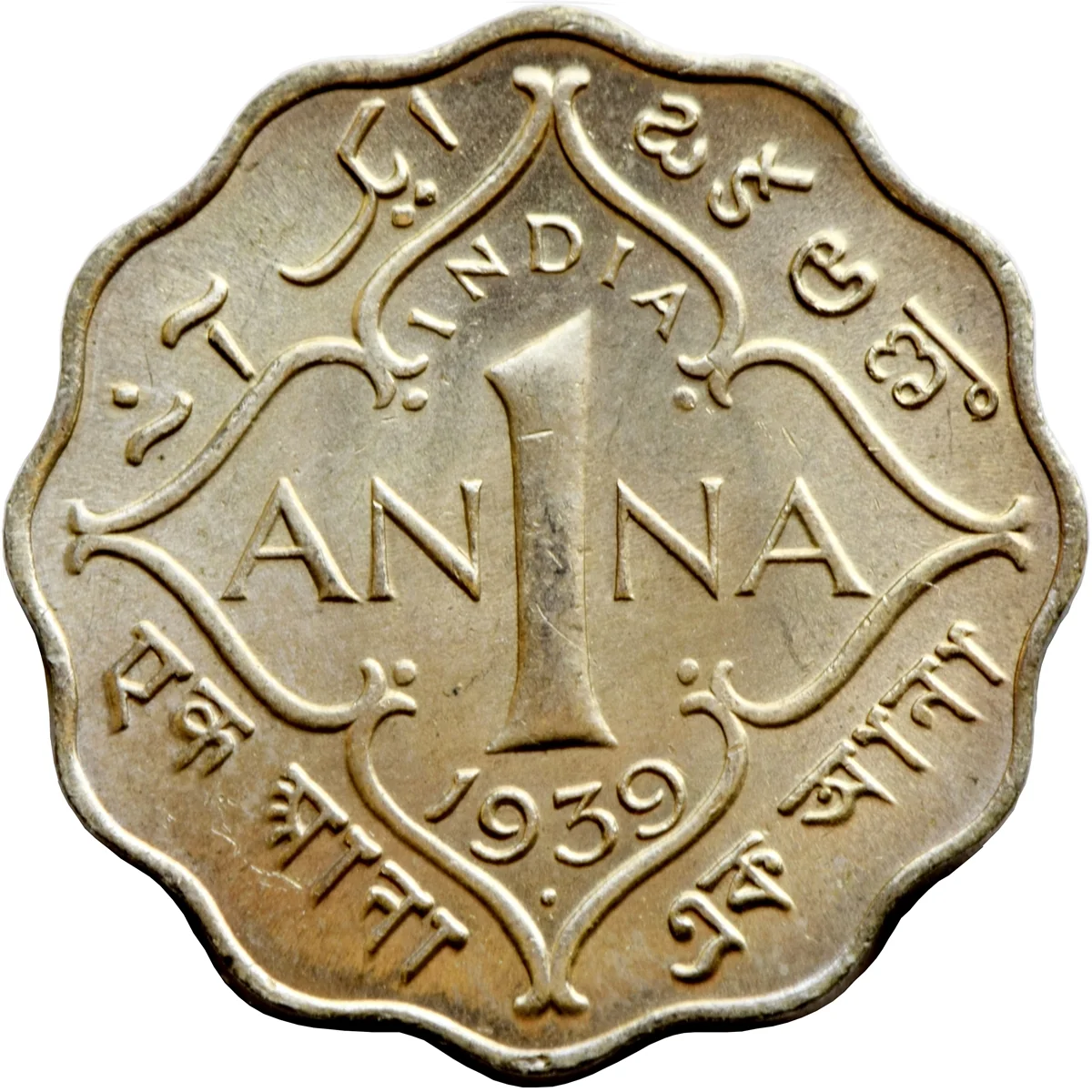
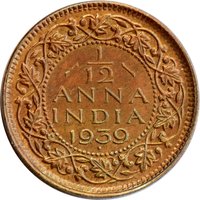
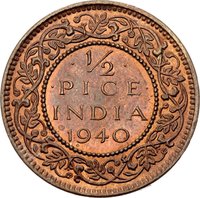
Reverse
Edge
Plain
Mints
| Name | Mark |
|---|---|
| Kolkata / Calcutta / Murshidabad | — |
| Mumbai / Bombay | · |
Mintings
| Year | Mint Mark | Mintage | Quality | Collection |
|---|---|---|---|---|
| 1938 | — | 7,128,000 | ||
| 1938 | — | — | Proof | |
| 1938 | • | 3,126,000 | ||
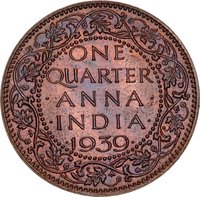
| 1939 | — | 18,192,000 | ||
| 1939 | • | 36,157,000 | ||
| 1940 | — | 60,945,000 | ||
| 1940 | • | — |
Historical background
In 1938, the currency situation in British India was defined by the Sterling Exchange Standard, a system intrinsically linked to Britain's financial interests. The Indian rupee was not backed by gold but by sterling reserves held in London, with its value fixed at 1 shilling 6 pence (or 1/15th of a British pound). This mechanism ensured that India's vast economy served as a captive market and a source of sterling credit, facilitating Britain's balance of payments and its purchases of Indian goods. The Reserve Bank of India, established just three years prior in 1935, managed this exchange standard, but ultimate control over India's monetary policy resided with the British government.
The system faced significant criticism from the growing Indian nationalist movement, which viewed it as a tool of colonial exploitation. Leaders and economists argued that tying the rupee to sterling prioritized British economic stability over Indian development, especially during the Great Depression. They contended that the fixed exchange rate and the export of India's sterling surpluses (the "Home Charges") drained capital needed for domestic industrialization, keeping the economy subservient as an exporter of raw materials and an importer of British manufactured goods.
Furthermore, the late 1930s were a period of financial tension and transition. The outbreak of World War II in 1939 would soon precipitate a dramatic shift, but in 1938, the structure remained intact. The system was stable in a technical sense, yet it was politically contentious, symbolizing economic subjugation. It created a paradoxical situation where India, a country with widespread poverty, was a net creditor to its colonial ruler, a point fiercely highlighted by nationalists demanding Swaraj (self-rule) and economic autonomy.
The system faced significant criticism from the growing Indian nationalist movement, which viewed it as a tool of colonial exploitation. Leaders and economists argued that tying the rupee to sterling prioritized British economic stability over Indian development, especially during the Great Depression. They contended that the fixed exchange rate and the export of India's sterling surpluses (the "Home Charges") drained capital needed for domestic industrialization, keeping the economy subservient as an exporter of raw materials and an importer of British manufactured goods.
Furthermore, the late 1930s were a period of financial tension and transition. The outbreak of World War II in 1939 would soon precipitate a dramatic shift, but in 1938, the structure remained intact. The system was stable in a technical sense, yet it was politically contentious, symbolizing economic subjugation. It created a paradoxical situation where India, a country with widespread poverty, was a net creditor to its colonial ruler, a point fiercely highlighted by nationalists demanding Swaraj (self-rule) and economic autonomy.
🌱 Very Common