

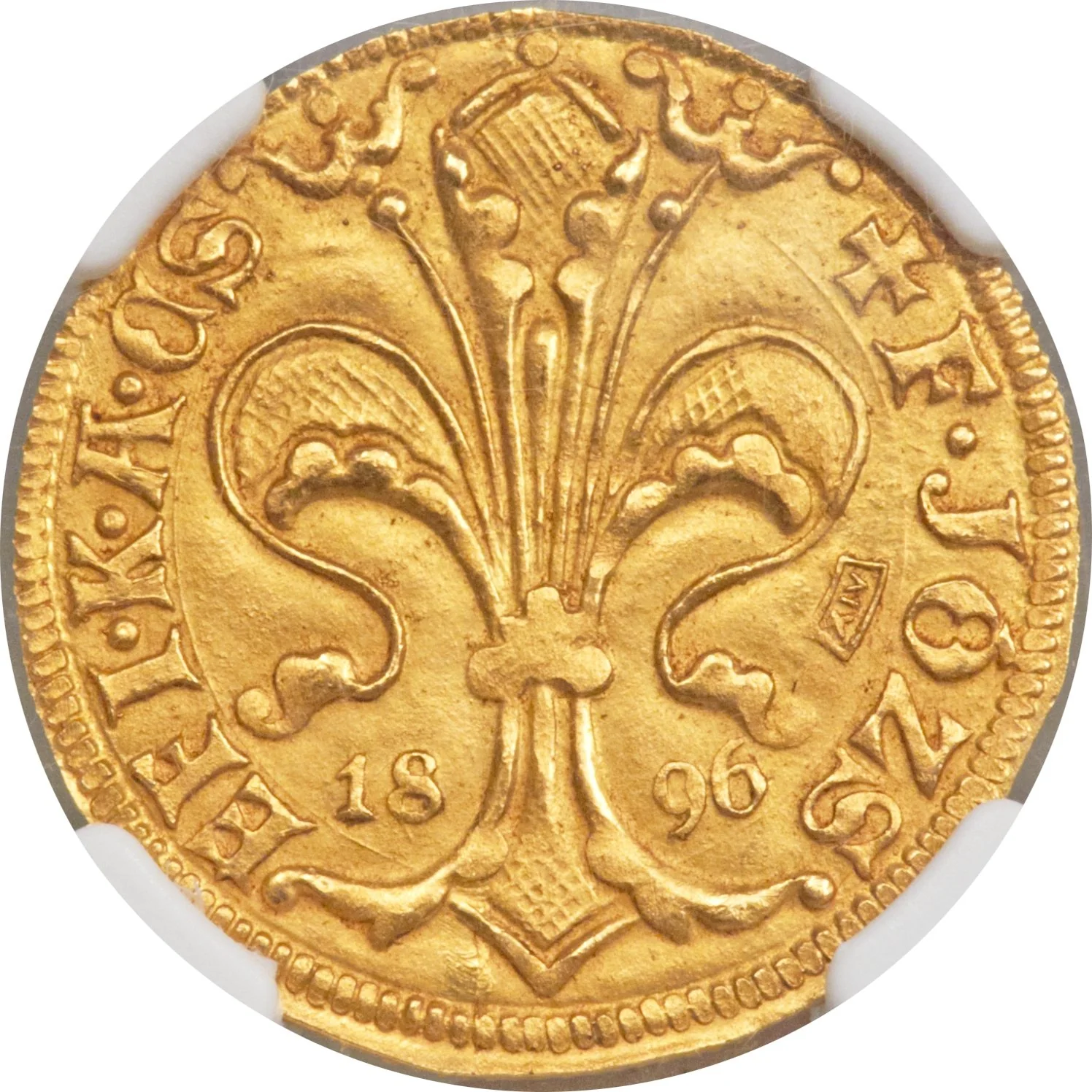
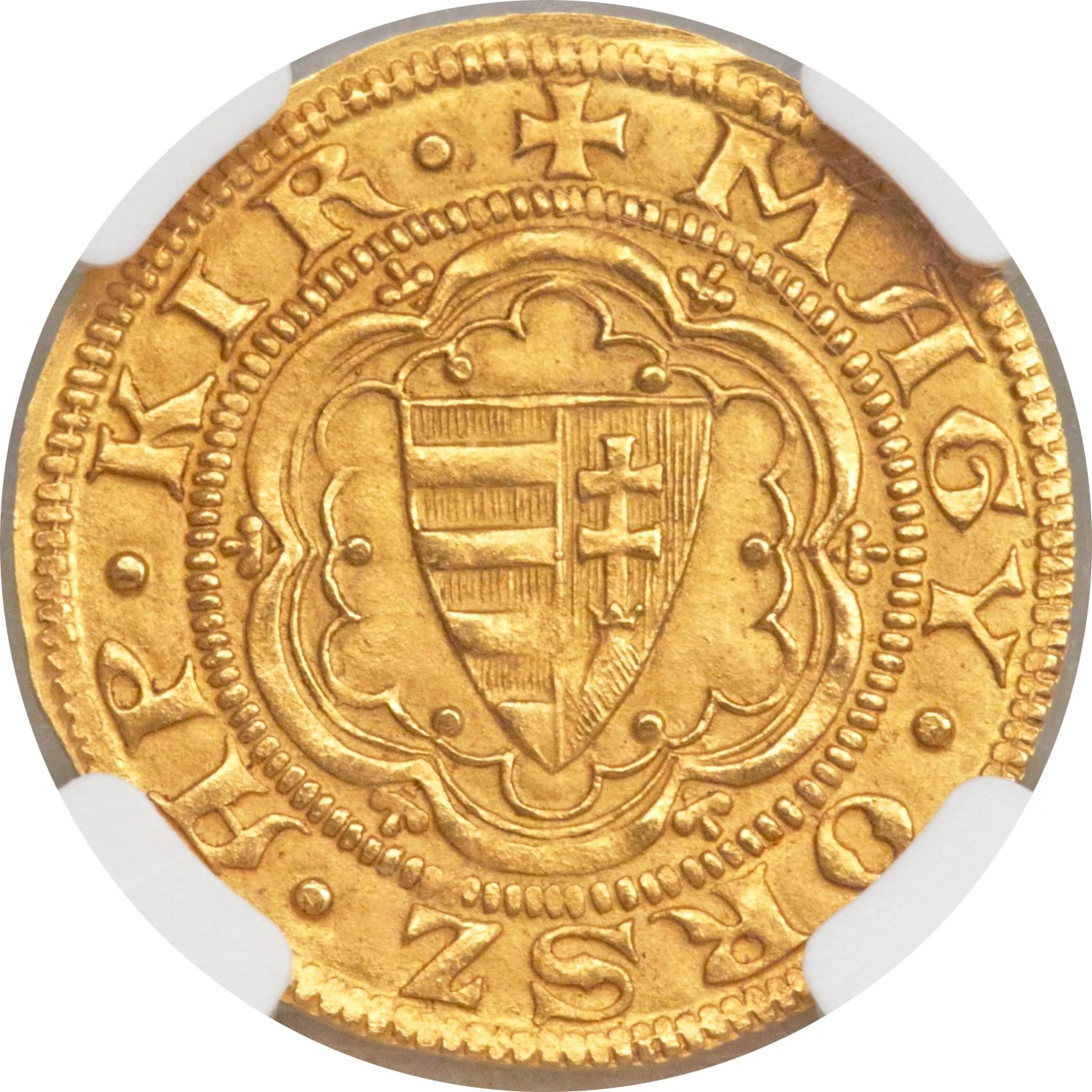
goldgulden (kingdom) – Hungary
Add to wishlist
Non-circulating coins
Commemoration: 1000th anniversary of the kingdom
Hungary
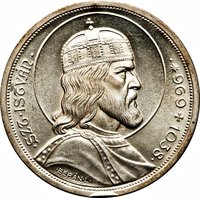
Obverse
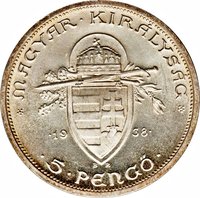
Reverse
Edge
Categories
| Event> Millennium |
Mintings
| Year | Mint Mark | Mintage | Quality | Collection |
|---|---|---|---|---|
| 1896 | — | 100 |
Historical background
In 1896, the Austro-Hungarian Empire, of which Hungary was a constituent kingdom, operated under a stable and modern gold standard. The shared currency was the Austro-Hungarian gulden (or florin), which had been fully convertible to gold since 1892, replacing the previous silver standard. This monetary union, managed by the Austro-Hungarian Bank in Vienna, provided Hungary with financial stability, low inflation, and facilitated trade and capital flows within the empire and with major European financial centers. The system was a cornerstone of the economic prosperity and ambitious state-led development, including the grandiose Millennium celebrations and infrastructure projects marking Hungary's 1000-year anniversary that year.
However, this currency arrangement was also a point of political contention within Hungary. Hungarian nationalists and economic elites increasingly chafed under the joint central bank, viewing it as a symbol of Austrian dominance and a constraint on Hungarian economic sovereignty. There was a growing political movement, led by figures like Sándor Wekerle, demanding a separate Hungarian national bank with the right to issue its own currency. This was part of a broader struggle for greater autonomy within the Dual Monarchy structure established in 1867.
Thus, the currency situation in 1896 was one of surface-level stability underpinned by deepening political strain. The gold-convertible gulden supported Hungary's rapid industrialization and integration into the European economy, yet it existed within an institutional framework that many Hungarians considered outdated. The calls for a independent central bank, which would eventually be realized with the founding of the Hungarian Royal State Bank in 1924, were already a significant undercurrent, highlighting the tension between economic integration within the empire and the pursuit of national self-determination.
However, this currency arrangement was also a point of political contention within Hungary. Hungarian nationalists and economic elites increasingly chafed under the joint central bank, viewing it as a symbol of Austrian dominance and a constraint on Hungarian economic sovereignty. There was a growing political movement, led by figures like Sándor Wekerle, demanding a separate Hungarian national bank with the right to issue its own currency. This was part of a broader struggle for greater autonomy within the Dual Monarchy structure established in 1867.
Thus, the currency situation in 1896 was one of surface-level stability underpinned by deepening political strain. The gold-convertible gulden supported Hungary's rapid industrialization and integration into the European economy, yet it existed within an institutional framework that many Hungarians considered outdated. The calls for a independent central bank, which would eventually be realized with the founding of the Hungarian Royal State Bank in 1924, were already a significant undercurrent, highlighting the tension between economic integration within the empire and the pursuit of national self-determination.
✨ Legendary