

5 pengos (St. Stephan) – Hungary
Add to wishlist
Non-circulating coins
Commemoration: 900th Anniversary - Death of St. Stephan
Hungary
Context
Year: 1938
Issuer: Hungary
Ruler: Nicolas Horthy
Currency:
(1927—1946)
Demonetization: 31 October 1945
Total mintage: 600,000
Material
References
KM: #
Numista: #6490
Value
Bullion value: $40.88
Obverse
Description:
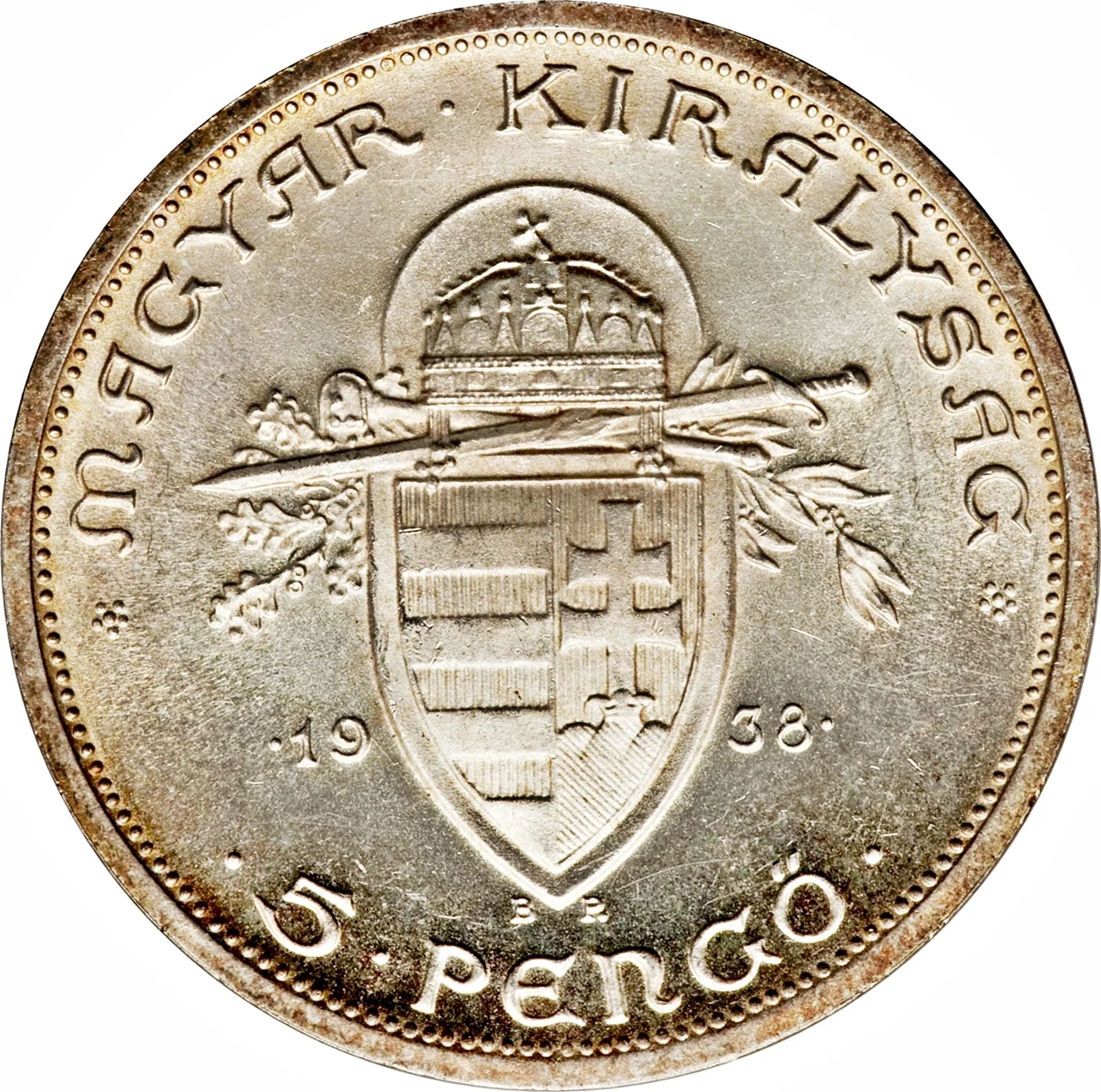
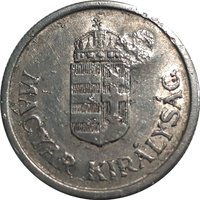
Heraldic emblem
Inscription:
MAGYAR KIRALYSAG
19 38
5 PENGÖ
19 38
5 PENGÖ
Translation:
HUNGARIAN KINGDOM
19 38
5 PENGO
19 38
5 PENGO
Script: Latin
Language: Hungarian
Engraver: Lajos Berán
Reverse
Description:
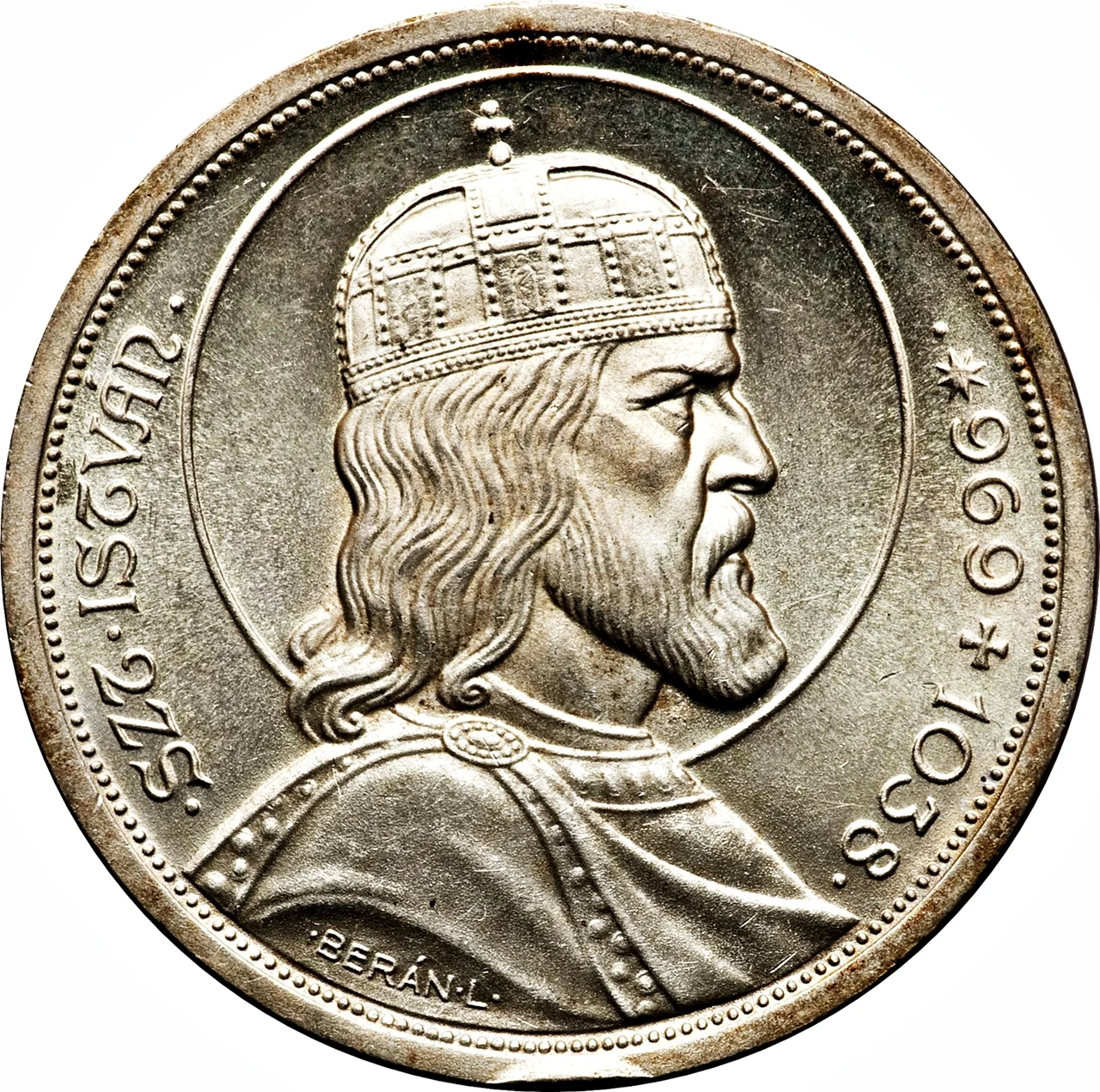
Portrait of Saint Stephen
Inscription:
SZT. ISTVÁN 969-1038
Translation:
Saint Stephen 969-1038
Script: Latin
Language: Hungarian
Engraver: Lajos Berán
Edge
Imprinted with ornamentals
Categories
| Event> Death anniversary |
Mints
| Name | Mark |
|---|---|
| Hungarian mint | — |
Mintings
| Year | Mint Mark | Mintage | Quality | Collection |
|---|---|---|---|---|
| 1938 | BP | 600,000 | Proof |
Historical background
In 1938, Hungary's currency situation was defined by the long shadow of the post-World War I economic collapse and the Great Depression. The national currency, the pengő, introduced in 1927 to replace the utterly collapsed korona, was initially a success story of stabilization under Prime Minister István Bethlen. It was tied to gold and enjoyed a period of relative strength. However, the global economic crisis of the 1930s severely impacted Hungary's largely agricultural economy, leading to a loss of foreign exchange reserves and forcing the country to default on its foreign debt in 1931. By 1938, while the pengő remained the official currency, it operated under strict exchange controls and was not freely convertible, as Hungary sought to protect its dwindling reserves and manage its autarkic economic policies.
The economy and currency were increasingly manipulated to serve the state's political and revisionist goals. Under the governorship of Gyula Reményi-Schmeller at the Hungarian National Bank, financial policy was subordinated to the government's agenda, which included rapid rearmament and preparing the economy for war to regain territories lost in the Treaty of Trianon. This led to chronic budget deficits, which were increasingly financed by money printing from the central bank, planting the seeds for future inflation. While hyperinflation was not yet apparent in 1938, the underlying pressures were building as public debt soared and the economy was redirected towards militarization, often through state-led barter agreements with Nazi Germany and Fascist Italy to circumvent hard currency shortages.
Consequently, by late 1938, Hungary's currency system was fragile and artificially sustained. The First Vienna Award in November, which returned southern Slovakia from Czechoslovakia to Hungary, provided a temporary morale and economic boost but did not alter the fundamental financial weaknesses. The pengő's stability was more illusory than real, maintained through isolation from international markets and authoritarian financial controls. The stage was set for the catastrophic monetary collapse that would follow during and after World War II, culminating in the infamous hyperinflation of the 1940s and the introduction of the forint in 1946.
The economy and currency were increasingly manipulated to serve the state's political and revisionist goals. Under the governorship of Gyula Reményi-Schmeller at the Hungarian National Bank, financial policy was subordinated to the government's agenda, which included rapid rearmament and preparing the economy for war to regain territories lost in the Treaty of Trianon. This led to chronic budget deficits, which were increasingly financed by money printing from the central bank, planting the seeds for future inflation. While hyperinflation was not yet apparent in 1938, the underlying pressures were building as public debt soared and the economy was redirected towards militarization, often through state-led barter agreements with Nazi Germany and Fascist Italy to circumvent hard currency shortages.
Consequently, by late 1938, Hungary's currency system was fragile and artificially sustained. The First Vienna Award in November, which returned southern Slovakia from Czechoslovakia to Hungary, provided a temporary morale and economic boost but did not alter the fundamental financial weaknesses. The pengő's stability was more illusory than real, maintained through isolation from international markets and authoritarian financial controls. The stage was set for the catastrophic monetary collapse that would follow during and after World War II, culminating in the infamous hyperinflation of the 1940s and the introduction of the forint in 1946.
🌱 Common