

10 Pence – United Kingdom
United Kingdom
Context
Years: 1968–1981
Issuer: United Kingdom 
Ruler: Elizabeth II
Currency:
(since 1971)
Demonetization: 30 June 1993
Total mintage: 1,776,364,860
Material
References
KM: #Click to copy to clipboard912
Numista: #878
Value
Exchange value: 0.10 GBP = $0.14
Inflation-adjusted value: 2.32 GBP
Obverse
Description:
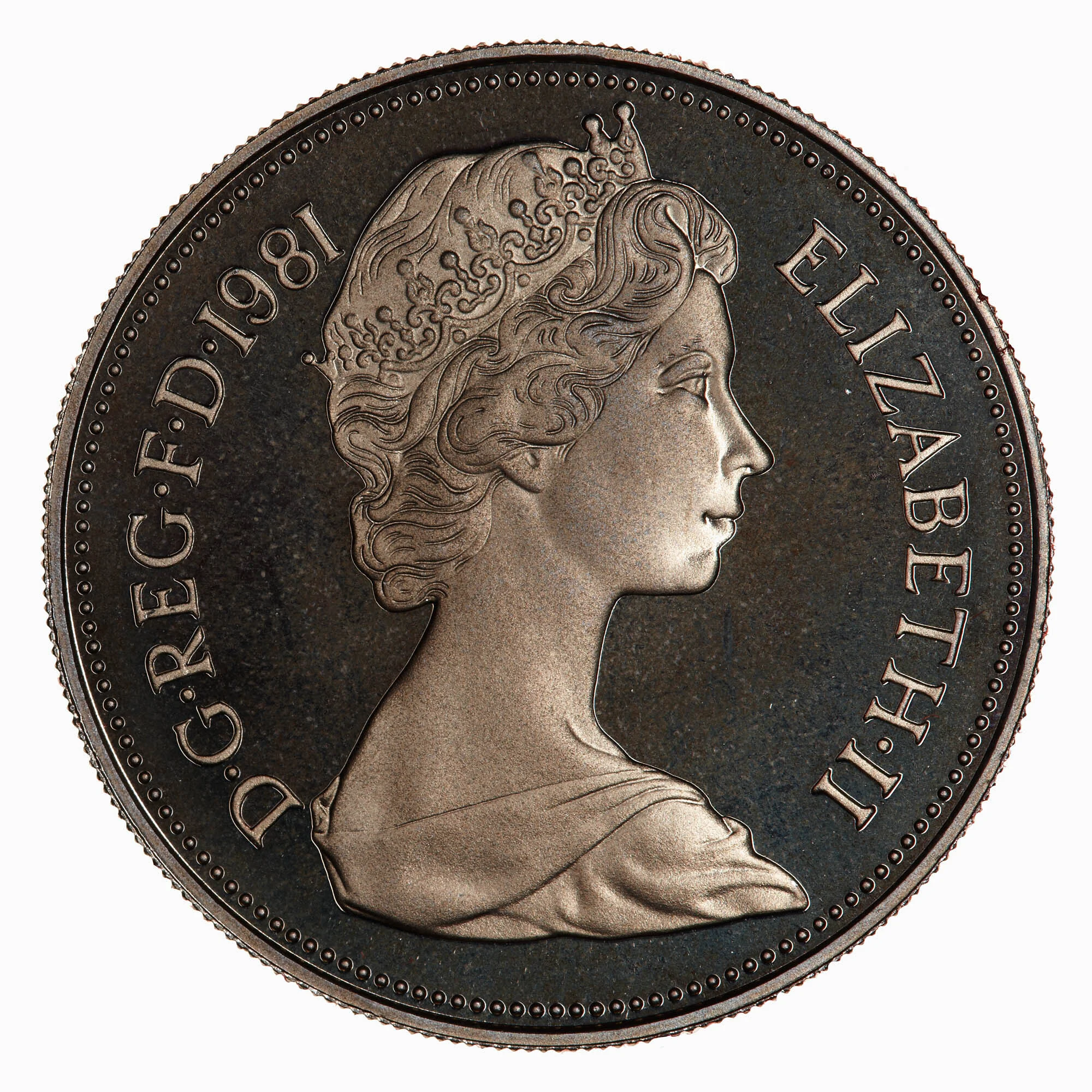
Queen Elizabeth II facing right, wearing the Girls of Great Britain and Ireland tiara.
Inscription:
ELIZABETH·II D·G·REG·F·D·1969
Translation:
Elizabeth the Second, by the Grace of God, Queen, Defender of the Faith, 1969
Script: Latin
Language: Latin
Designer: Arnold Machin
Reverse
Description:
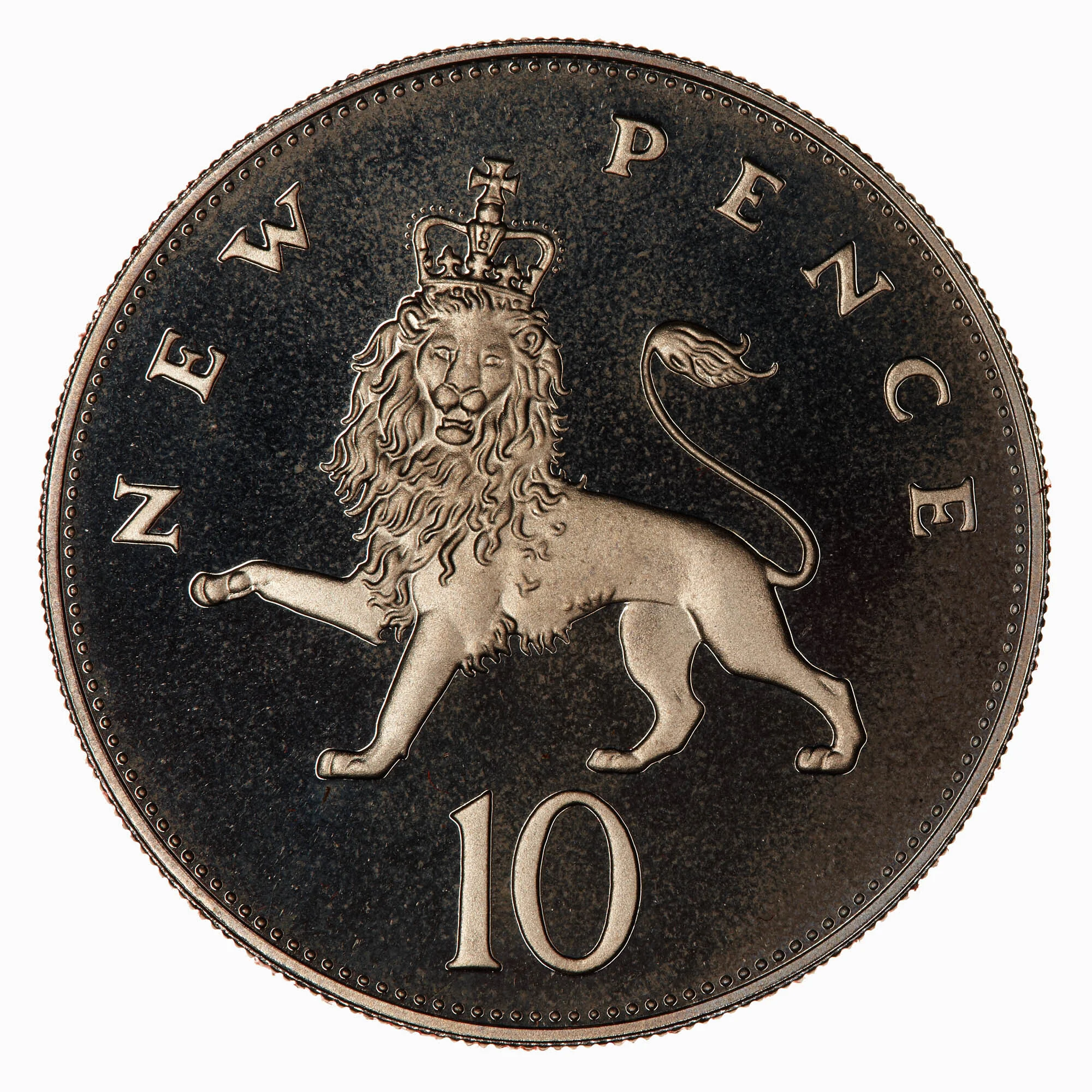
Crowned lion passant guardant, with legend above and denomination below.
Inscription:
NEW PENCE
10
10
Script: Latin
Designer: Christopher Ironside
Edge
Milled
Mints
| Name | Mark |
|---|---|
| Royal Mint (Tower Hill) | — |
| Royal Mint | — |
Mintings
| Year | Mint Mark | Mintage | Quality | Collection |
|---|---|---|---|---|
| 1968 | — | 336,143,250 | ||
| 1968 | — | 6,323,210 | BU | |
| 1969 | — | 314,008,000 | ||
| 1970 | — | 133,571,000 | ||
| 1971 | — | 63,205,000 | ||
| 1971 | — | 350,000 | Proof | |
| 1972 | — | 150,000 | Proof | |
| 1973 | — | 100,000 | Proof | |
| 1973 | — | 152,174,000 | ||
| 1974 | — | 92,741,000 | ||
| 1974 | — | 100,000 | Proof | |
| 1975 | — | 181,559,000 | ||
| 1975 | — | 100,000 | Proof | |
| 1976 | — | 228,220,000 | ||
| 1976 | — | 100,000 | Proof | |
| 1977 | — | 193,000 | Proof | |
| 1977 | — | 59,323,000 | ||
| 1978 | — | 86,100 | Proof | |
| 1979 | — | 115,457,000 | ||
| 1979 | — | 81,000 | Proof | |
| 1980 | — | 88,650,000 | ||
| 1980 | — | 143,000 | Proof | |
| 1981 | — | 3,487,000 | ||
| 1981 | — | 100,300 | Proof |
Historical background
In 1968, the United Kingdom faced a severe currency crisis, marking a critical juncture in its post-war economic decline. The year began with intense pressure on the pound sterling, which was still pegged to the US dollar under the Bretton Woods system. A substantial trade deficit, rising inflation, and a lack of confidence in the government's economic management led to relentless speculative attacks against the pound. Despite a major devaluation in November 1967 from $2.80 to $2.40, intended to restore competitiveness, the underlying weaknesses persisted, and capital continued to flee the country throughout early 1968.
The crisis culminated in March with the dramatic "Basle Agreement," negotiated with the Bank for International Settlements. To avert a second devaluation within months, the UK government introduced a stringent deflationary package, including deep public spending cuts and further credit tightening. Crucially, a network of central banks provided a $2 billion standby credit to support the pound. This was paired with the separation of the official exchange rate from the "sterling area" reserves, effectively creating a two-tier market and insulating the pound from the pressures of converting sterling balances held by former colonies and Commonwealth nations.
These drastic measures stabilized the pound for the remainder of the year, but at a significant political and economic cost. The crisis underscored the end of sterling's role as a major reserve currency and highlighted Britain's diminished global financial power. Domestically, the austerity required to defend the exchange rate exacerbated social tensions and contributed to a wave of industrial unrest, setting the stage for the economic challenges of the 1970s. The events of 1968 thus represented a pivotal retreat from global monetary leadership and a painful adjustment to a new economic reality.
The crisis culminated in March with the dramatic "Basle Agreement," negotiated with the Bank for International Settlements. To avert a second devaluation within months, the UK government introduced a stringent deflationary package, including deep public spending cuts and further credit tightening. Crucially, a network of central banks provided a $2 billion standby credit to support the pound. This was paired with the separation of the official exchange rate from the "sterling area" reserves, effectively creating a two-tier market and insulating the pound from the pressures of converting sterling balances held by former colonies and Commonwealth nations.
These drastic measures stabilized the pound for the remainder of the year, but at a significant political and economic cost. The crisis underscored the end of sterling's role as a major reserve currency and highlighted Britain's diminished global financial power. Domestically, the austerity required to defend the exchange rate exacerbated social tensions and contributed to a wave of industrial unrest, setting the stage for the economic challenges of the 1970s. The events of 1968 thus represented a pivotal retreat from global monetary leadership and a painful adjustment to a new economic reality.
🌱 Very Common