

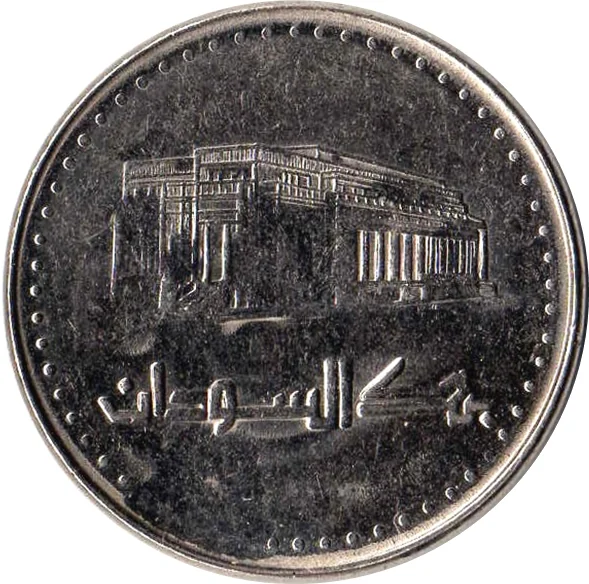
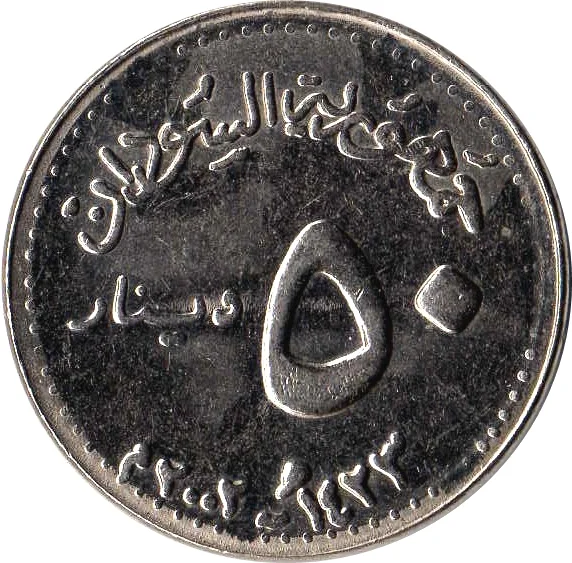
50 dinars – Sudan
Add to wishlist
Sudan
Context
Year: 2002
Islamic (Hijri) Year:: 1423
Issuer: Sudan
Period:
(1956—1969)
Currency:
(1992—2007)
Demonetization: 1 July 2007
Material
Diameter: 24 mm
Weight: 5.6 g
Thickness: 1.6 mm
Shape: Round
Composition: Copper-nickel
Technique: Milled
Alignment: Medal alignment
flip
References
KM: #
Numista: #8767
Value
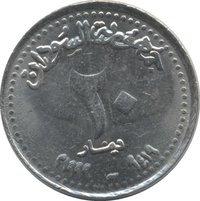
Exchange value: 50 SDD
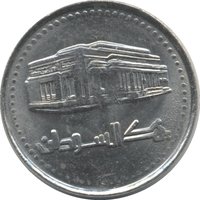
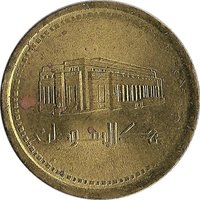
Obverse
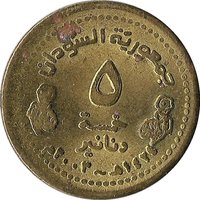
Reverse
Edge
Plain
Categories
| Building |
Mintings
| Year | Mint Mark | Mintage | Quality | Collection |
|---|---|---|---|---|
| 2002 | — | — |
Historical background
In 2002, Sudan's currency situation was characterized by severe instability and a stark duality. The country operated with two distinct currencies: the Sudanese dinar in the north and the Sudanese pound in the south. This bifurcation was a direct consequence of the long-running Second Sudanese Civil War (1983-2005), which had fractured the national economy. The Government of Sudan in Khartoum issued the dinar, while the Sudan People's Liberation Movement (SPLM) in the south continued to use the old pound notes, creating separate monetary zones that complicated trade and symbolized the deep political divide.
Economically, the nation was grappling with rampant inflation, a massively overvalued official exchange rate, and a thriving black market for foreign currency. Years of conflict, economic mismanagement, and international isolation had depleted foreign reserves and crippled production. The official exchange rate was fixed by the central bank at a rate far stronger than market reality, leading to severe shortages of hard currency for official imports. Consequently, the black market for US dollars and other currencies flourished, with exchange rates there often being several times higher than the official rate, distorting all economic activity.
This fragile and complex monetary environment was set against a backdrop of ongoing peace negotiations. The Machakos Protocol, signed in July 2002, marked a crucial breakthrough in the civil war and began to frame discussions on power and wealth-sharing, which inherently included the future of Sudan's monetary system. Therefore, the currency situation in 2002 was not just an economic crisis but a pivotal political issue, with any lasting peace agreement necessitating a plan to reunify the country's fractured finances, a challenge that would loom large in the subsequent Comprehensive Peace Agreement of 2005.
Economically, the nation was grappling with rampant inflation, a massively overvalued official exchange rate, and a thriving black market for foreign currency. Years of conflict, economic mismanagement, and international isolation had depleted foreign reserves and crippled production. The official exchange rate was fixed by the central bank at a rate far stronger than market reality, leading to severe shortages of hard currency for official imports. Consequently, the black market for US dollars and other currencies flourished, with exchange rates there often being several times higher than the official rate, distorting all economic activity.
This fragile and complex monetary environment was set against a backdrop of ongoing peace negotiations. The Machakos Protocol, signed in July 2002, marked a crucial breakthrough in the civil war and began to frame discussions on power and wealth-sharing, which inherently included the future of Sudan's monetary system. Therefore, the currency situation in 2002 was not just an economic crisis but a pivotal political issue, with any lasting peace agreement necessitating a plan to reunify the country's fractured finances, a challenge that would loom large in the subsequent Comprehensive Peace Agreement of 2005.
🌱 Common