

20 pence – Guernsey
Add to wishlist
Context
Years: 1982–1983
Country: British Crown dependencies
Issuer: Guernsey
Ruler: Elizabeth II
Currency:
(since 1971)
Total mintage: 1,000,000
Material
Diameter: 21.4 mm
Weight: 5 g
Thickness: 2 mm
Shape: Equilateral curve heptagon
Composition: Copper-nickel
Technique: Milled
Alignment: Medal alignment
flip
References
KM: #
Numista: #8762
Value
Exchange value: 0.20 GGP
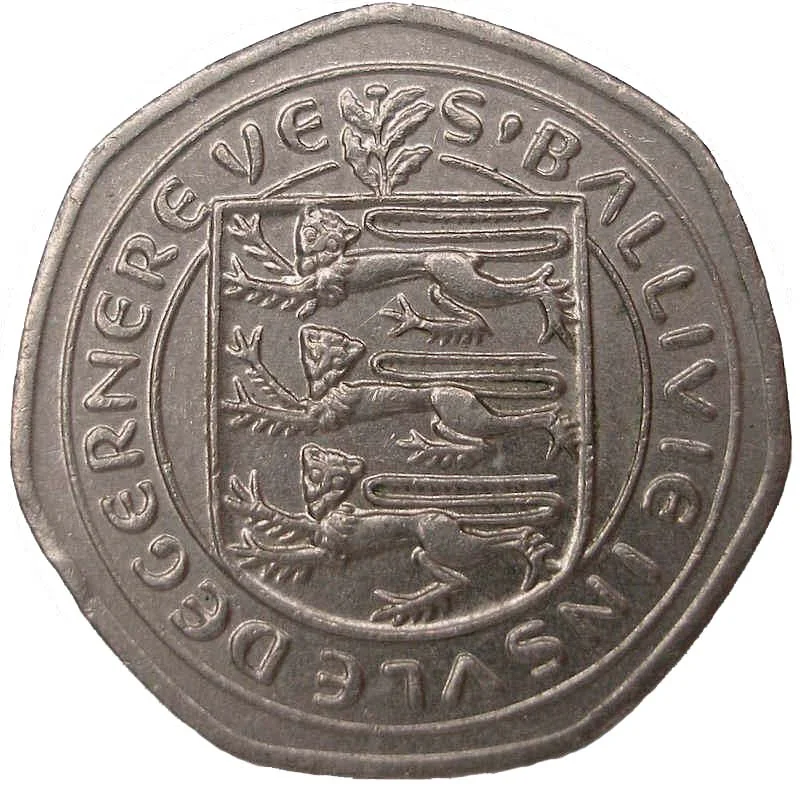
Obverse
Reverse
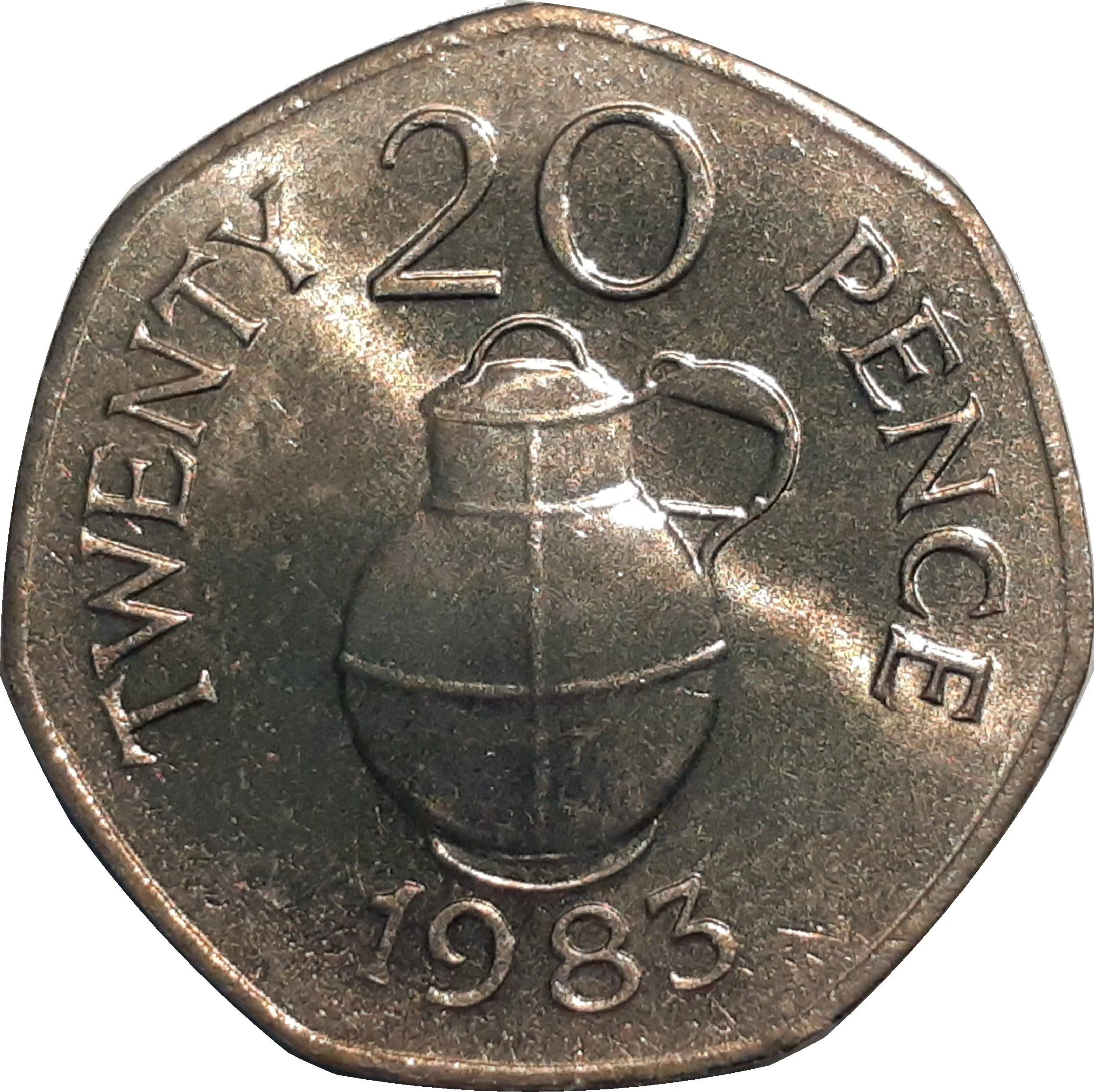
Description:
Guernsey milk can, numeral with flanking letters above, date below.
Inscription:
TWENTY 20 PENCE
1983
1983
Script: Latin
Engraver: Frederick Mogford
Edge
Plain
Mintings
| Year | Mint Mark | Mintage | Quality | Collection |
|---|---|---|---|---|
| 1982 | — | 500,000 | ||
| 1983 | — | 500,000 |
Historical background
In 1982, Guernsey's currency situation was defined by its unique, long-standing relationship with the British pound sterling. The island, as a British Crown Dependency, was not part of the United Kingdom and thus did not use Bank of England notes. Instead, it issued its own distinct banknotes and coins, the Guernsey pound, which was pegged at par with sterling and circulated alongside UK currency. This local issue, managed by the States of Guernsey, was fully backed by sterling reserves and UK government securities, ensuring financial stability and complete convertibility.
The period was one of consolidation rather than crisis. Following the decimalisation of the UK currency in 1971, Guernsey had introduced its own decimal coins in line with the British system. By 1982, the island's finance industry was beginning its significant expansion, but the currency system remained straightforward and robust. The primary function of issuing local currency was to retain seigniorage profits (the revenue from creating money) for the benefit of the island's government, funding public services without the need for direct taxation increases.
There were no major currency reforms or destabilising events in Guernsey during 1982. The system operated smoothly, underpinned by confidence in its sterling peg and the island's prudent fiscal management. This stability provided a solid foundation for Guernsey's growing economy and its emerging role as an international finance centre, all while maintaining the symbolic autonomy and identity represented by its own banknotes and coinage.
The period was one of consolidation rather than crisis. Following the decimalisation of the UK currency in 1971, Guernsey had introduced its own decimal coins in line with the British system. By 1982, the island's finance industry was beginning its significant expansion, but the currency system remained straightforward and robust. The primary function of issuing local currency was to retain seigniorage profits (the revenue from creating money) for the benefit of the island's government, funding public services without the need for direct taxation increases.
There were no major currency reforms or destabilising events in Guernsey during 1982. The system operated smoothly, underpinned by confidence in its sterling peg and the island's prudent fiscal management. This stability provided a solid foundation for Guernsey's growing economy and its emerging role as an international finance centre, all while maintaining the symbolic autonomy and identity represented by its own banknotes and coinage.
🌱 Common