

1 Pound – Guernsey
Context
Year: 1983
Country: British Crown dependencies
Issuer: Guernsey
Ruler: Elizabeth II
Currency:
(since 1971)
Demonetization: 15 October 2017
Total mintage: 267,000
Material
Diameter: 22.5 mm
Weight: 9.5 g
Thickness: 3.1 mm
Shape: Round
Composition: Nickel brass
Magnetic: No
Technique: Milled
Alignment: Medal alignment
flip
References
KM: #Click to copy to clipboard39
Numista: #3078
Value
Exchange value: 1 GGP
Obverse
Reverse
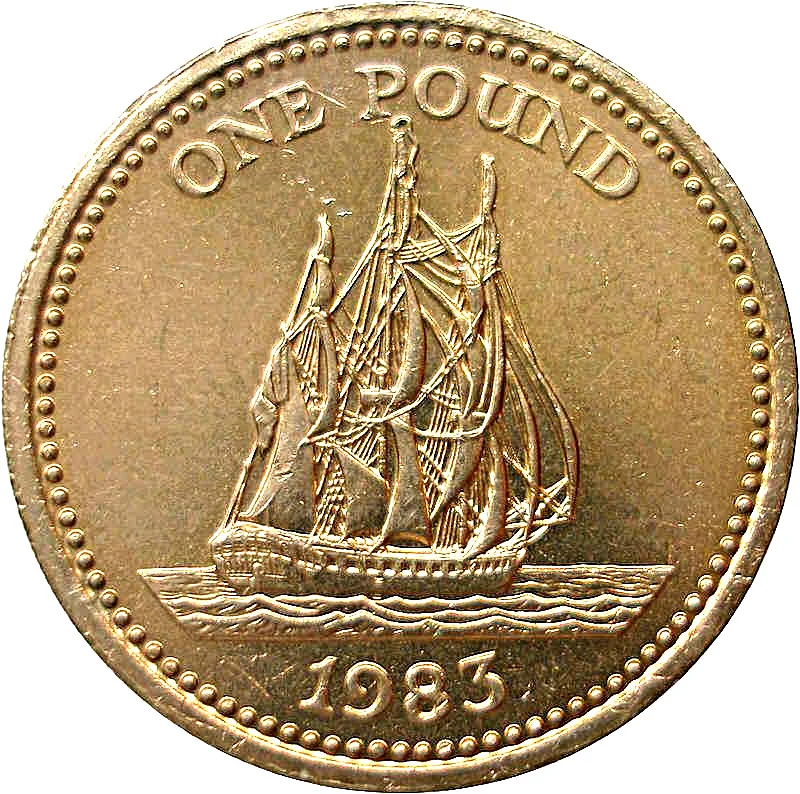
Description:
H.M.S. Crescent, a Royal Navy frigate.
Inscription:
ONE POUND
1983
1983
Script: Latin
Engraver: Robert Elderton
Edge
Inscripted
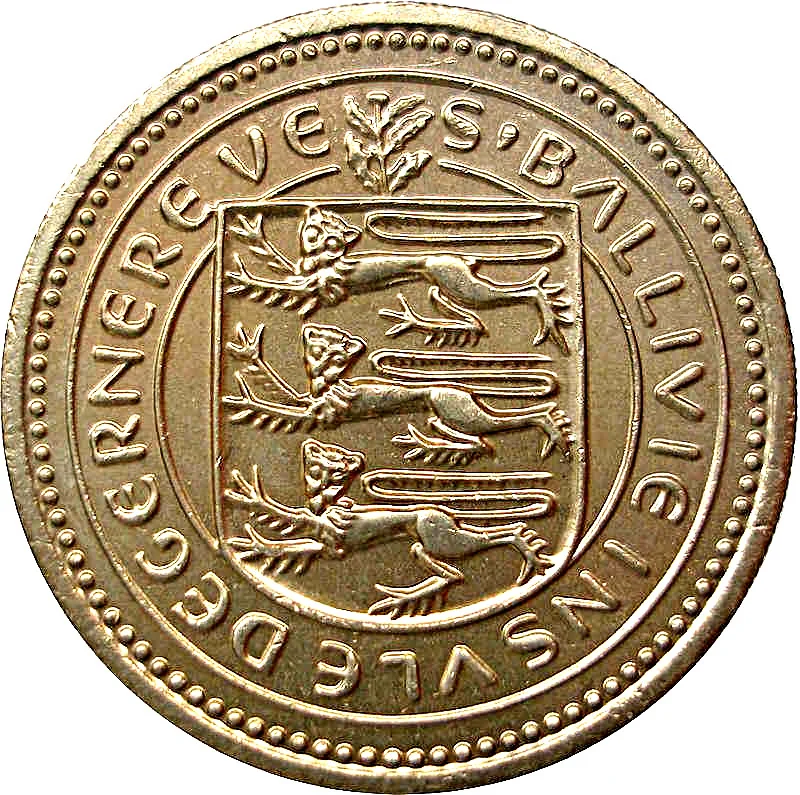
Legend:
BAILIWICK OF GUERNSEY
Categories
| Transportation> Watercraft |
Mintings
| Year | Mint Mark | Mintage | Quality | Collection |
|---|---|---|---|---|
| 1983 | — | 267,000 |
Historical background
In 1983, Guernsey's currency situation was characterised by a stable and pragmatic system, underpinned by its long-standing issue of local banknotes. As a British Crown Dependency, the island was not part of the United Kingdom and had its own monetary authority, the States of Guernsey. While the UK pound sterling (£) was legal tender and formed the basis of the island's currency, Guernsey issued its own distinct series of pound notes, which circulated on par with sterling. This arrangement provided the local government with seigniorage revenue—the profit made from issuing currency—which was used to fund public services without increasing taxation.
The system functioned smoothly due to a strict requirement for the Guernsey Treasury to back its note issue with sterling assets, primarily held as deposits in UK banks or in UK government securities. This 100% backing ensured full convertibility and maintained absolute parity with sterling, guaranteeing economic stability and confidence in the local currency both for residents and for the important finance sector. There was no central bank; instead, the Island's Finance Board and the UK Treasury maintained a close, informal liaison on monetary matters.
The context of 1983 was one of continuity rather than change. The island had no independent monetary policy, effectively shadowing UK interest rates and inflation. Discussions about extending decimal coinage to include Guernsey-specific coins (which would later be introduced in the 1980s) were likely underway, but the core framework remained unchanged. The system successfully balanced local identity and fiscal advantage with the security and integration provided by its link to the broader British monetary area.
The system functioned smoothly due to a strict requirement for the Guernsey Treasury to back its note issue with sterling assets, primarily held as deposits in UK banks or in UK government securities. This 100% backing ensured full convertibility and maintained absolute parity with sterling, guaranteeing economic stability and confidence in the local currency both for residents and for the important finance sector. There was no central bank; instead, the Island's Finance Board and the UK Treasury maintained a close, informal liaison on monetary matters.
The context of 1983 was one of continuity rather than change. The island had no independent monetary policy, effectively shadowing UK interest rates and inflation. Discussions about extending decimal coinage to include Guernsey-specific coins (which would later be introduced in the 1980s) were likely underway, but the core framework remained unchanged. The system successfully balanced local identity and fiscal advantage with the security and integration provided by its link to the broader British monetary area.
🌱 Common