

5 drachmai – Greece
Add to wishlist
Greece
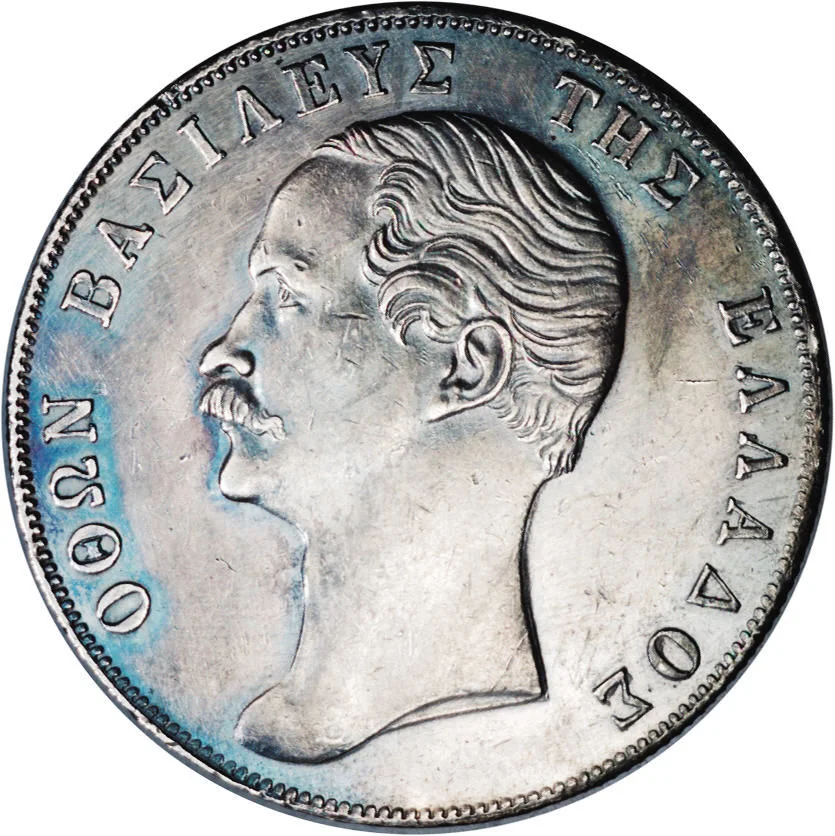
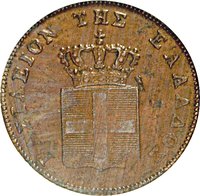
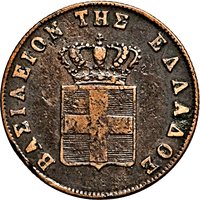
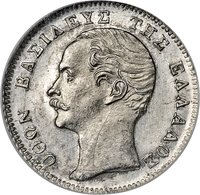
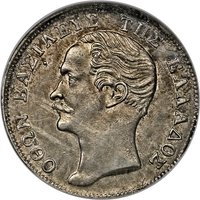
Obverse
Description:
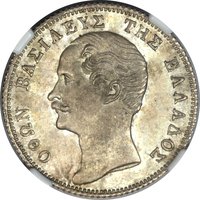
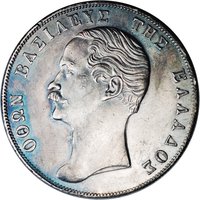
King Othon, mature, facing left.
Inscription:
ΟΘΩΝ ΒΑΣΙΛΕΥΣ ΤΗΣ ΕΛΛΑΔΟΣ
Translation:
OTHO KING OF GREECE
Script: Greek
Language: Greek
Engraver: Konrad Lange
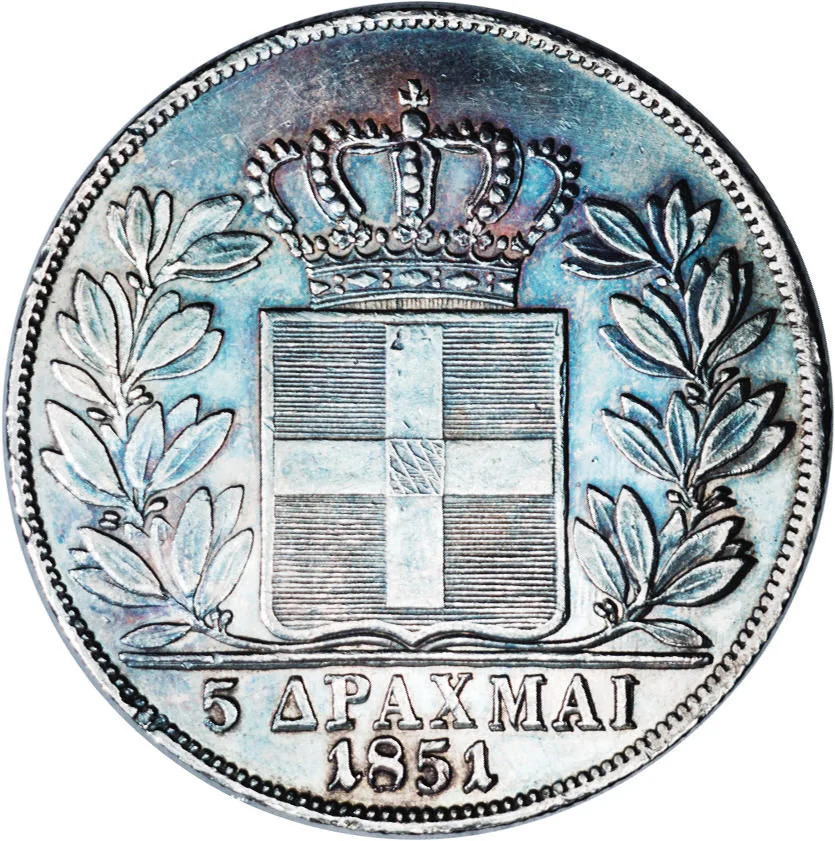
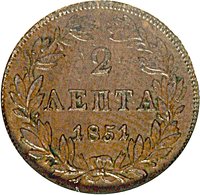
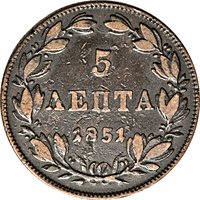
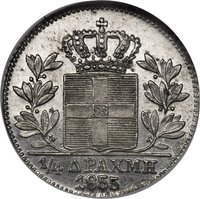
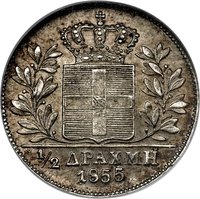
Reverse
Description:
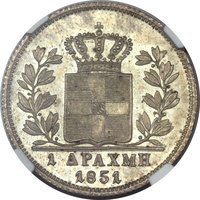
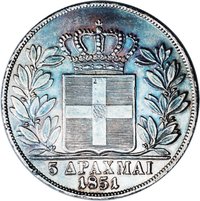
Arms crowned with olive branches, denomination and date beneath.
Inscription:
5 ΔΡΑΧΜΑΙ
1851
1851
Translation:
5 DRACHMAS
1851
1851
Script: Greek
Language: Greek
Engraver: Konrad Lange
Edge
Reeded
Mints
| Name | Mark |
|---|---|
| Athens Mint | — |
Mintings
| Year | Mint Mark | Mintage | Quality | Collection |
|---|---|---|---|---|
| 1851 | — | — | ||
| 1851 | — | — | Proof |
Historical background
In 1851, Greece was navigating a complex and unstable monetary landscape, a direct legacy of its War of Independence (1821-1832) and its subsequent establishment as a new kingdom. The nation lacked a unified national currency, leading to a chaotic circulation of diverse coins. This included the "phoenix," the short-lived first currency of modern Greece (introduced in 1828), various older Ottoman coins like the kuruş, a multitude of European currencies (particularly French francs and British sovereigns) used in trade, and even the large silver "talers" of Maria Theresa from Austria. This proliferation of foreign and obsolete coins created confusion, hindered commerce, and symbolized the young state's struggle to establish economic sovereignty.
The situation was actively being addressed by King Otto’s government under the guidance of the protecting powers (Britain, France, and Russia). A pivotal reform was underway: the preparation for a new national currency. The drachma, evoking ancient Hellenic heritage, was formally introduced by royal decree in 1833, but the process of minting and distributing the new coins was slow. By 1851, the first silver drachma coins (minted in Paris, Birmingham, and later at the new mint in Athens) were in circulation alongside the older monetary chaos. The system was decimal, with 1 drachma = 100 lepta, but full adoption was far from complete.
Therefore, 1851 represents a transitional year within a longer period of monetary consolidation. The government was actively working to suppress the old Ottoman monetary units and establish the drachma as the sole legal tender, a process crucial for national identity and economic modernization. However, in daily life, Greeks still dealt with a confusing mix of old and new coins, reflecting the practical challenges of building a stable financial system in a nascent and financially weak state. The complete standardization of the currency would remain a work in progress for several more decades.
The situation was actively being addressed by King Otto’s government under the guidance of the protecting powers (Britain, France, and Russia). A pivotal reform was underway: the preparation for a new national currency. The drachma, evoking ancient Hellenic heritage, was formally introduced by royal decree in 1833, but the process of minting and distributing the new coins was slow. By 1851, the first silver drachma coins (minted in Paris, Birmingham, and later at the new mint in Athens) were in circulation alongside the older monetary chaos. The system was decimal, with 1 drachma = 100 lepta, but full adoption was far from complete.
Therefore, 1851 represents a transitional year within a longer period of monetary consolidation. The government was actively working to suppress the old Ottoman monetary units and establish the drachma as the sole legal tender, a process crucial for national identity and economic modernization. However, in daily life, Greeks still dealt with a confusing mix of old and new coins, reflecting the practical challenges of building a stable financial system in a nascent and financially weak state. The complete standardization of the currency would remain a work in progress for several more decades.
Series: 1851 Greece circulation coins
💎 Extremely Rare